Minnesota Trout UnlimitedMinnesota Trout Unlimited
  • HOME
  • About
    • Chapters
      • Headwaters Chapter
      • Gitche Gumee Chapter
      • Twin Cities Chapter
      • Hiawatha Chapter
      • Win-Cres Chapter
    • Our Mission
    • Join MNTU
    • Contact Us
    • Help Support MNTU
  • NEWS
    • Blog
    • Events
    • Monthly Cast Newsletter
    • Trout Unlimited Minnesota Newsletter
  • HABITAT
  • EDUCATION
    • Education and Outreach
    • Trout in the Classroom
    • Fishing Skills Programs
    • Great Waters Fly Fishing Expo
    • Foster the Outdoors Program
    • T.U.N.E Camp
  • ADVOCACY
    • Agricultural Runoff
    • Data Centers
    • Feedlots
    • Neonics
    • Nitrates
    • Preventing Fish Kills
    • Public Waters
    • Sulfide Mining
  • FISHING
  • DONATE
  • HOME
  • About
    • Chapters
      • Headwaters Chapter
      • Gitche Gumee Chapter
      • Twin Cities Chapter
      • Hiawatha Chapter
      • Win-Cres Chapter
    • Our Mission
    • Join MNTU
    • Contact Us
    • Help Support MNTU
  • NEWS
    • Blog
    • Events
    • Monthly Cast Newsletter
    • Trout Unlimited Minnesota Newsletter
  • HABITAT
  • EDUCATION
    • Education and Outreach
    • Trout in the Classroom
    • Fishing Skills Programs
    • Great Waters Fly Fishing Expo
    • Foster the Outdoors Program
    • T.U.N.E Camp
  • ADVOCACY
    • Agricultural Runoff
    • Data Centers
    • Feedlots
    • Neonics
    • Nitrates
    • Preventing Fish Kills
    • Public Waters
    • Sulfide Mining
  • FISHING
  • DONATE

Macro of the month: Little sister sedge
Jennifer Biederman - MNTU Habitat Director on April 7, 20242026-05-01T20:07:15+00:00
By Jennifer Biederman - MNTU Habitat Director on April 7, 2024

Little Sister Sedge 

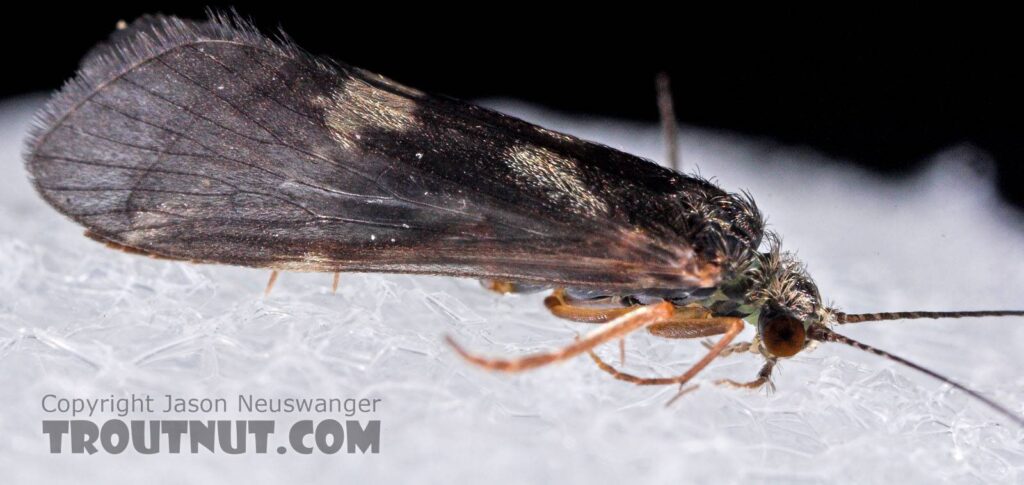
April marks the onset of more vibrant seasonal activity in trout streams, with increasing diversity of emerging insect life. This surge in insect activity not only breathes life into the aquatic ecosystem but also signals prime time for both trout and anglers. The increase in available food sources leads to more active trout, making this a particularly exciting time for fishing enthusiasts. In the next few weeks, look out for the emergence of net-spinning caddisflies, including the little sister sedge Cheumatopsyche pasella. This sedge belongs to the insect family Hydropsychidae, which is nestled within the larger order of caddisflies, the Trichopterans. 

What comes to mind when most experienced anglers or stream enthusiasts think of caddisflies are the diverse, intricate homes, or protective “cases” they build out of silk and materials like sand, pebbles, or organic debris from their surroundings along the stream bottom. These cases serve as mobile homes that provide protection from predators and environmental hazards as the larvae develop. 

In contrast, net-spinning caddisflies, including the little sister sedge, lack sophisticated, durable cases. While they do construct a rough shelter of gravel and debris attached to the sides of rocks along the streambed, these are more akin to a “lean-to.” Instead, net-spinning caddisflies spend much of their time building open silk nets to trap drifting food particles. This distinction highlights different ecological strategies: net-spinners actively filter feed, contributing to water quality, while cased species are more sedentary, impacting the streambed’s physical structure and providing a food source for predators through their case-building behavior. This process plays a key role in nutrient cycling and water filtration. 

If you poke around the substrate of the stream, you are likely to find little sister sedge larvae that are big enough to see with the naked eye. Net-spinning caddisfly larvae generally have a streamlined body adapted for life in flowing water, with a well-developed head and thorax. Their color can vary, but many exhibit a camouflage pattern that blends with their surroundings. Additionally, they possess prominent gills for underwater respiration and are often found attached to submerged objects in the stream where they build their nets. 

The development and growth of Cheumatopsyche pasella, like many aquatic insects, can vary based on water temperature and availability of food resources. Typically, these caddisflies complete their life cycle within a year. In Minnesota, the little sister sedge tends to emerge from trout streams as adults in mid-April with hatches extending through July. Life as adults is focused on reproduction, with adults emerging, mating in synchronized swarms in flight, and laying eggs before dying. 
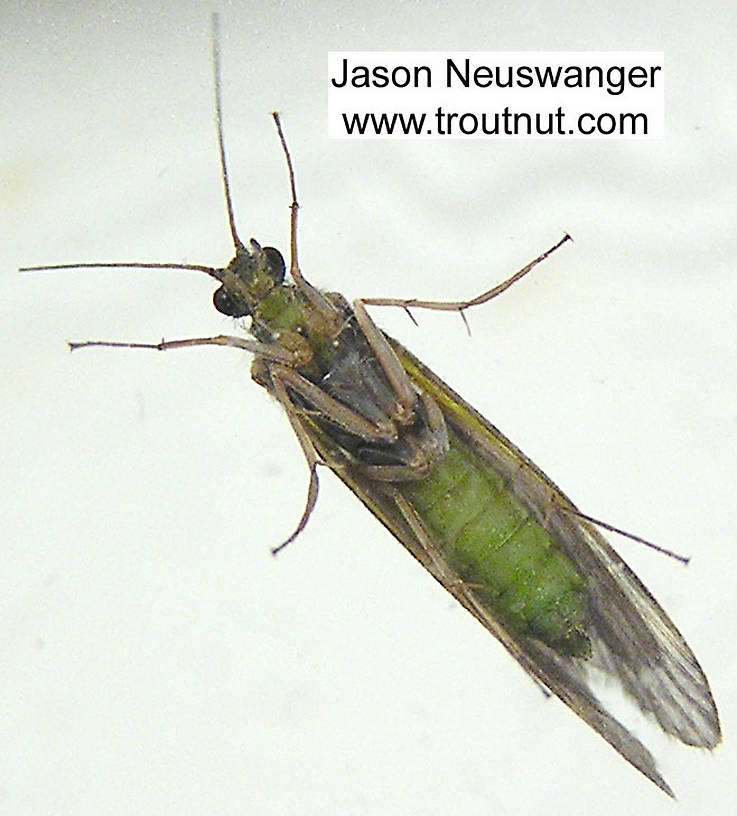
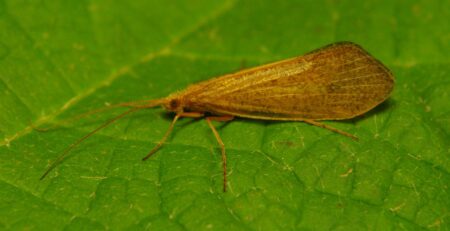
Tie the fly! Adults of the little sister sedge are typically imitated with a size14-16 hook and have  14-16 greenish bodies and brown wings.  An Elk Hair Caddis is great on rough water, but on the calmer waters typical in southeast MN a very effective imitation is the X-Caddis tie.  This emphasizes silhouette and color over traditional hackle to entice picky trout. Check out this video tutorial.  

Learn more! For such tiny larval insects, healthy populations of net-spinning caddisflies can have significant impacts on the structure of stream ecosystems. To learn more about how net-spinning caddis flies like the little sister sedge serve as ecosystem engineers, check out this film.

What’s a macro and what’s it have to do with trout angling and conservation? Macros are on the trout menu for pretty much every meal. Macro means big and macroinvertebrates, or “macros,” are animals without a backbone, that are big enough to be seen by the human eye. They can be aquatic or land based, however aquatic insects make up the majority of a trout’s diet. They are also, of course, the inspiration for the flies we tie and use to catch trout. Learn about a new macro each month and how you can create your own to take with you on your next fishing trip!
Share this post

Facebook Twitter Email

Related Posts

Gear up for North Shore steelhead

The fishing gear you need for catching Steelhead on the North Shore of Lake Superior. From rod and reels, to... read more

All about fly fishing strike indicators

Learn everything you need to know about fly fishing with indicators. Is is ok if you call it a bobber?... read more

Photo credit: Chironomidae Research Group

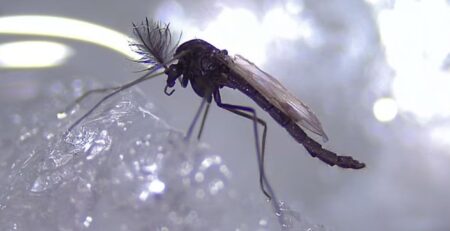
Community science for winter anglers: Bugs below zero

I went to college at Saint Mary’s in Winona, and during the winter months I spent a lot of time... read more

Winter fly fishing in Minnesota’s Driftless Area

For many Minnesota anglers, January is a month spent leaning over an ice hole or a fly-tying vice, but if... read more

What happens to aquatic invertebrates as winter sets in?

Macro of the Month – December 2025 December has always been one of my favorite times to walk a trout stream.... read more

Macro of the Month: Northern caddisflies

Northern Caddisflies (Family Limnephilidae) Last month, we explored the importance of October foliage after it falls into a stream. Let’s take... read more

Macro of the Month: Beetles

All it takes is a little wind on the grass and you might be lucky enough to hear a little... read more

Macro of the Month: Grasshoppers

It’s August in Minnesota. The heat has settled in, and streamside vegetation hangs thick and heavy over the banks of... read more

Macro of the Month: Ants

One of my favorite surprises of summer trout fishing in Minnesota comes after a good soaking rain. When storms sweep... read more

Macro of the Month: Crane flies

Living on a trout stream in southeastern Minnesota, it doesn’t require too much effort to keep an eye on what’s... read more

Categories

Recent Posts

  • Action alert: Speak up to protect MNTU’s habitat improvement funding  
  • Construction for Eagle Creek restoration begins in May 
  • Photos: Mahtomedi students release trout and identify bugs
  • Action alert: Funding for habitat restoration is stalled
  • Action alert: Protect robust trout streams near proposed data center in Hermantown

Chapters

  • Headwaters Chapter
  • Gitche Gumee Chapter
  • Twin Cities Chapter
  • Hiawatha Chapter
  • Win-Cres Chapter
Subscribe
 
Join MNTU
 
Make A Donation
  • Facebook
  • YouTube
  • Instagram
Protect – Restore – Sustain

Find Your Chapter

  • Headwaters Chapter
  • Gitche Gumee Chapter
  • Twin Cities Chapter
  • Hiawatha Chapter
  • Win-Cres Chapter

Learn More

  • Recent News
  • Upcoming Events
  • Habitat Projects
  • Fishing Information
  • Contact Us

Get Involved

  • Join MNTU
  • Make a Donation
  • Monthly Cast Newsletter
  • Follow on Facebook
  • Follow on Instagram
© Copyright 2026 Minnesota Trout Unlimited. All Rights Reserved.
Minnesota Trout Unlimited is a 501(c)(3) organization.