Minnesota Trout UnlimitedMinnesota Trout Unlimited
  • HOME
  • About
    • Chapters
      • Headwaters Chapter
      • Gitche Gumee Chapter
      • Twin Cities Chapter
      • Hiawatha Chapter
      • Win-Cres Chapter
    • Our Mission
    • Join MNTU
    • Contact Us
    • Help Support MNTU
  • NEWS
    • Blog
    • Events
    • Monthly Enews
    • Trout Unlimited Minnesota Newsletter
  • HABITAT
  • EDUCATION
    • Education and Outreach
    • Trout in the Classroom
    • Fishing Skills Programs
    • Great Waters Fly Fishing Expo
    • Foster the Outdoors Program
    • T.U.N.E Camp
  • ADVOCACY
    • Agricultural Runoff
    • Data Centers
    • Feedlots
    • Neonics
    • Nitrates
    • Preventing Fish Kills
    • Public Waters
    • Sulfide Mining
  • FISHING
  • DONATE
  • HOME
  • About
    • Chapters
      • Headwaters Chapter
      • Gitche Gumee Chapter
      • Twin Cities Chapter
      • Hiawatha Chapter
      • Win-Cres Chapter
    • Our Mission
    • Join MNTU
    • Contact Us
    • Help Support MNTU
  • NEWS
    • Blog
    • Events
    • Monthly Enews
    • Trout Unlimited Minnesota Newsletter
  • HABITAT
  • EDUCATION
    • Education and Outreach
    • Trout in the Classroom
    • Fishing Skills Programs
    • Great Waters Fly Fishing Expo
    • Foster the Outdoors Program
    • T.U.N.E Camp
  • ADVOCACY
    • Agricultural Runoff
    • Data Centers
    • Feedlots
    • Neonics
    • Nitrates
    • Preventing Fish Kills
    • Public Waters
    • Sulfide Mining
  • FISHING
  • DONATE

Macro of the month: Terrestrials

Jennifer Biederman - MNTU Habitat Director on July 8, 20242026-05-01T19:56:24+00:00
By Jennifer Biederman - MNTU Habitat Director on July 8, 2024

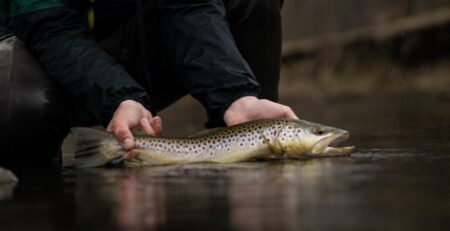
When it comes to the diets of stream-dwelling trout in Minnesota, aquatic benthic invertebrates take most of the spotlight. Keep in mind that trout are visual and opportunistic feeders – so prey preference and capture probability are likely influenced by the accessibility, size, color, mobility, and degree of exposure of various prey types. In Minnesota streams – especially those in the Driftless – the high availability of aquatic invertebrates (high productivity is thanks to the fertile water of the karst landscape) means that stream trout tend to engage in epibenthic feeding (epibenthic = along the rocky stream bottom).

This isn’t true everywhere. Numerous scientific studies have identified a positive selection by brown trout for terrestrial insects – especially in the western United States where terrestrial insects have been shown to make up over 80% of trout diets in certain regions. Research has shown different eating patterns in Minnesota. A 2005 study in Valley Creek (Washington County) found that trout were neutrally selective for terrestrial prey in the summer, which only comprised 3% of all available drifting invertebrates available and of the overall stomach contents. My own PhD research looked at both seasonal diets and the availability of prey (benthic and drifting) in six streams in southeastern Minnesota across three years. Although on a few notable occasions stomachs contained high proportions of terrestrial prey in response to a temporary spike in availability (e.g. ants and aphids following a significant rainfall event in summer), terrestrial insects were very few and far between in stomachs, and only a small portion of prey available.

So, does that mean you should abandon the terrestrial patterns this summer? Nah. Trout are opportunistic, visual feeders. Especially outside of a hatch, trout will still chase after a terrestrial fly – which are really, really fun to fish.

Here are some recommended patterns to tie:

  1. Hopper Patterns:
    • Dave’s Hopper: Mimics grasshoppers that are common in summer. Its realistic profile and buoyant construction make it an excellent choice.
    • Parachute Hopper: Floats well and is easy to see, making it ideal for fishing in faster-moving water.
  2. Ant Patterns:
    • Foam Ant: Very buoyant and effective, particularly during hot summer days when ants are active.
    • Cinnamon Ant: A realistic pattern that works well when ants are present near the water.
  3. Beetle Patterns:
    • Foam Beetle: Easy to tie and highly effective. Its foam body ensures it floats well, and the shiny back can attract attention.
    • Japanese Beetle: Imitates the iridescent beetles that are common in July.
  4. Cricket Patterns:
    • Morrish’s Hopper/Cricket: Effective for imitating both hoppers and crickets. It’s versatile and a good general terrestrial pattern.
    • Letort Cricket – Effective for imitating crickets, as well as black caddis in smaller sizes. It’s versatile and a good general terrestrial pattern.
    • Chernobyl Ant: While often used for hoppers, it can also mimic crickets and other large terrestrials.
  5. Spider Patterns:
    • Black Foam Spider: Imitates small black spiders that frequently fall into the water.
    • Parachute Spider: Floats well and is highly visible, making it a good choice for varied water conditions.
  6. Miscellaneous Terrestrials:
    • Madam X: An attractor pattern that mimics a variety of terrestrials. Its rubber legs provide additional movement that can entice strikes.
    • Fat Albert: A buoyant, multi-colored fly that can imitate hoppers, beetles, and other large terrestrials.

When tying these flies, consider using durable materials to withstand multiple strikes and maintain their effectiveness in the water. Also, adding a bit of flash or using bright colors can help attract trout in various lighting conditions.

Tie your own terrestrial fly! Check out Paul Johnson’s video on tying a Lunchbox Hopper.

What’s a macro and what’s it have to do with trout angling and conservation? Macros are on the trout menu for pretty much every meal. Macro means big and macroinvertebrates, or “macros,” are animals without a backbone, that are big enough to be seen by the human eye. They can be aquatic or land based, however aquatic insects make up the majority of a trout’s diet. They are also, of course, the inspiration for the flies we tie and use to catch trout. Learn about a new macro each month and how you can create your own to take with you on your next fishing trip!
Share this post

Facebook Twitter Email

Related Posts

Gear up for North Shore steelhead

The fishing gear you need for catching Steelhead on the North Shore of Lake Superior. From rod and reels, to... read more

All about fly fishing strike indicators

Learn everything you need to know about fly fishing with indicators. Is is ok if you call it a bobber?... read more

Photo credit: Chironomidae Research Group

Community science for winter anglers: Bugs below zero

I went to college at Saint Mary’s in Winona, and during the winter months I spent a lot of time... read more

Winter fly fishing in Minnesota’s Driftless Area

For many Minnesota anglers, January is a month spent leaning over an ice hole or a fly-tying vice, but if... read more

What happens to aquatic invertebrates as winter sets in?

Macro of the Month – December 2025 December has always been one of my favorite times to walk a trout stream.... read more

Macro of the Month: Northern caddisflies

Northern Caddisflies (Family Limnephilidae) Last month, we explored the importance of October foliage after it falls into a stream. Let’s take... read more

Macro of the Month: Beetles

All it takes is a little wind on the grass and you might be lucky enough to hear a little... read more

Macro of the Month: Grasshoppers

It’s August in Minnesota. The heat has settled in, and streamside vegetation hangs thick and heavy over the banks of... read more

Macro of the Month: Ants

One of my favorite surprises of summer trout fishing in Minnesota comes after a good soaking rain. When storms sweep... read more

Macro of the Month: Crane flies

Living on a trout stream in southeastern Minnesota, it doesn’t require too much effort to keep an eye on what’s... read more

Categories

Recent Posts

  • Action alert: Protect robust trout streams near proposed data center in Hermantown
  • Action alert: Recruit your out-of-state family and friends to protect the Boundary Waters
  • Get to know MNTU’s two new staff members
  • Trout release season: Your questions answered
  • South Creek project kicks off 

Chapters

  • Headwaters Chapter
  • Gitche Gumee Chapter
  • Twin Cities Chapter
  • Hiawatha Chapter
  • Win-Cres Chapter
Join
Donate
  • Facebook
  • YouTube
  • Instagram
Protect – Restore – Sustain

Find Your Chapter

  • Headwaters Chapter
  • Gitche Gumee Chapter
  • Twin Cities Chapter
  • Hiawatha Chapter
  • Win-Cres Chapter

Learn More

  • Recent News
  • Upcoming Events
  • Habitat Projects
  • Fishing Information
  • Contact Us

Get Involved

  • Join MNTU
  • Make a Donation
  • Subscribe
  • Follow on Facebook
  • Follow on Instagram
© Copyright 2026 Minnesota Trout Unlimited. All Rights Reserved.
Minnesota Trout Unlimited is a 501(c)(3) organization.