

Preventing Fish Kills
According to Minnesota state agencies, “Fish kills are caused by the release of pollutants and are different than fish die-offs. Fish kills are infrequent as compared to fish die-offs and they are acute events.” Threats to fish come in the form of many different toxins that make their way into our streams. Toxins come from agricultural runoff, including pesticides and fungicides, and feedlots, including nitrates. Repeated fish kills indicate it is beyond time the State re-examines their policies including:
- The density of feedlot operations within each watershed
- Manure spreading rules and setback requirements (from sinkholes, streams, and steep slopes),
- The adequacy (or failure) of inspections and enforcement
- Manure storage requirements on siting and capacity
- Timing and amount of pesticide and fungicide applications
Fish Kills in the Karst Since 2015
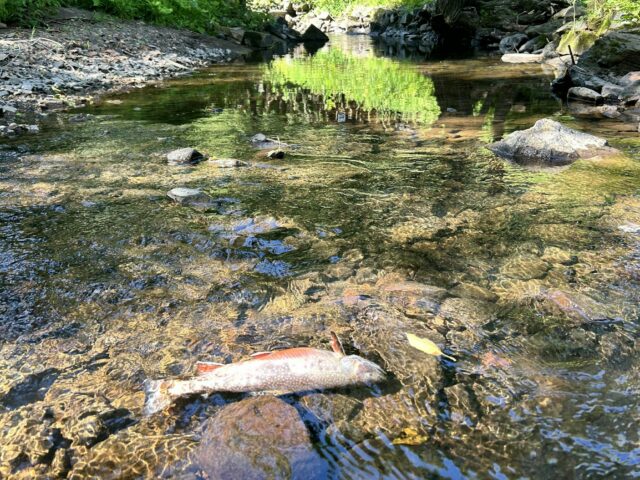
There have been six significantly documented fish kills in these counties of the Driftless Area, but this not a comprehensive list. Nitrates and/or ammonia have been implicated in all of these.
According to the Lanesboro DNR fisheries office, here’s a list of six documented fish kills since 2015 in Fillmore, Houston, Winona and Olmsted counties.
- July 2022: Rush Creek estimated 1,875 trout and 625 other fish dead.
- July 2021: Trout Valley Creek estimated 250 trout dead.
- September 2019: Garvin Brook estimated 1,262 trout dead.
- May 2018: Bee Creek estimated 15 trout dead.
- October 2017: Spring Valley Creek estimated 170 trout dead.
- July 2015: South Branch Whitewater River estimated 9,000 to 10,000 trout dead.
How is MNTU Taking Action?
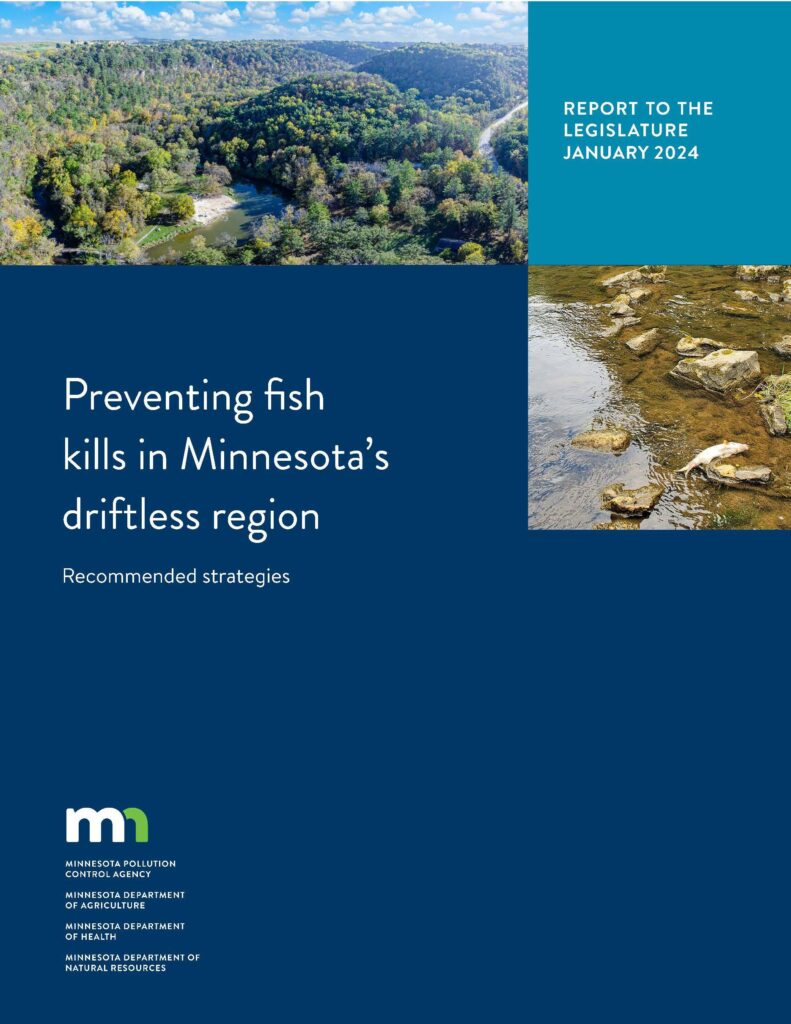
In 2023, MNTU drafted and successfully lobbied to pass a bill requiring state agencies to identify measures that could be taken to prevent fish kills. In January of 2024 Minnesota’s Departments of Agriculture, Health, and Natural Resources and Minnesota Pollution Control Agency released, the Preventing fish kills in Minnesota’s Driftless region report.
While the Report includes measures to prevent fish kills, no clear step forwards are indicated including timeline, funding and implementation. Threats to coldwater fisheries come in the form of many different toxins that make their way into our streams. Toxins come from agricultural runoff, including pesticides and fungicides, and feedlots, including nitrates. In 2024 MNTU worked with partners to demand meaningful and timely revision to the manure management rules, as well as other initiatives focusing on runoff to coldwater fisheries and groundwater springs.
In April of 2024 Minnesota’s departments of agriculture, health and natural resources and the Minnesota Pollution Control Agency released the Interagency Fish Kill Response: Guidance Document and Protocol and requested comments. Read MNTU’s thoughts on the document here.
Latest Fish Kill Updates
Lessons learned from Duluth’s Tischer Creek fish kill
Prior to the July 2024 fish kill in Duluth’s Tischer Creek, the release of drinking water into storm sewer systems… read more
2025 legislative session recap
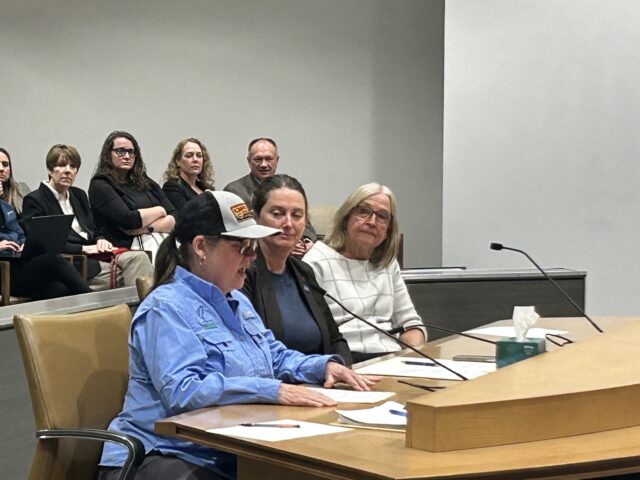
Legislative session was more a game of defense, rather than much momentum forward this year. In general we held the… read more
Nitrates, feedlots and fish kills: MNTU pushes for stronger feedlot rules
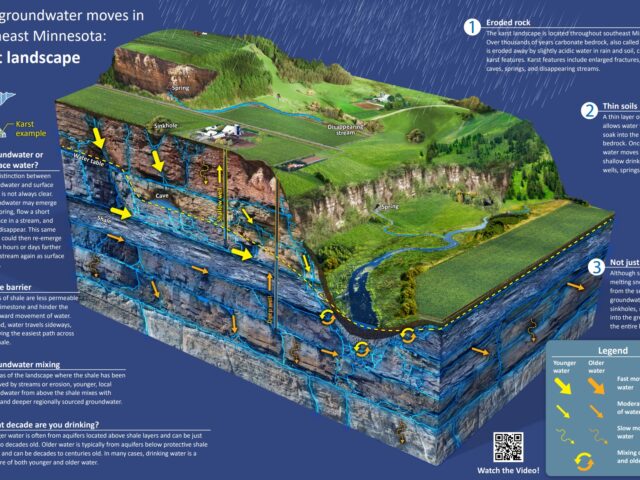
MNTU has a long history of developing awareness of, and urging action to reduce, nitrate contamination, especially where contamination impacts… read more

Action alert: Ensure bill will prevent fish kills
May 10, 2024 We’re coming to the finish line for the Minnesota Legislative session and we need you to contact your Senator… read more
How agencies can improve their response to fish kills
MNTU identified several improvements that should be made to ensure timely investigation and better public disclosure of lessons to be… read more
Action alert: Make sure fish kill prevention becomes law
The Minnesota Senate passed a bill including a requirement that state agencies identify the statutes and rules that should be changed to prevent… read more