
Trout release season: Your questions answered
This week our education team kicks off release season for our Trout in the Classroom (TIC) schools!
While we gear up to join hundreds of students around the state at these exciting events, let’s revisit some of your frequently asked questions about trout releases.
Where do students release their fish?
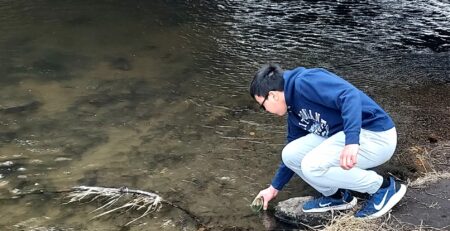
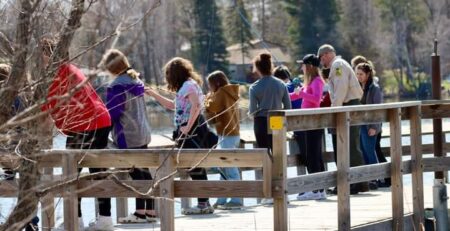
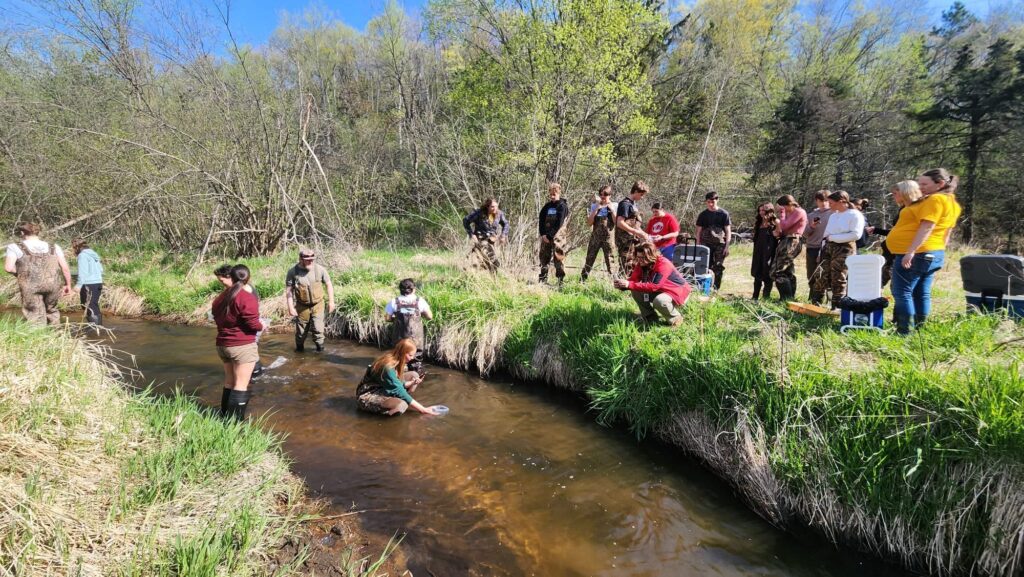
All fish are released into bodies of water approved by the school’s fisheries area manager with the Minnesota Department of Natural Resources (DNR). The area managers work with the DNR’s pathology lab to approve release sites each year. The DNR already stocks these waters with rainbow trout, so we only release trout into bodies of water where they already exist. The Twin Cities schools have three site options for their releases: Vermillion River in Farmington, Browns Creek in Stillwater, and Cenaiko Lake in Coon Rapids. Other frequently used release sites include the Little Cannon River, Whitewater River, Grindstone Lake, Spruce Creek near Miltona and a variety of mine pit lakes in northeastern Minnesota.
What precautions are taken to ensure disease isn’t transferred to the release body of water?
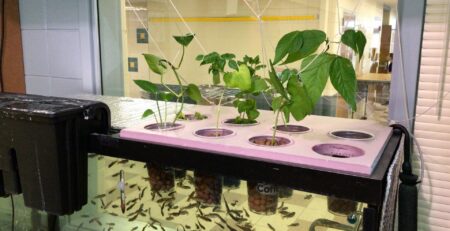
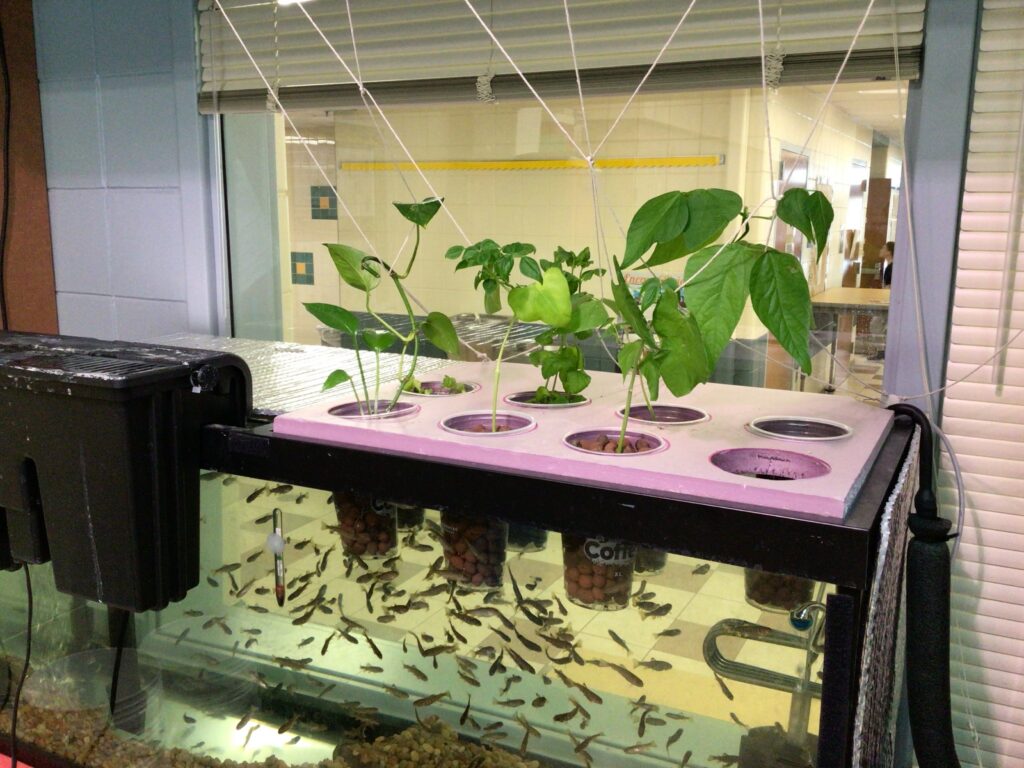
All teachers are required to sign a permit at the beginning of each year in which they agree to a handful of rules and regulations while keeping a TIC tank. One of these is that no living organisms are allowed in the tank other than the trout. This includes no aquatic plants, snails or other fish and aquatic creatures. Teachers are allowed to use terrestrial plants in their tanks. Some actively do aquaponics with their students, growing peas, strawberries, lettuce and more. Others simply dangle cuttings of house plants like Pothos into the water. The roots from these plants help to keep the water chemistry in check, removing nitrates and ammonia.
This was taken a step further this year with an addition to the permit that requires schools to test their trout for disease if the tank is housed near any other aquariums. This is due to a concern about cross contamination through nets and other supplies used for tank maintenance. Schools that reach a 60% cumulative mortality are required to send in fish for disease testing as well. These precautions, in addition to specifically assigned release sites and close communication with the DNR pathology lab, prevent sick or diseased fish from being released.
How big are they when released?
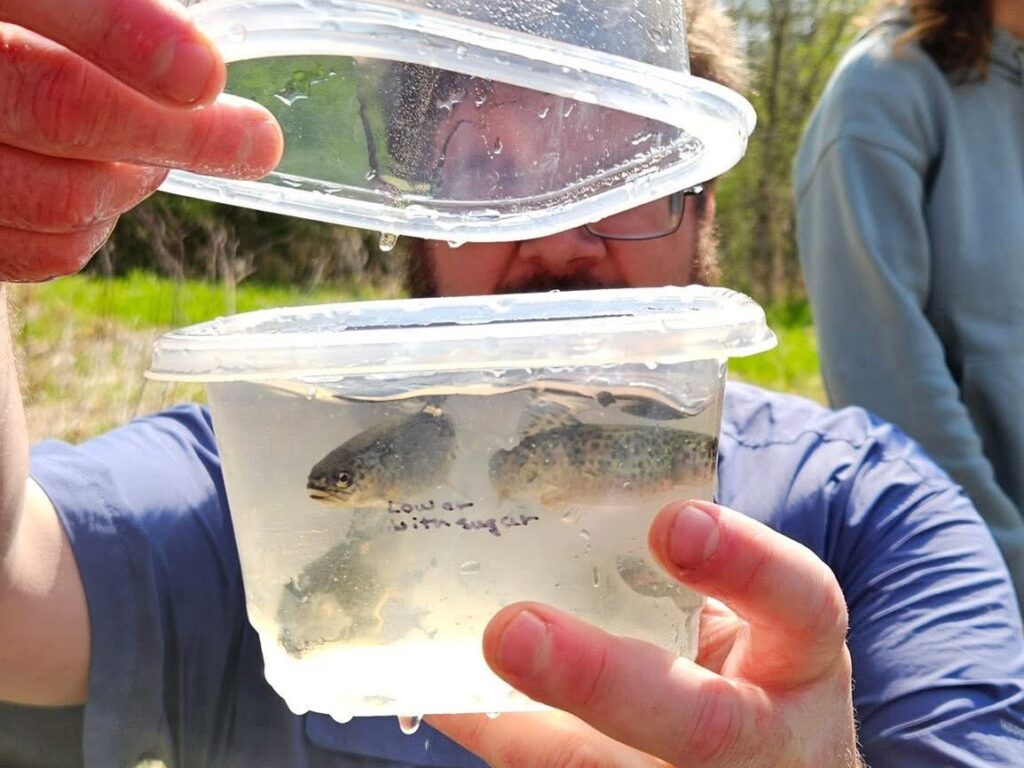
We see a wide range of sizes on release day, from barely an inch to over five inches! Teachers can experiment with growth rates based on the temperature of the tank and the amount of food they feed. Trout grow more quickly in warmer tanks than in colder ones. Due to their small size when released, our fingerlings are mostly a protein boost to the watershed. Not only for other fish, but also turtles, herons, otters, kingfishers, large aquatic insects such as giant water bugs and more. When I was assisting with a release on the Clearwater River near Bemidji a few years ago, a very large snapping turtle appeared, hanging out along the shoreline about six feet down the river and enjoying a trout fingerling buffet. After so many releases at that site, I wonder if that turtle has figured out when to show up for an easy meal of trout fingerlings!
How many are released?
Each school receives around 300 eggs and anywhere from 25-275 of them are released in the spring. Most tanks experience some level of die-off throughout the school year due to issues like water chemistry, equipment failure and cannibalism among tank mates. It is normal and expected that fish will die during all stages of development, even in the most well-run tanks. I remind teachers that the number of trout released in the spring is not the focus of the program. What’s important is the learning that happens throughout the school year.
Are they ever tagged or marked to know if any survive?
This would be a very difficult thing to implement for a variety of reasons. So for now, there is no tagging or marking happening with our TIC trout. There have been a few TIC fish discovered through DNR shocking surveys in the fall following their release. They could only have been TIC trout due to their size and how those bodies of water are managed.
What do students do on the release day?
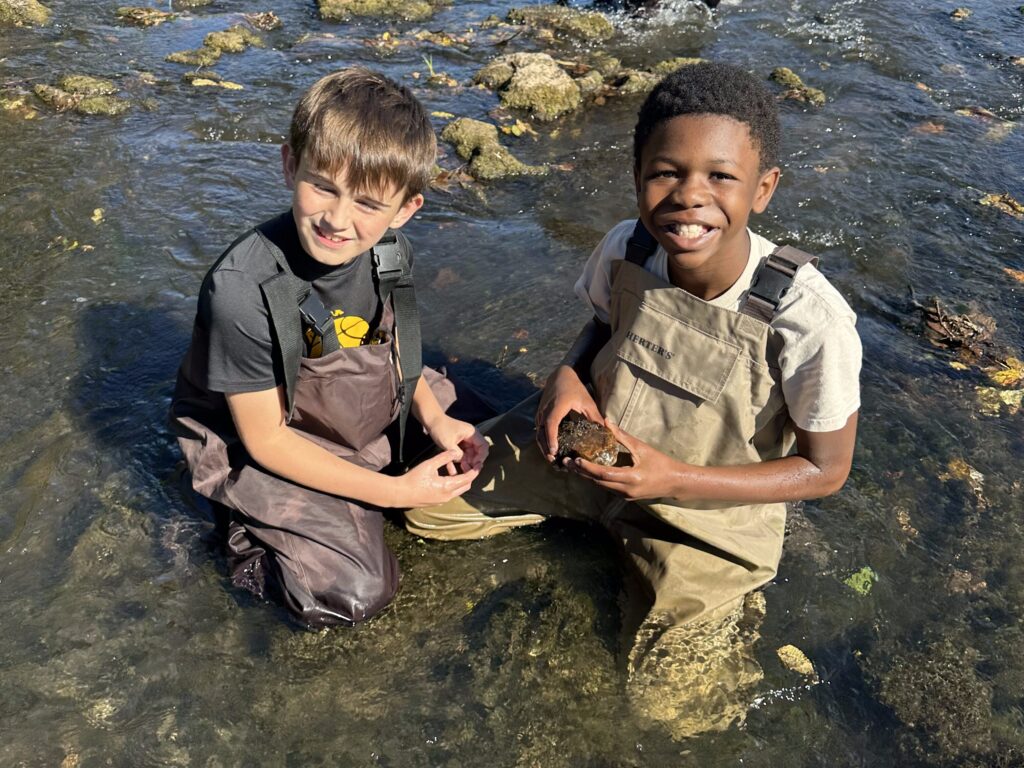
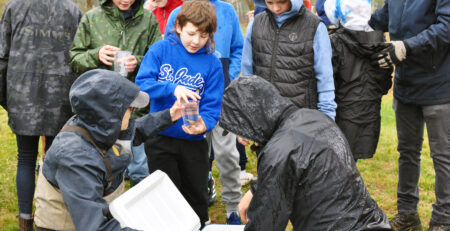
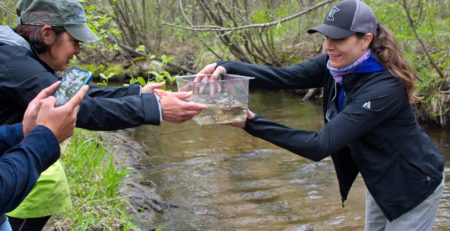
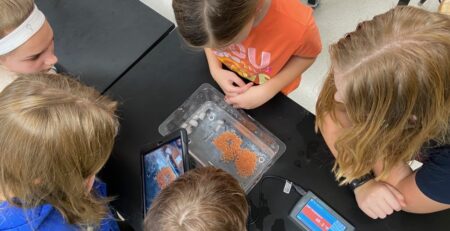
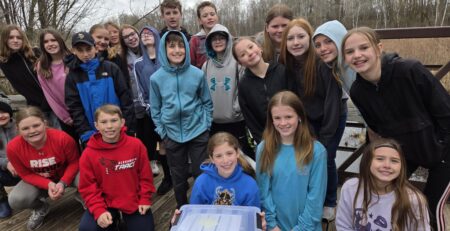
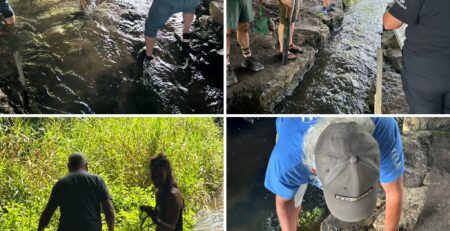
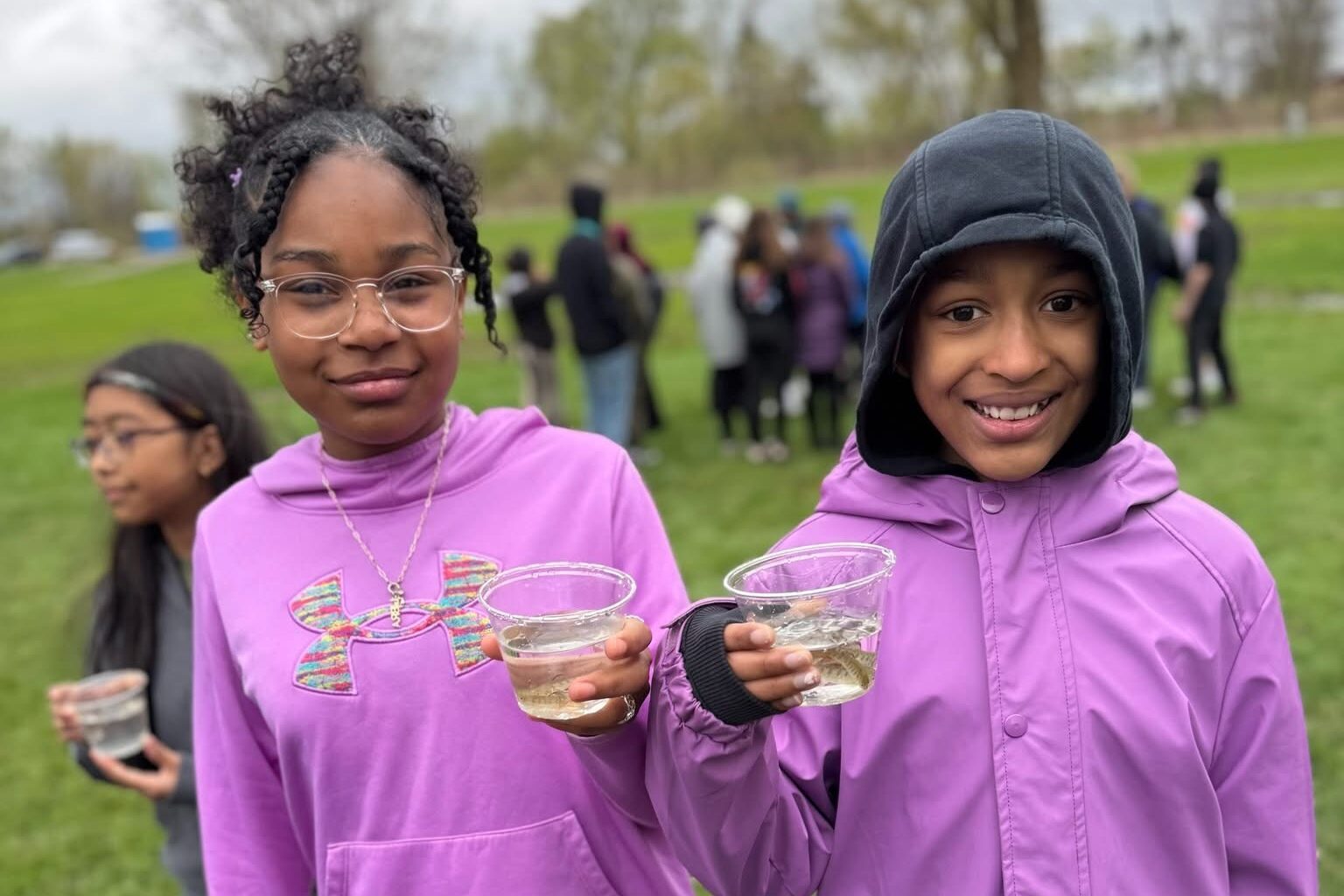
The release itself doesn’t take very long! A lot of the approved release sites are in parks or locations where students can participate in other activities such as looking for aquatic macroinvertebrates, nature hikes and fishing. Schools with small groups typically release all their trout at the same time, while larger groups use the release as one activity in a rotation of others. Each year, DNR fisheries staff join a few lucky schools for the release of the yearling rainbows.