Minnesota Trout UnlimitedMinnesota Trout Unlimited
  • HOME
  • About
    • Chapters
      • Headwaters Chapter
      • Gitche Gumee Chapter
      • Twin Cities Chapter
      • Hiawatha Chapter
      • Win-Cres Chapter
    • Our Mission
    • Join MNTU
    • Contact Us
    • Help Support MNTU
  • NEWS
    • Blog
    • Events
    • Monthly Enews
    • Trout Unlimited Minnesota Newsletter
  • HABITAT
  • EDUCATION
    • Education and Outreach
    • Trout in the Classroom
    • Fishing Skills Programs
    • Great Waters Fly Fishing Expo
    • Foster the Outdoors Program
    • T.U.N.E Camp
  • ADVOCACY
    • Agricultural Runoff
    • Data Centers
    • Feedlots
    • Neonics
    • Nitrates
    • Preventing Fish Kills
    • Public Waters
    • Sulfide Mining
  • FISHING
  • DONATE
  • HOME
  • About
    • Chapters
      • Headwaters Chapter
      • Gitche Gumee Chapter
      • Twin Cities Chapter
      • Hiawatha Chapter
      • Win-Cres Chapter
    • Our Mission
    • Join MNTU
    • Contact Us
    • Help Support MNTU
  • NEWS
    • Blog
    • Events
    • Monthly Enews
    • Trout Unlimited Minnesota Newsletter
  • HABITAT
  • EDUCATION
    • Education and Outreach
    • Trout in the Classroom
    • Fishing Skills Programs
    • Great Waters Fly Fishing Expo
    • Foster the Outdoors Program
    • T.U.N.E Camp
  • ADVOCACY
    • Agricultural Runoff
    • Data Centers
    • Feedlots
    • Neonics
    • Nitrates
    • Preventing Fish Kills
    • Public Waters
    • Sulfide Mining
  • FISHING
  • DONATE

Macro of the month: Baetis a.k.a. the blue-winged olive
Jennifer Biederman - MNTU Habitat Director on March 8, 20242026-05-01T20:14:11+00:00
By Jennifer Biederman - MNTU Habitat Director on March 8, 2024

Baetis, a genus of mayflies commonly known as the blue-winged olive among anglers, holds an iconic status in the world of trout enthusiasts. Emerging first from Minnesota streams in early March, this mayfly plays a crucial role in the delicate balance of coldwater stream ecosystems, capturing the fascination of scientists and anglers alike.

The blue-winged olive becomes a vital presence during the cooler late winter and spring months, producing up to three generations and notable hatches during a typically quiet period for insect emergences. During the nymph stage, these mayflies strategically position themselves amidst gravel substrate or vegetation. Research indicates they have evolved to adapt the timing of their activity to avoid trout feeding actively on benthos. As young nymphs with a tiny body size and superior swimming ability, they easily evade trout predation, but as they mature and become larger and more visible, trout readily prey on them. Studies in southeastern Minnesota highlights a trout preference for benthic feeding, with stomachs filled mostly with nymphs, including mayflies and other types of macros that live along the bottom.

Depending on the species, blue-winged olive nymphs spend varying durations – a few months up to a year – maturing before ascending through the water column as a dun. The dun, ready to breathe air, stays on the water’s surface as its wings unfold for flight – an ideal moment for trout to indulge. Within a day or so, the dun undergoes another emergence, splitting its skin to become a fully mature adult mayfly. These adults engage in a swift mating swarm above the stream’s surface, a process so focused on mating that adult mayflies lack a functioning mouth. Not only is there really no time to feed, but females return to lay eggs beneath the water’s surface shortly after mating, after which they live only minutes or hours.

The blue-winged olive emergence often aligns with unpredictable late winter and early spring weather, adding to the intrigue for fly anglers. Their distinct blueish hues and delicate size make them a challenging yet rewarding target.

Beyond their appeal to trout anglers, the presence and emergence of blue-winged olives, like other mayflies, serve as an ecological indicator. Sensitive to pollution and water temperature, their presence reflects stream health and highlights the interconnectedness of aquatic ecosystems with the surrounding landscape. Recent research indicates widespread losses in mayflies and other sensitive aquatic insects globally and across the upper Midwest, primarily due to habitat loss, intensive agriculture, urbanization, pollution, and climate change.

As MNTU continues to enhance coldwater streams across Minnesota, habitat improvement for aquatic macroinvertebrates, including the blue-winged olive, is a primary goal. Restoration efforts focus on creating shallow riffles with coarse gravel substrate and fast-flowing, oxygen-rich water, allowing mayflies and other benthic invertebrates to thrive. Channel narrowing aids sediment passage and reveals coarse gravel substrates. Additionally, projects establish wide buffers of perennial, deeply-rooted native vegetation to shield in-stream habitat from run-off, erosion, and pollutants, providing a conducive environment for macroinvertebrate populations.

Check out this video for tips on tying a blue-winged olive nymph, and this one for tying a dry-fly.

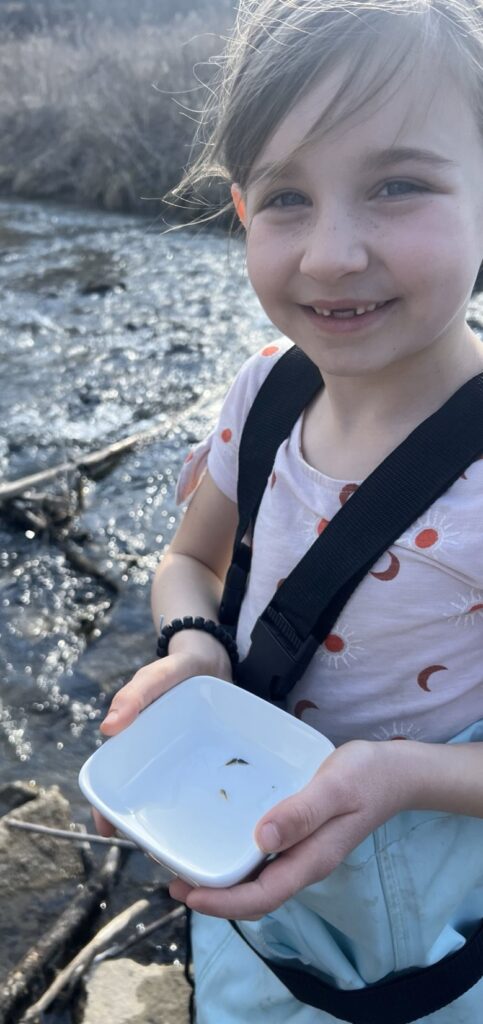
What’s a macro and what’s it have to do with trout angling and conservation? Macros are on the trout menu for pretty much every meal. Macro means big and macroinvertebrates, or “macros,” are animals without a backbone, that are big enough to be seen by the human eye. They can be aquatic or land based, however aquatic insects make up the majority of a trout’s diet. They are also, of course, the inspiration for the flies we tie and use to catch trout. Learn about a new macro each month and how you can create your own to take with you on your next fishing trip!
Share this post

Facebook Twitter Email

Related Posts

Gear up for North Shore steelhead

The fishing gear you need for catching Steelhead on the North Shore of Lake Superior. From rod and reels, to... read more

All about fly fishing strike indicators

Learn everything you need to know about fly fishing with indicators. Is is ok if you call it a bobber?... read more

Photo credit: Chironomidae Research Group

Community science for winter anglers: Bugs below zero

I went to college at Saint Mary’s in Winona, and during the winter months I spent a lot of time... read more

Winter fly fishing in Minnesota’s Driftless Area

For many Minnesota anglers, January is a month spent leaning over an ice hole or a fly-tying vice, but if... read more

What happens to aquatic invertebrates as winter sets in?

Macro of the Month – December 2025 December has always been one of my favorite times to walk a trout stream.... read more

Macro of the Month: Northern caddisflies

Northern Caddisflies (Family Limnephilidae) Last month, we explored the importance of October foliage after it falls into a stream. Let’s take... read more

Macro of the Month: Beetles

All it takes is a little wind on the grass and you might be lucky enough to hear a little... read more

Macro of the Month: Grasshoppers

It’s August in Minnesota. The heat has settled in, and streamside vegetation hangs thick and heavy over the banks of... read more

Macro of the Month: Ants

One of my favorite surprises of summer trout fishing in Minnesota comes after a good soaking rain. When storms sweep... read more

Macro of the Month: Crane flies

Living on a trout stream in southeastern Minnesota, it doesn’t require too much effort to keep an eye on what’s... read more

Categories

Recent Posts

  • Action alert: Protect robust trout streams near proposed data center in Hermantown
  • Action alert: Recruit your out-of-state family and friends to protect the Boundary Waters
  • Get to know MNTU’s two new staff members
  • Trout release season: Your questions answered
  • South Creek project kicks off 

Chapters

  • Headwaters Chapter
  • Gitche Gumee Chapter
  • Twin Cities Chapter
  • Hiawatha Chapter
  • Win-Cres Chapter
Join
Donate
  • Facebook
  • YouTube
  • Instagram
Protect – Restore – Sustain

Find Your Chapter

  • Headwaters Chapter
  • Gitche Gumee Chapter
  • Twin Cities Chapter
  • Hiawatha Chapter
  • Win-Cres Chapter

Learn More

  • Recent News
  • Upcoming Events
  • Habitat Projects
  • Fishing Information
  • Contact Us

Get Involved

  • Join MNTU
  • Make a Donation
  • Subscribe
  • Follow on Facebook
  • Follow on Instagram
© Copyright 2026 Minnesota Trout Unlimited. All Rights Reserved.
Minnesota Trout Unlimited is a 501(c)(3) organization.