
South Creek Project Kicks Off
By Jennifer Biederman, MNTU habitat director
April 3, 2026
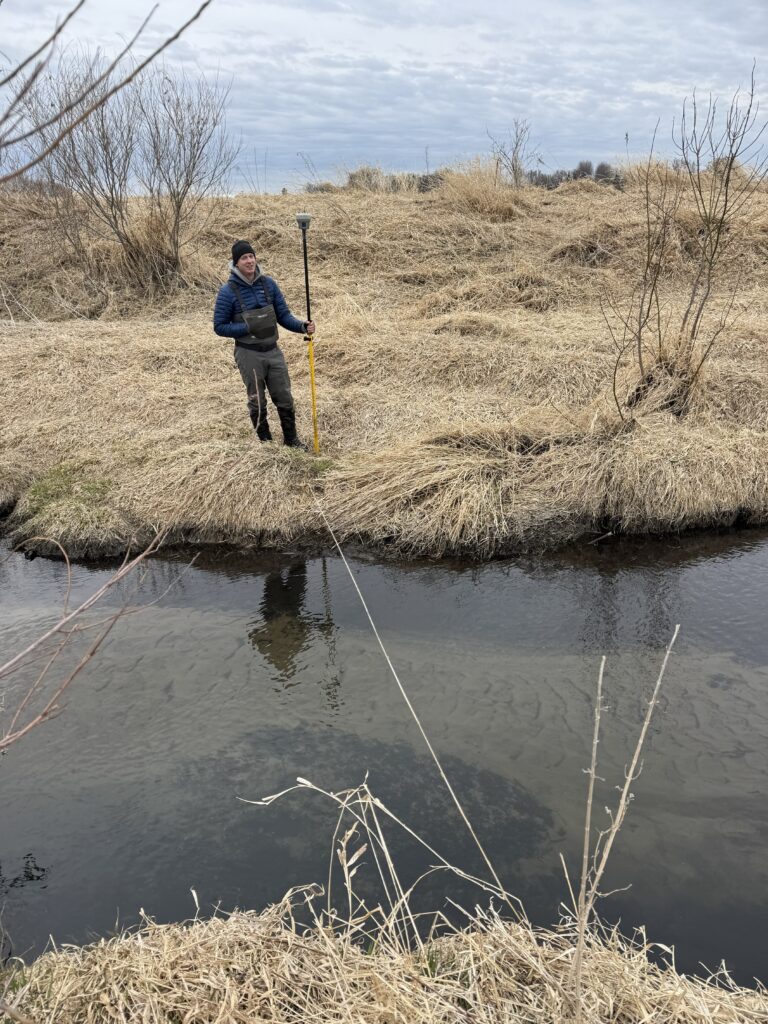
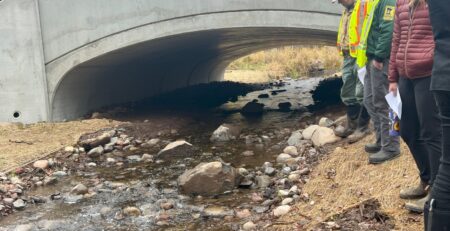
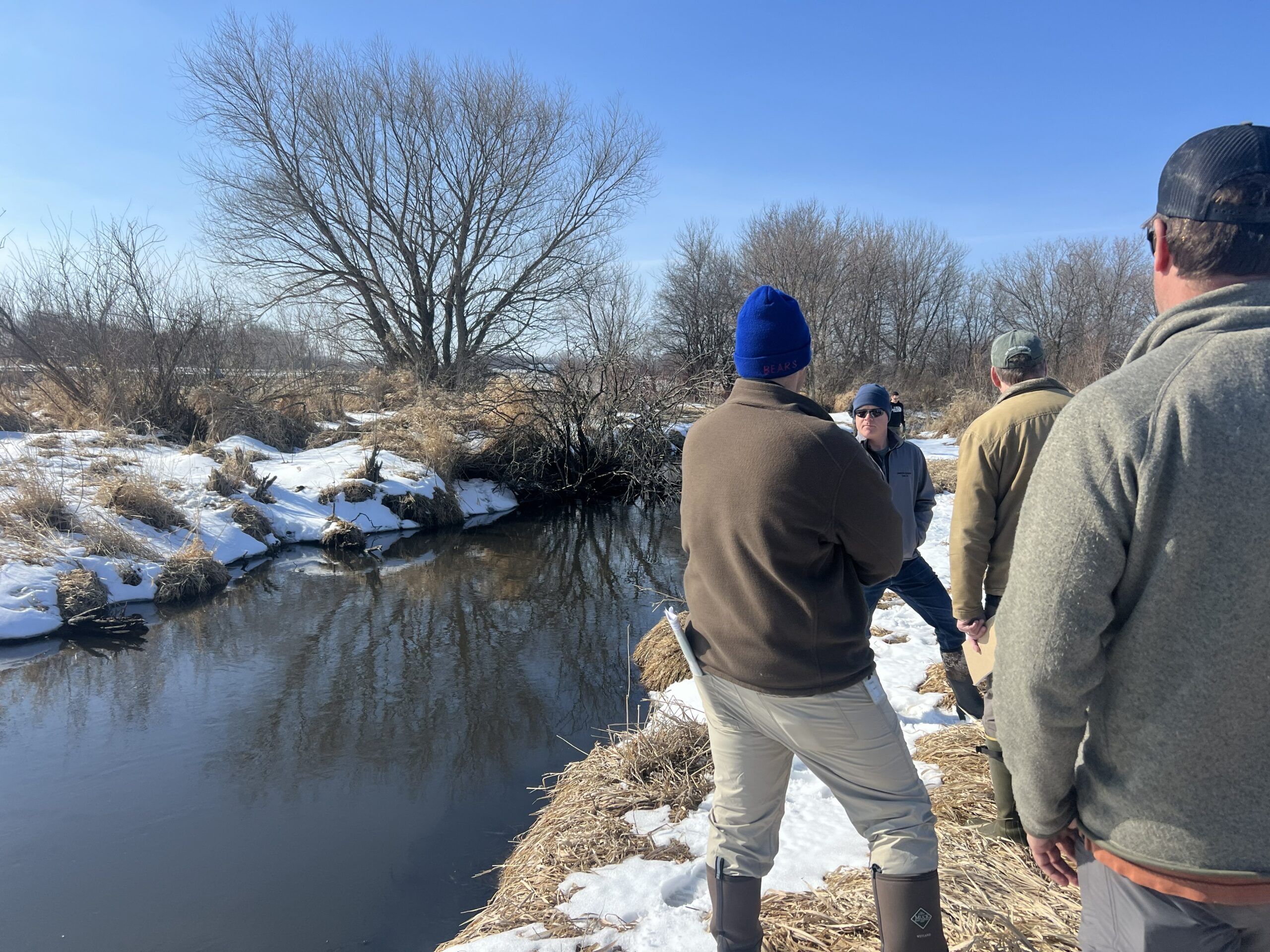
A few weeks ago, Minnesota Trout Unlimited and partners, including Dakota County and the Minnesota Department of Natural Resources, gathered streamside at South Creek in Farmington to kick off the design of a major habitat improvement project on this coldwater tributary to the Vermillion River – gem of a trout stream near the Twin Cities. The group spent the morning walking the stream, tracing the existing straightened channel, and imagining what this stream once looked like before it was straightened decades ago – and what it could look like in the future. With the recent acquisition of the adjacent floodplain by Dakota County for its greenway initiative, this project has the space to completely re-meander this section of the stream.
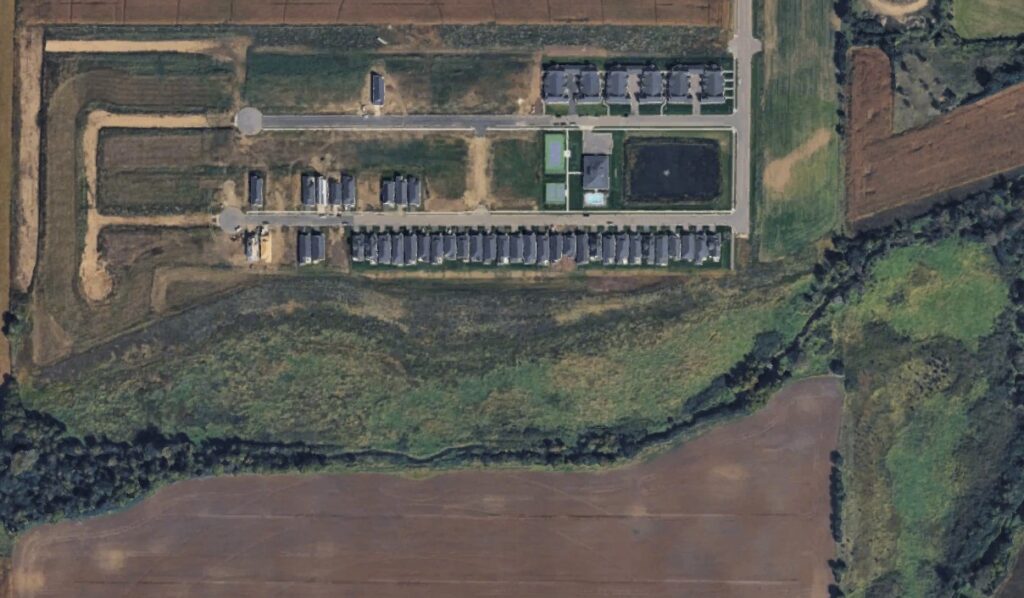
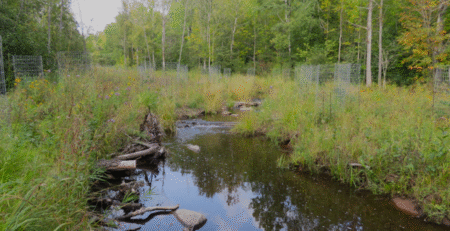
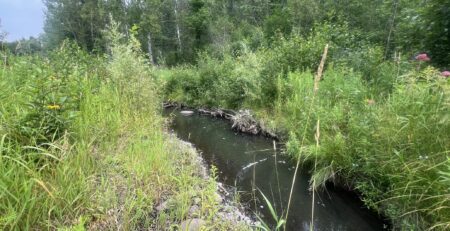
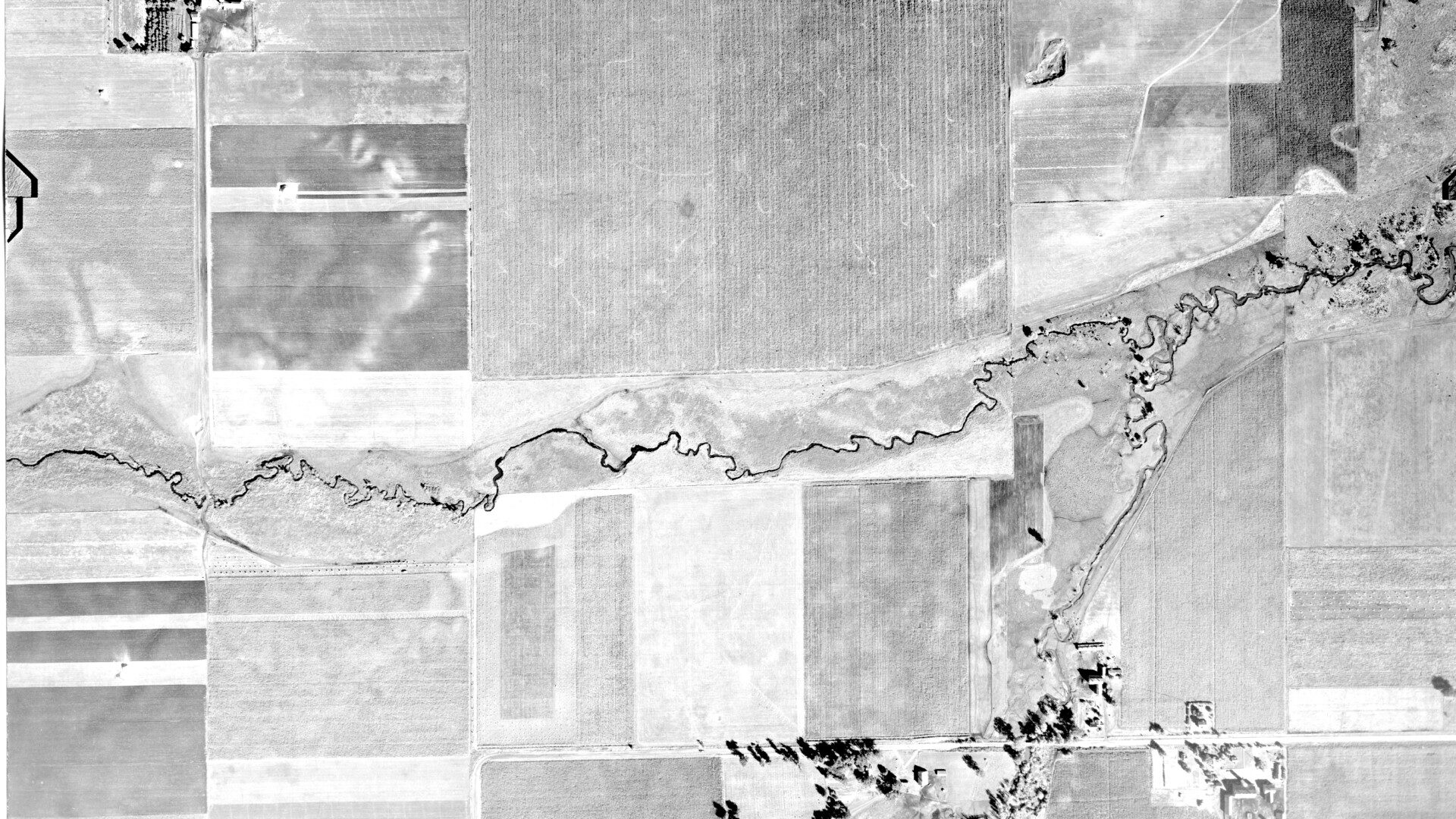
South Creek tells a familiar story in southeastern Minnesota. Historical ditching simplified the stream into a straight, disconnected channel, cutting it off from its floodplain and limiting its ability to support healthy trout populations. Old survey records and aerial imagery show just how much habitat complexity and sinuosity has been lost over time. Sinuosity, or how much a stream bends, is critical to stream health, helping slow water, reduce erosion, move sediments, and create the deep pools and varied habitat that trout need. This project aims to bring that complexity back.
The vision is to re-meander roughly 3,700 feet of channel into more than 5,000 feet of connected, functional stream, restoring bends, riffles, pools, and floodplain access. By putting the stream back up onto its historic floodplain and rebuilding natural channel form, the project will improve habitat for trout across all life stages while also reducing erosion and improving water quality.
During the site walk, conversations focused on the building blocks of good stream design: identifying bankfull indicators, selecting an appropriate channel type, discussing meander patterns, and thinking through where wood, riffles, and off-channel features can add habitat value. These conversations are so critical in the process and the bones of a strong, geomorphically sound and habitat-focused design.
Over the coming months, the project will move through iterative design phases, permitting, and public engagement, with construction anticipated in 2027, with professional engineering and oversight led by Keith Anderson of Beaver River Consulting. Like many of MNTU’s habitat projects, this effort is funded through the Lessard-Sam Outdoor Heritage Fund and built in close partnership with the DNR, Dakota County, and local stakeholders.