Minnesota Trout UnlimitedMinnesota Trout Unlimited
  • HOME
  • About
    • Chapters
      • Headwaters Chapter
      • Gitche Gumee Chapter
      • Twin Cities Chapter
      • Hiawatha Chapter
      • Win-Cres Chapter
    • Our Mission
    • Join MNTU
    • Contact Us
    • Help Support MNTU
  • NEWS
    • Blog
    • Events
    • Monthly Cast Newsletter
    • Trout Unlimited Minnesota Newsletter
  • HABITAT
  • EDUCATION
    • Education and Outreach
    • Trout in the Classroom
    • Fishing Skills Programs
    • Great Waters Fly Fishing Expo
    • Foster the Outdoors Program
    • T.U.N.E Camp
  • ADVOCACY
    • Agricultural Runoff
    • Data Centers
    • Feedlots
    • Neonics
    • Nitrates
    • Preventing Fish Kills
    • Public Waters
    • Sulfide Mining
  • FISHING
  • DONATE
  • HOME
  • About
    • Chapters
      • Headwaters Chapter
      • Gitche Gumee Chapter
      • Twin Cities Chapter
      • Hiawatha Chapter
      • Win-Cres Chapter
    • Our Mission
    • Join MNTU
    • Contact Us
    • Help Support MNTU
  • NEWS
    • Blog
    • Events
    • Monthly Cast Newsletter
    • Trout Unlimited Minnesota Newsletter
  • HABITAT
  • EDUCATION
    • Education and Outreach
    • Trout in the Classroom
    • Fishing Skills Programs
    • Great Waters Fly Fishing Expo
    • Foster the Outdoors Program
    • T.U.N.E Camp
  • ADVOCACY
    • Agricultural Runoff
    • Data Centers
    • Feedlots
    • Neonics
    • Nitrates
    • Preventing Fish Kills
    • Public Waters
    • Sulfide Mining
  • FISHING
  • DONATE

Bare soil to thriving native habitat: What happens after stream restoration

Jennifer Biederman - MNTU Habitat Director on August 11, 20252026-07-10T21:43:25+00:00
By Jennifer Biederman - MNTU Habitat Director on August 11, 2025

When a stream restoration project wraps up, the work on the ground is just beginning. During construction, streambanks are graded and soil is heavily disturbed throughout the project reach. In most cases, to restore the stream’s access to its floodplain we must grade back soil. This requires that most vegetation be cleared and that process temporarily leaves behind bare soil. Typically most of the Minnesota Department of Natural Resource’s (DNR) easement corridor we work on is excavated to increase flood resilience, usually 66 feet from center line on each side of the stream. This is necessary for reshaping the channel and improving stability, but it also creates the perfect opportunity to clear invasive, aggressive species from the river corridor and plant native, deep-rooted and bank-stabilizing plants.
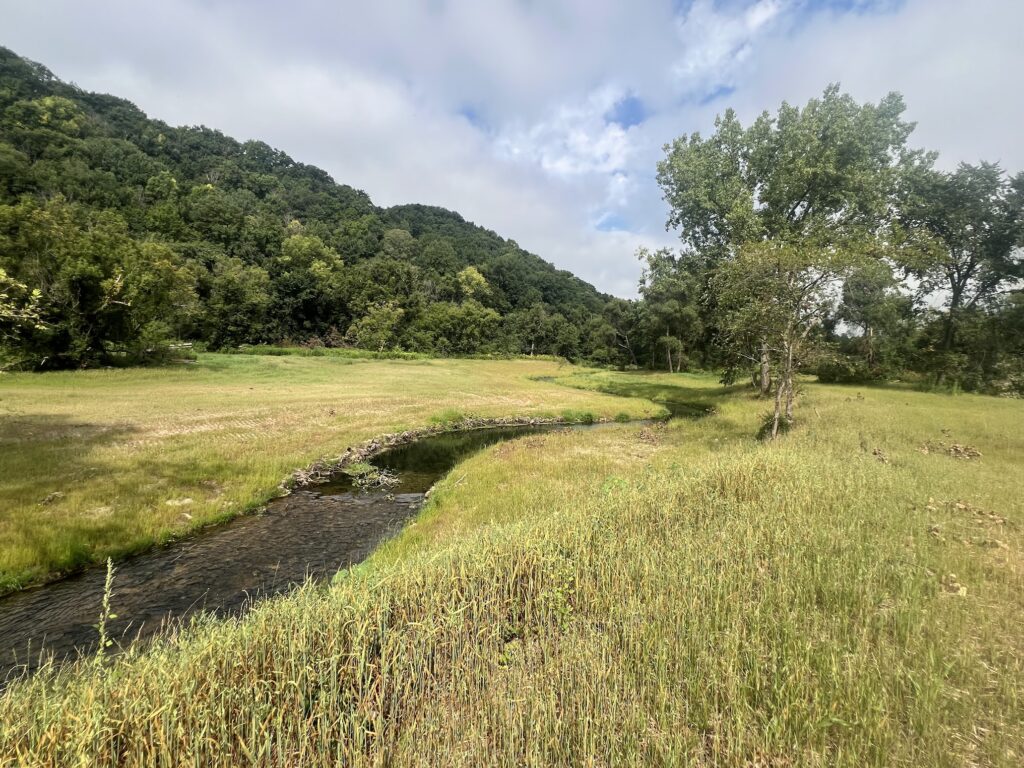
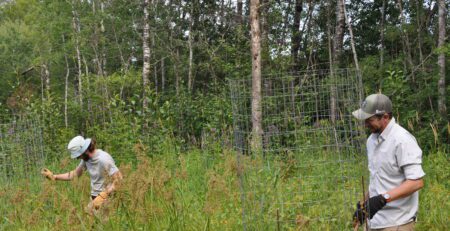
A 1,500-foot habitat restoration project was completed in July 2025 on Spring Creek in Wabasha County. A cover crop of annual oat and rye was planted to stabilize the bare soil. A native seed mix of native riparian grasses, sedges and flowers was also applied. The native plant community will require three years to establish after planting.


Often, degraded riparian corridors are dominated by weedy, invasive and aggressive plants that provide little ecological benefit. Restoration gives us a “blank slate” to replace those undesirable species with a carefully designed mix of native vegetation.


Immediately after construction, we stabilize the soil by planting a quick-growing cover crop, typically oats and/or rye. These fast germinators hold the soil in place and protect it from erosion while native plants take root. In addition, we seed a diverse mix of native grasses and wildflowers, chosen with input from the DNR and our restoration consultants to match local soils, hydrology and habitat needs.

Native plants grow slowly at first, focusing on root development. In year two, they begin to fill in and by year three, a diverse, resilient plant community is taking hold. Throughout this period, mowing and invasive species control are essential to give natives the sunlight and space they need. Our contractors stay on top of this with the guidance of our consultants and DNR.


The end result? Stabilized streambanks, improved water quality and rich habitat for trout, pollinators, birds and other wildlife, ensuring the long-term success of the restored stream.
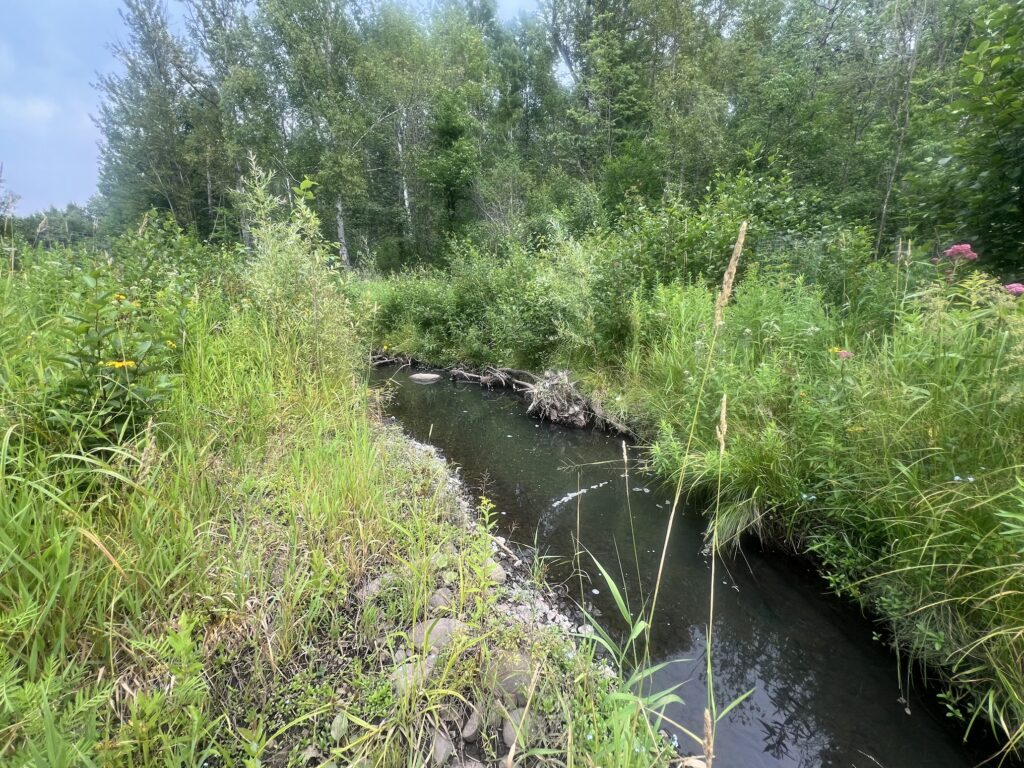
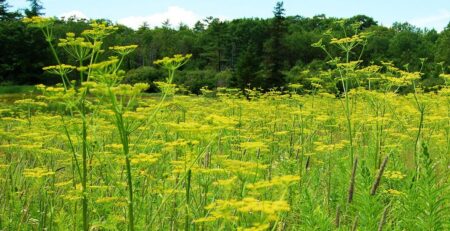
Habitat restoration on this section of Keene Creek in Hermantown took place in 2022. A cover crop was planted while the pictured thriving native plant community of sedges, grasses and flowers established itself.

Share this post

Facebook Twitter Email

Related Posts

Restoring a healthier stream: Your questions answered about the South Creek project

Minnesota Trout Unlimited is working to restore a 3,700-foot section of South Creek in Farmington. read more

Should anglers rethink catch and release in southeast Minnesota?

For many Trout Unlimited members, catch and release is less about management regulations and more about an ethos, or a... read more

Your questions answered about the South Branch Root River habitat restoration project

Minnesota Trout Unlimited is partnering to improve habitat, public access and long-term river health along a 3,000-foot section the... read more

Construction for Eagle Creek restoration begins in May 

Minnesota Trout Unlimited will begin a major habitat improvement project on Eagle Creek, one of the most unique and historically... read more

South Creek project kicks off 

Minnesota Trout Unlimited and partners kicked off the design of a major habitat improvement project on South Creek. read more

Restoring riparian forests for North Shore coldwater fisheries

Minnesota Trout Unlimited is undertaking a critical planting project to restore healthy forests within riparian corridors along the high-quality cold-water... read more

Bob Luck Eagle Creek Brook Trout

Planning underway for Eagle Creak habitat improvement

This spring, Minnesota Trout Unlimited will begin construction on a 2,000-foot trout stream habitat improvement project on Eagle Creek in... read more

The importance of pools as trout habitat in stream restoration

On a rainy afternoon a few months ago, I stopped at a newly constructed project on my way home to... read more

Moving the needle on fish passage in northeastern Minnesota

Fish passage is not always just about fish passage. A culvert replacement might start as a solution to a barrier... read more

Evaluating stream habitat designs across southeast Minnesota

Over the past few decades, Minnesota has made tremendous progress in restoring and enhancing its coldwater streams. read more

Categories

Recent Posts

  • The most impactful way to leave a legacy is the simplest
  • Restoring a healthier stream: Your questions answered about the South Creek project
  • Should anglers rethink catch and release in southeast Minnesota?
  • Lessons learned from Duluth’s Tischer Creek fish kill
  • Volunteer spotlight: Sally Noll

Chapters

  • Headwaters Chapter
  • Gitche Gumee Chapter
  • Twin Cities Chapter
  • Hiawatha Chapter
  • Win-Cres Chapter
Subscribe
   
Join MNTU
   
Make A Donation
Protect – Restore – Sustain

Find Your Chapter

  • Headwaters Chapter
  • Gitche Gumee Chapter
  • Twin Cities Chapter
  • Hiawatha Chapter
  • Win-Cres Chapter

Learn More

  • Recent News
  • Upcoming Events
  • Habitat Projects
  • Fishing Information
  • Contact Us

Get Involved

  • Join MNTU
  • Make a Donation
  • Monthly Cast Newsletter
  • Follow on Facebook
  • Follow on Instagram
© Copyright 2026 Minnesota Trout Unlimited. All Rights Reserved.
Minnesota Trout Unlimited is a 501(c)(3) organization.