Minnesota Trout Unlimited
  • HOME
  • ABOUT
    • Chapters
    • About
    • Join TU
    • Contact Us
    • How to Support Us
  • NEWS
    • Blog
    • Events
    • Monthly Enews
    • Trout Unlimited Minnesota
  • HABITAT
    • Visit Recent Projects
  • EDUCATION
    • Education and Outreach
    • Trout in the Classroom
    • Fishing Skills Programs
    • Great Waters Fly Fishing Expo
    • Foster the Outdoors Program
    • T.U.N.E Camp
  • ADVOCACY
    • Agricultural Runoff
    • Data Centers
    • Feedlots
    • Neonics
    • Nitrates
    • Preventing Fish Kills
    • Public Waters
    • Sulfide Mining
  • FISHING
  • DONATE
  • HOME
  • ABOUT
    • Chapters
    • About
    • Join TU
    • Contact Us
    • How to Support Us
  • NEWS
    • Blog
    • Events
    • Monthly Enews
    • Trout Unlimited Minnesota
  • HABITAT
    • Visit Recent Projects
  • EDUCATION
    • Education and Outreach
    • Trout in the Classroom
    • Fishing Skills Programs
    • Great Waters Fly Fishing Expo
    • Foster the Outdoors Program
    • T.U.N.E Camp
  • ADVOCACY
    • Agricultural Runoff
    • Data Centers
    • Feedlots
    • Neonics
    • Nitrates
    • Preventing Fish Kills
    • Public Waters
    • Sulfide Mining
  • FISHING
  • DONATE

Macro of the Month: Dark Hendrickson

Kristen Poppleton2025-04-07T20:12:30+00:00

April 2025

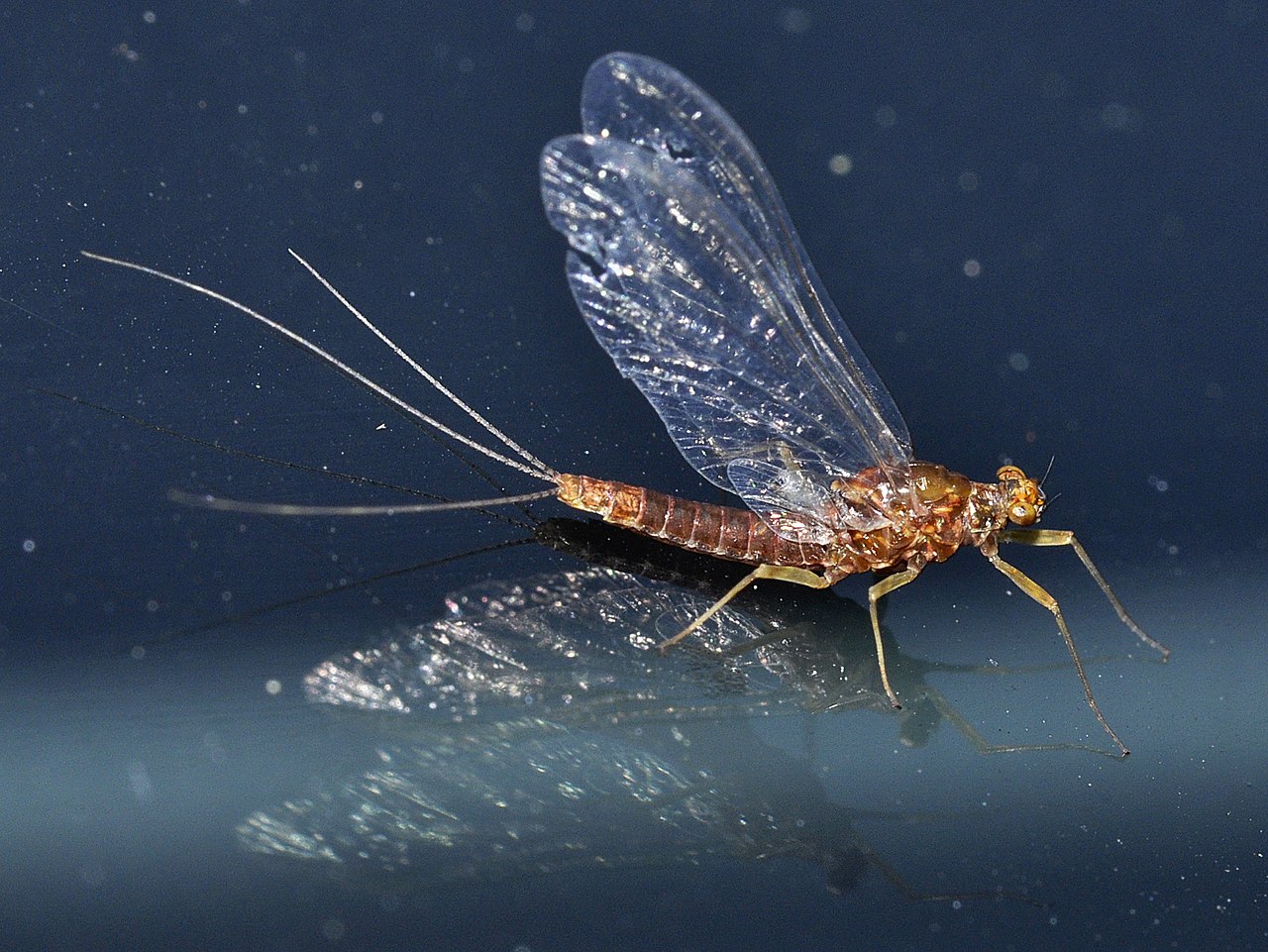
Every spring, as snowmelt charges the streams and the days grow longer, trout anglers eagerly await one of the season’s most iconic hatches: the Dark Hendrickson. This mayfly, known to entomologists as Ephemerella subvaria, helps kick off dry fly season and can offer some great surface action during the early part of the year.  This hatch is getting harder and harder to find in southeast Minnesota, but is still going strong in the non-agricultural areas of central and northern Minnesota.

The ecology of E. subvaria

Beyond the fly box, though, this coldwater aquatic macroinvertebrate is fascinating.  While the Hendrickson hatch happens on top of the water, most of this insect’s life is spent underwater. As a member of the Ephemerellidae family (commonly called the “spiny crawler” mayflies) E. subvaria nymphs are built for life clinging to the gravel and cobble of riffles in clean, cold streams.

The nymphs are squat and compact, adapted to resist fast currents. They graze on periphyton (algae and microorganisms that grow on submerged surfaces) and organic detritus, and they’re sensitive to pollution, making them excellent bioindicators of stream health (sufficient oxygen, cold temperatures, and minimal sedimentation or chemical pollution). Trout key in on them well before the hatch, making nymph imitations like the Pheasant Tail or a custom Hendrickson nymph pattern effective in early spring.

E. subvaria typically has a one-year life cycle. Nymphs grow slowly through the winter and emerge as adults in a tight window in April or early May, depending on latitude and elevation (earlier in southern Minnesota; later in the north). The hatch often follows the first warm days after snowmelt, with water temperatures in the mid-40s to low 50s °F sparking emergence.

When conditions align, Hendricksons emerge in a near-synchronized flush – a really cool adaptive measure that is meant to overwhelm predators and boost reproductive success. Males and females may look quite different on the water: males tend to be smaller and darker, while females are larger and lighter, often with a reddish-brown or tan coloration. Anglers may need to “match the sex,” particularly during selective feeding.

Emergence usually begins mid- to late-afternoon and can last a couple of weeks. Duns (the subimago stage) drift briefly on the surface before flying to nearby vegetation to molt into spinners (the imago stage). Within a day or two, the mating swarm begins, often in the early evening, culminating in spinner falls that can bring big trout up for gentle rises.

Like all mayflies, E. subvaria serves multiple roles in stream ecosystems. As grazers, their nymphs help regulate algal growth and break down organic material. As prey, they are critical food sources for trout, sculpins, and aquatic insects such as stoneflies and dragonfly larvae. Their emergence also feeds a host of terrestrial predators, from swallows to spiders. In the broader context of stream ecology, the Hendrickson hatch is part of a seasonal rhythm of energy transfer that moves biomass from benthic (bottom-dwelling) environments to the surface and eventually into terrestrial food webs.

Tips for the water

To capitalize on the Hendrickson hatch, watch for rising trout in the afternoon – from 1 pm until an hour or two before dusk – especially on sunny days following a cold snap. Nymphing beforehand can be very productive, especially in tailouts and riffle transitions.

To learn more strategy, there are numerous magazine articles, chapters of books, and online information about this legendary hatch.  One interesting aspect is that the abdomen color of duns vary across their range, so check your local fly shop. The male duns, often imitated with a Red Quill dry, are closer to a size #14 than a #12.  

Carry a range of patterns: parachute duns, Comparaduns, and spinner imitations in sizes 12–14. And don’t forget your emerger patterns – trout often key on struggling duns that can’t quite break free from their nymphal shucks.

Wet fly pattern:
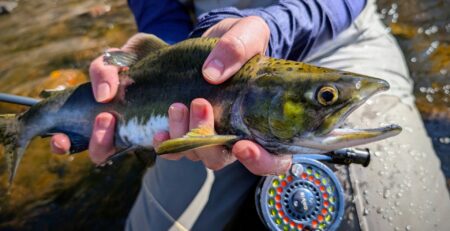
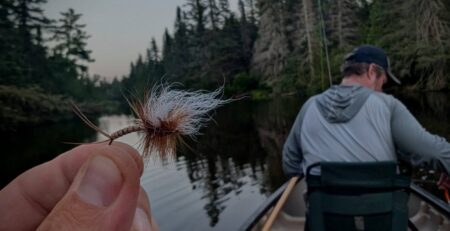
Dry fly pattern:

Share this post

Facebook Twitter LinkedIn Google + Email

Related Posts

The Importance of Pools as Trout Habitat in Stream Restoration

On a rainy afternoon a few months ago, I stopped at a newly constructed project on my way home to... read more

Moving the Needle on Fish Passage in Northeastern Minnesota

Fish passage is not always just about fish passage. A culvert replacement might start as a solution to a barrier... read more

Evaluating Stream Habitat Designs Across Southeast Minnesota

Over the past few decades, Minnesota has made tremendous progress in restoring and enhancing its coldwater streams. Across the state,... read more

September 2025 Macro of the Month: Beetles

https://youtu.be/rMyK2YhJgBo?si=ygo5lUwCMMap7eq6 All it takes is a little wind on the grass and you might be lucky enough to hear a little... read more

Why Toewood Is Showing Up Along Minnesota Trout Streams

By Dr. Jennifer Biederman Walk a recently restored bend of a trout stream anywhere in Minnesota and you may notice a... read more

Macroinvertebrate of the Month: Grasshoppers (a.k.a. “Hoppers”)

https://www.youtube.com/watch?si=brQSuflgREs0ySwV&ct=t%28EMAIL_CAMPAIGN_5_13_2024_15_51_COPY_01%29&v=iBe6QJsGE10&feature=youtu.be It’s August in Minnesota. The heat has settled in, and streamside vegetation hangs thick and heavy over the banks of... read more

July 2025 Macro of the Month: Ants on the Water and Trout on the Feed

https://youtu.be/-VuagsWHNM8?si=KpzgCgYfCFK9TXXQ One of my favorite surprises of summer trout fishing in Minnesota comes after a good soaking rain. When storms sweep... read more

Duluth’s Amity Creek Receives New Protection!

MNTU is proud to be a part of an effort to add the highest level of protections to over 1,100... read more

Habitat Director’s Report from the Field, July 2025

July is the heart of field season when it comes to carrying out stream restoration work across the state. Tackling... read more

MNTU’s barrier removal projects also benefit aquatic invertebrates

When most trout anglers think about culvert replacements, they rightly think of trout passage to critical habitat.   Undersized, perched, and... read more

Minnesota Trout Unlimited
  • Facebook
  • Instagram
  • YouTube
  • An 8-Year Look at the MNTU Education Program
  • Winter Fly Fishing in Minnesota’s Driftless
  • The Importance of Pools as Trout Habitat in Stream Restoration
  • What Happens to Aquatic Invertebrates as Winter Sets In?
  • Moving the Needle on Fish Passage in Northeastern Minnesota
  • 12,000 Eggs Delivered for Trout In The Classroom
  • November 2025 Macro of the Month- Northern Caddisflies
  • Evaluating Stream Habitat Designs Across Southeast Minnesota
  • Why I Became Involved With Minnesota Trout Unlimited
  • September 2025 Macro of the Month: Beetles
  • Trout in the Classroom: 19 Years and Growing
  • Action Alerts
  • Advocacy
  • Donations
  • Education
  • Fishing
  • Habitat
  • Legislation
  • Macro of the Month
  • News
  • Policy
  • Trout In The Classroom
  • Uncategorized

Send all correspondence to:

Minnesota Trout Unlimited

P.O. Box 845

Chanhassen, MN 55317

Join MNTU
Donate

© Copyright 2026 Minnesota Trout Unlimited. All Rights Reserved.