


Recent Projects
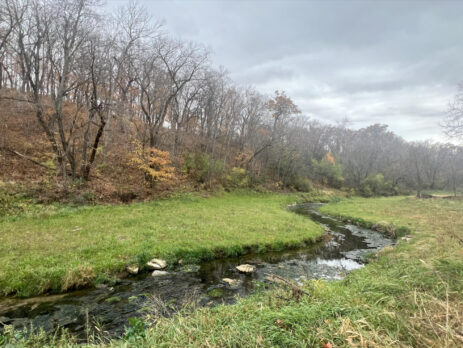
Rice Creek Habitat Restoration
Rice Creek Habitat Restoration
Hiawatha
This project aimed to restore floodplain access and increase in-stream fish and macroinvertebrate habitat along approximately 5,200 linear feet of Rice Creek, a designated trout stream in Fillmore County, MN.
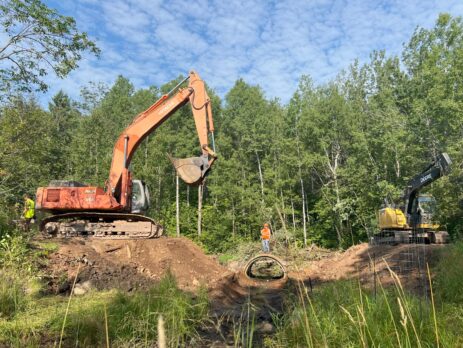
Keene Creek Fish Passage Project
Keene Creek Fish Passage Project
Gitche Gumee
MNTU partnered with the City of Hermantown to replace an undersized barrier culvert on Keene Creek with a properly sized pre-cast concrete arch culvert with headwall and wingwalls, reconnecting wild brook trout with 8,300-ft of habitat.
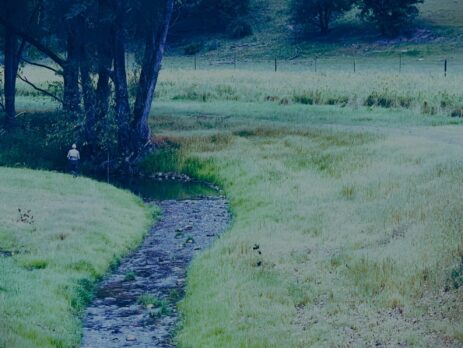
Cedar Valley Creek Stream Habitation Improvement Project
Cedar Valley Creek Stream Habitation Improvement Project
Win-Cres
The Cedar Valley Creek HI project was completed in early August 2025 , restoring approximately 5,200 feet of trout stream.
Recent Habitat News
MNTU Habitat E-news: February 2026
Spotlight: Eagle Creek Habitat Improvement Project (Savage, MN) This spring, Minnesota Trout Unlimited (MNTU) will begin construction on a 2,000-foot trout stream habitat improvement project on Eagle Creek in Savage, located between Highway 13 and 126th Street. The primary goal is to enhance habitat for native brook trout while improving overall...
The Importance of Pools as Trout Habitat in Stream Restoration
On a rainy afternoon a few months ago, I stopped at a newly constructed project on my way home to see how it was reacting to the higher flows. Walking the stream, in-particular, a section where a restored riffle curved into a nice deep pool with toewood tucked into the...
Moving the Needle on Fish Passage in Northeastern Minnesota
Fish passage is not always just about fish passage. A culvert replacement might start as a solution to a barrier in a watershed, but when MNTU gets involved, it becomes an opportunity to address habitat beyond the ability for a trout to get from point A to point B. When...
Evaluating Stream Habitat Designs Across Southeast Minnesota
Over the past few decades, Minnesota has made tremendous progress in restoring and enhancing its coldwater streams. Across the state, partnerships between Minnesota Trout Unlimited, the Minnesota Department of Natural Resources (MNDNR), local Soil and Water Conservation Districts, and others have brought new life to miles and miles of degraded...
Why Toewood Is Showing Up Along Minnesota Trout Streams
By Dr. Jennifer Biederman Walk a recently restored bend of a trout stream anywhere in Minnesota and you may notice a line of logs tucked tight to the bank, some with their rootwads still attached. That isn’t debris. It’s a feature called toewood, a design approach that uses large wood to...
What Happens After Stream Restoration? From Bare Soil to Cover Crops to Thriving Native Habitat
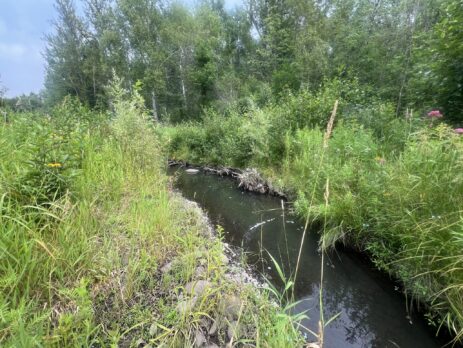
When a stream restoration project wraps up, the work on the ground is just beginning. During construction, streambanks are graded and soil is heavily disturbed throughout the project reach. In most cases, to restore the stream’s access to its floodplain we must grade back soil. This requires that most vegetation...
Duluth’s Amity Creek Receives New Protection!
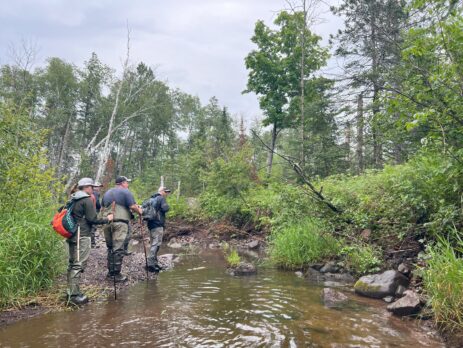
MNTU is proud to be a part of an effort to add the highest level of protections to over 1,100 acres of land in the City of Duluth now called the Lester–Amity–Hawk Ridge Natural Area as a part of Duluth’s Natural Area Program (DNAP). The area includes a large segment...
Habitat Director’s Report from the Field, July 2025
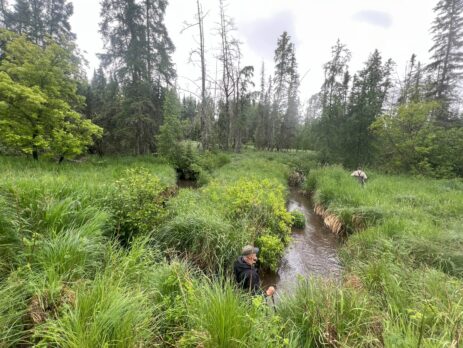
July is the heart of field season when it comes to carrying out stream restoration work across the state. Tackling riparian invasives, removing barriers to fish passage, scoping future projects, maintaining tree plantings, and implementing large scale instream habitat improvements - the staff, members, volunteers, and contractors of MNTU have...
MNTU’s barrier removal projects also benefit aquatic invertebrates
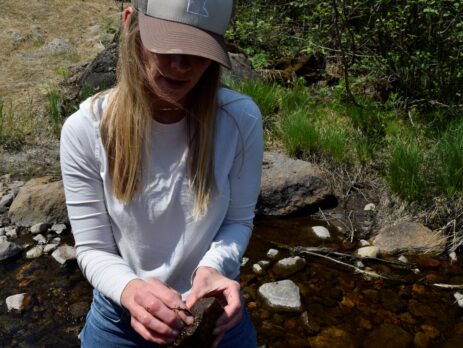
When most trout anglers think about culvert replacements, they rightly think of trout passage to critical habitat. Undersized, perched, and crumbling culverts block trout from reaching cold water refuges, spawning grounds, and more habitat. Removing those barriers is a huge benefit to trout fisheries. But often overlooked is the fact that...
Trees for Trout: An Update on MNTU’s Riparian Reforestation Project
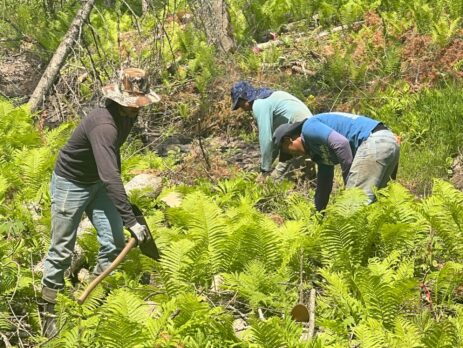
If you’ve fished along a trout stream in northeast Minnesota lately, you’ve probably noticed the standing dead spruce and balsam fir, open gaps in the forest canopy, and more brush than you’d expect in what used to be shaded, coniferous woods. It’s not just about aesthetics - it’s a coldwater...
MNTU Kicks Off the Field Season with a Riparian Forestry Project on the Sucker River
Minnesota Trout Unlimited is dedicated to preserving and improving the health of trout streams across the state. During these cold weeks of early spring, we’ve kicked off our first project of the year in the Sucker River watershed, a top-tier brook trout and steelhead stream east of Duluth. We're implementing...
No Hatch to Match? The Silent Decline of Aquatic Insects in Minnesota Trout Streams
If you’ve spent any time fishing the cold, clear streams of the Driftless Region, you know that matching the hatch is often the key to success. Hundreds of fly patterns exist to mimic the many species of mayflies, caddisflies, and stoneflies that emerge throughout the season. But in recent years,...
 Minnesota Trout Unlimited has a long history of working on habitat improvement projects across the state. From limestone streams in southeast Minnesota to the cascading streams of the North Shore, MNTU has been a leader in protecting, restoring and enhancing our coldwater resources.
In November 2008, Minnesota voters approved a constitutional amendment dedicating the proceeds of a new state sales tax to protecting and improving Minnesota’s natural resources. A competitive grant process followed and in March 2009 the Lessard-Sams Outdoor Heritage Council recommended full funding of Minnesota Trout Unlimited’s proposal to improve coldwater habitat in eleven streams around the state. Fifteen miles of stream work was completed with this first round of funding. This was the first step in a new phase of MNTU’s habitat work around the state. In the years that have followed, funding from the Outdoor Heritage Fund has enabled MNTU to complete habitat projects in dozens of locations around the state. Along with other federal, state and private funds, MNTU has been able to greatly expand our restoration work improving coldwater habitat and building climate resilient streams and watersheds around the state. MNTU is a responsible manager of grant funding and is proud that administrative costs average less than 5% of grant funding. On completed grants, only 4.2% of funding was utilized for TU administrative costs.
Minnesota Trout Unlimited and its five (formerly six as seen in the map below) TU chapters, with assistance from the MNDNR, has stabilized stream banks, improved water quality, and increased habitat for trout and non-game species. Minnesota TU members are honored to have been given this opportunity to improve Minnesota’s coldwater resources for all anglers and citizens. We are thankful to the Lessard-Sams Outdoor Heritage Council, the Minnesota Legislature and Minnesota taxpayers for partnering with us to improve our State’s resources.
When is a habitat project truly completed?
Because trout habitat work is done in areas at the edge of streams where flows rise and fall frequently and unpredictably, and where flooding over the banks is not uncommon, projects remain very vulnerable to erosion until riparian vegetation becomes well established. It typically takes two full growing seasons or more after the year of the initial installation for the growth of adequate vegetation root mass. For example, a project first installed or reported as having been “completed” in 2018 will not truly be complete until fall 2020 or later. Some erosion and settling of soil is inevitable for the first couple years. We plan for this and contract for two years of inspections and repair/maintenance. In addition, we count of floods to scour pools and move sediments in ways which gradually narrow and deepen streams. Thus even the best designed habitat projects will not be complete until 2 or 3 years (or more) after they are initially reported as having been completed.
Repair and Maintenance of Habitat Projects
Trout habitat work remains very vulnerable to erosion until riparian vegetation becomes well established. This usually takes two full growing seasons after the year of the initial installation work. Since some erosion and settling of soil is almost inevitable these first couple years, our contracts with both the design firm and the construction contractor require they periodically inspect and repair the project site for two full years after the year of installation (for example, 2018 installation means inspection and repairs through October 2020). Because habitat work in dynamic streams involves a fair degree of “art” in addition to science, sometimes flooding reveals where a design tweak is needed. This is another reason why our repair/maintenance provisions are this long, since floods typically occur every year and a half and well within our repair/maintenance performance period. If a flood reveals a design or installation shortcoming it too will be corrected as part of the repair/maintenance process.
Even the best designed and installed habitat work occasionally needs some maintenance or repair. In many parts of the state even a run of the mill flood can carry large logs and whole trees downstream for considerable distances. When these large logs and trees catch in a bend or other feature they can cause significant erosion and even blow out stream banks and their installed habitat. As the amount of improved habitat increases due to the work of MNDNR and TU the need for funding for regular maintenance will increase. Outdoor Heritage Fund dollars may not be available for this type of work, so securing other funding sources for either MNDNR or TU to make repairs remains an important need.
Bidding on MNTU project work
MNTU uses rigorous competitive bidding processes to select firms for design and construction work for each project. MNTU maintains lists of potentially qualified environmental design firms, construction contractors, and material suppliers but is always looking to expand the lists of potential bidders. Firms that wish to receive RFPs/bid packages for MNTU’s stream habitat projects can email MNTU’s Habitat Director, Jennifer Biederman, at: jennifer.biederman@mntu.org
How MNTU Restores and Enhances Trout Habitat
The goals of trout habitat improvement projects are to increase the carrying capacity and trout population of the streams, while also improving water quality, providing benefits to aquatic, terrestrial and avian wildlife, and increasing angling access and participation. The specific objectives, scope, and methods utilized vary by project site, but some fundamental concepts apply statewide:
- Restoring Access to the Floodplain
Floods unleash a huge amount of energy into stream channels. The habitat provided by stream banks and in-stream features can be damaged or destroyed unless the flood energy can be released outside the stream channel. Healthy streams do this by quickly dissipating most of the flood’s energy outside the stream channel on the stream’s floodplain. Most streams have become degraded over many decades and the stream beds are trapped between unnaturally tall, sheer and highly erodible banks which prevent rising waters from quickly spreading out onto the floodplain. This traps excessive energy within these too-high banks, which damages or “blows out” in-stream habitat. A key aspect of every project is removing and sloping back streamside sediments, opening up easy access to the floodplain.

- Designing Entire Reaches to Work with Flood Flows
Floods provide much of the energy which digs out and maintains pools. Projects are designed with two separate flows in mind – low/base flows in which in-stream habitat must function and flood flows which help create and/or maintain habitat, but which must be managed so excess energy is carried outside the stream channel. Bank sloping designs are developed from upstream to downstream, always keeping in mind that the stream’s power must go somewhere. If pressure is relieved on one bank, it may increase pressure on another area.
- Accounting for Sediment Loads
Streams do not just move water, they also move the material which they erode from their banks and bed. Every stream moves sediment, but the amount and size of this “sediment load” can vary greatly. Higher flows and floods can move larger sized material than base flows (rocks and cobble versus sand and silt). A properly sized stream channel moves sediment efficiently so that sediment is not deposited unnaturally in the stream reach (aggradation), and does not cut down too deeply into the stream bottom (degradation), causing the streambanks to rise and reducing access to the floodplain. We now pay closer attention to sediments loads and adjust channel dimensions to maintain streambed substrates free of excessive sand and silt.
- Addressing a Variety of Habitats
Trout need a mixture of different habitat, including spawning habitat, juvenile rearing habitat, food production areas, cover habitat (feeding, resting and escape) and overwintering habitat. The ability to move between these different types of habitats at important times (daily, seasonally, etc.) is important and why restoring or improving the connectedness of stream habitats is a key component of some projects.
- Cover Habitat
Bank cover and in-stream cover habitat are central features of every habitat project. Restoring floodplain access, designing for flood flows, and managing sediment movement are all essential to keep good cover habitat functioning well. Cover habitat comes in many varieties, including deep water, undercut banks, overhead cover structures (logs, lumber or rock) and mid-stream cover rocks, cover logs, etc. Different varieties work more or less well depending upon specific site conditions.