
Gear up for North Shore steelhead
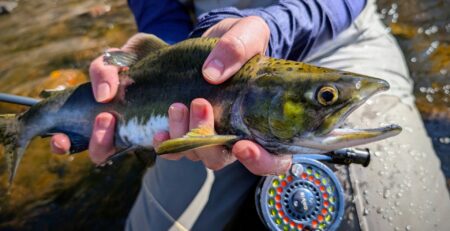
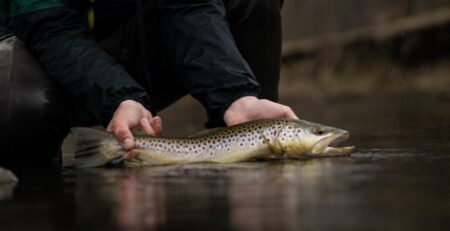
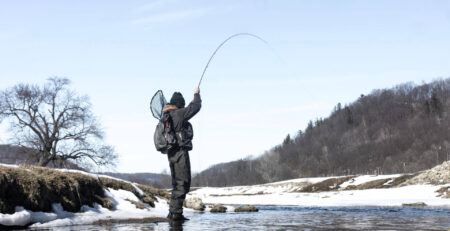
Minnesota is full of different varieties of trout that thrive in our coldwater fisheries. From the browns and rainbows in the Driftless Region to the native brookies along the North Shore as well as lake trout and splake in our northern trout lakes, and many in between. We are lucky to live in a state with such a variety of fishing opportunities. In the spring, however, it is difficult to skip over one of my personal favorite fish to catch, the steelhead.
When I first learned about steelhead and tried my luck at catching one of these elusive fish it seemed daunting. Yes, they are still trout, and they are in the river, but the cold, stained, fast-moving water made everything seem so much more difficult. Not to mention the size and strength of these fish! If you are new to steelhead fishing there can be a steep learning curve and the trout gear you may typically bring to the river will most likely not work well for steelhead. You will need to go up a few sizes for all of your gear. Larger flies, hooks, weight, tippet, leader, line, rod, reel and yes even your net. So here is a list of gear that you will need on your next steelheading trip!
North Shore Steelhead Gear
Waders
Anything that keeps you dry will work well on the north shore of Lake Superior. Bootfoot waders will keep you warmer, but stockingfoot waders with rubber soles and studs will give you the most traction and be the most comfortable getting to and from the river. Felt-soled wading boots are legal in Minnesota, but because there is a risk of spreading invasive species they are not recommended. If you prefer felt-soled boots, please remember to decontaminate them before reusing them in a different body of water.
Pack
There are many different types of ways to get your gear down to the water. Vests, hip packs, sling packs, backpacks, fanny packs, etc. Everyone has their own preference. Just make sure to have something to organize your fishing gear while having room for extra layers, drinks, snacks, your fishing license and more.
Rod and Reel
You will want a 7-wt. or 8-wt. fly rod that is 9-ft. to 10-ft. in length. Pair that rod up with an equivalent 7-wt. or 8-wt. fly reel that has a smooth drag system and retrieves line relatively quickly. You can often find 9-ft., 8-wt. rod and reel combos at your local fly shop that would be great for steelhead and can double as a rod for bass and pike in the summer.
Line
There are two fairly distinct forms of steelhead fishing that you will see on the north shore. Indicator fishing (using floating fly line and an indicator) and tight lining (using ~20lb mono fishing line and a slinky sinker).
Each style of fishing has its pros and cons depending on the flow and depth of water you are fishing. As long as you are fishing ethically and legally, your preferred method is up to you.
Leader and Tippet
A 0x tapered leader is always a good starting point. At the end of your leader, tie on a small ant swivel. You can then choose your preferred tippet based on the conditions. In clear water 1x or 2x fluorocarbon tippet works well, but many of our North Shore rivers are stained with tannins. In dirty water and high water conditions using a high quality mono can work just as well.
Indicators
If you are going to fish with a fly line, you will want to have some strike indicators. There are a lot of different options, but having a variety for different scenarios is a good idea. You can learn more about fly fishing indicators from a previous article.
Split Shot
You will need some type of weight to get your fly close to the bottom of the river. It’s good to have a few different sizes to adjust for different situations. Remember to use a lead-free split shot if you can.
Flies
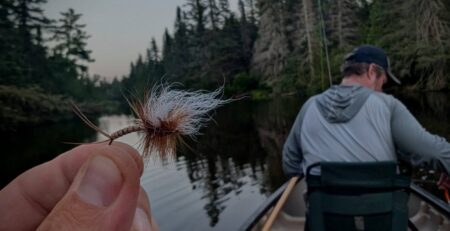
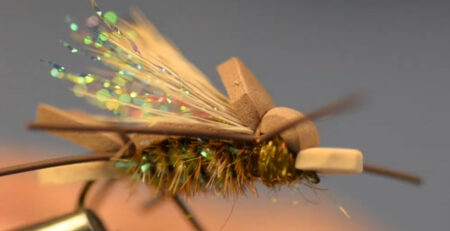
While most aspects of steelhead fishing are more difficult than trout fishing, choosing your fly is often where things get simplified. Egg patterns are the primary fly choice for the majority of steelhead fishing. Once the water warms up though you can use nearly any stonefly, nymph, or streamer pattern in your box (as long as your hook is sturdy enough). Remember you can only use one fly when fishing for steelhead!
Net
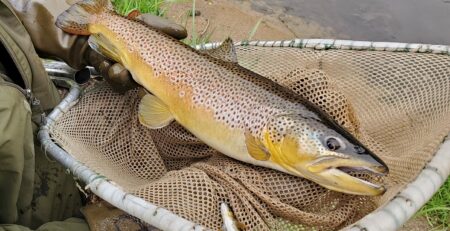
It is extremely important to have a net that can handle a full-grown steelhead. Some steelhead on the North Shore can get up to 30 inches or bigger. A standard trout net simply won’t work and can possibly do more harm than good.
Clothes
Warm clothes, long underwear, wool socks, hand and toe warmers and a rain jacket, are great options to help you stay warm, dry and comfortable during a cold spring day on the North Shore.
Miscellaneous
A wading staff or trekking pole can be useful when getting to and from the river as well as crossing. Polarized sunglasses will help you navigate the river safely when crossing as well as protecting your eyes when casting. Lastly, don’t forget your fishing license and trout stamp!
Leave It Better Than You Found It
Steelhead fishing on the North Shore is a challenging yet rewarding experience, but it requires us to be prepared both for the adventure and for the protection of our resources. To ensure these fisheries thrive for future generations, remember to practice effective catch and release by keeping fish wet and in the water as much as possible. Additionally, help maintain the environment by packing out any trash (including discarded fishing line, yarn, hooks and split shot) and always show respect to fellow anglers by providing plenty of space as you move along the river.