
Should anglers rethink catch and release in southeast Minnesota?
This article was originally published in our June 2026 issue of Trout Unlimited Minnesota.
When I first joined Trout Unlimited years ago, it didn’t take long to pick up on an expectation I hadn’t fully appreciated growing up fishing in the Driftless Area: trout were meant to be released. So, I kept relatively quiet about the fact that one of my favorite breakfasts in the world is a freshly pan-fried brown trout pulled from the stream that runs behind my house. To this day, when my twin sister comes home from Chicago to visit, it’s still her most requested meal. The slight tension between catch-and-release ethics and the role harvest can play in healthy fisheries management in a place like the Driftless is something I’ve thought a lot about over the years as a freshwater biologist.
For many Trout Unlimited members, catch and release is less about management regulations and more about an ethos, or a conservation-minded culture (and what draws many of us to this organization). Releasing a trout often reflects a sincere respect for the resource and an admirable desire to protect these often-sensitive fisheries for future generations. In many trout waters, especially where populations are limited or fragile, this is the best mindset to sustain a healthy, robust trout population.
However, consider the case that southeast Minnesota’s Driftless streams are different, at least when it comes to the harvest of brown trout.
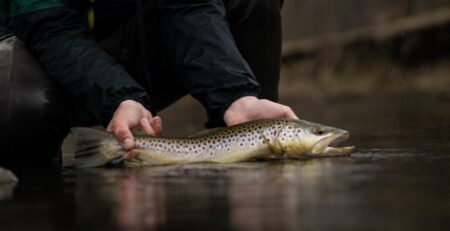
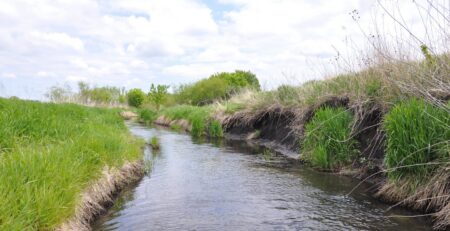
The streams in the Driftless are highly spring-fed systems and many are incredibly productive. In stream after stream, brown trout reproduce naturally in large numbers – and this is supported by long-term monitoring data by the Minnesota Department of Natural Resources (DNR). According to DNR fisheries staff, despite being a popular destination for fishing, angler harvest has little measurable impact on most southeast Minnesota trout populations because these streams simply produce so many fish and relatively few anglers choose to keep what they catch. In much of southeast Minnesota, keeping a few brown trout is indeed sustainable and may even align with broader fisheries goals.
Why is the Driftless Area different?
Like most places, many trout anglers bring the mindset of catch and release when fishing the Driftless, and many simply are not aware of how these streams function on a different ecological level than those in other parts of the state and regions where trout exist.
In northeast Minnesota, for example, trout populations are often naturally smaller and more vulnerable. Because of food sources and water temperature, trout may grow more slowly. Also, habitat can be more limited and, therefore, harvest can have greater impacts on population size. Up north, catch and release of stream-dwelling trout is probably the best approach.
In contrast, Driftless streams are uniquely fertile environments, largely due to the mineral-rich water from the Karst limestone geology that supports a healthy food chain, including aquatic macroinvertebrates. Brown trout grow quickly, reproduce efficiently and experience relatively short lifespans. But as DNR fisheries staff would likely remind anglers: releasing every 10-inch brown trout this year does not automatically create a stream full of 16-inch trout next year.
In many southeast Minnesota streams, trout populations are so abundant that the bigger issue becomes competition, especially among brown trout in the 8-to-12-inch range.
The “too many small fish” problem
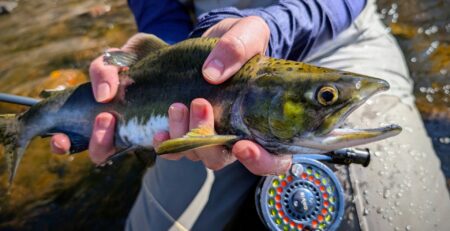
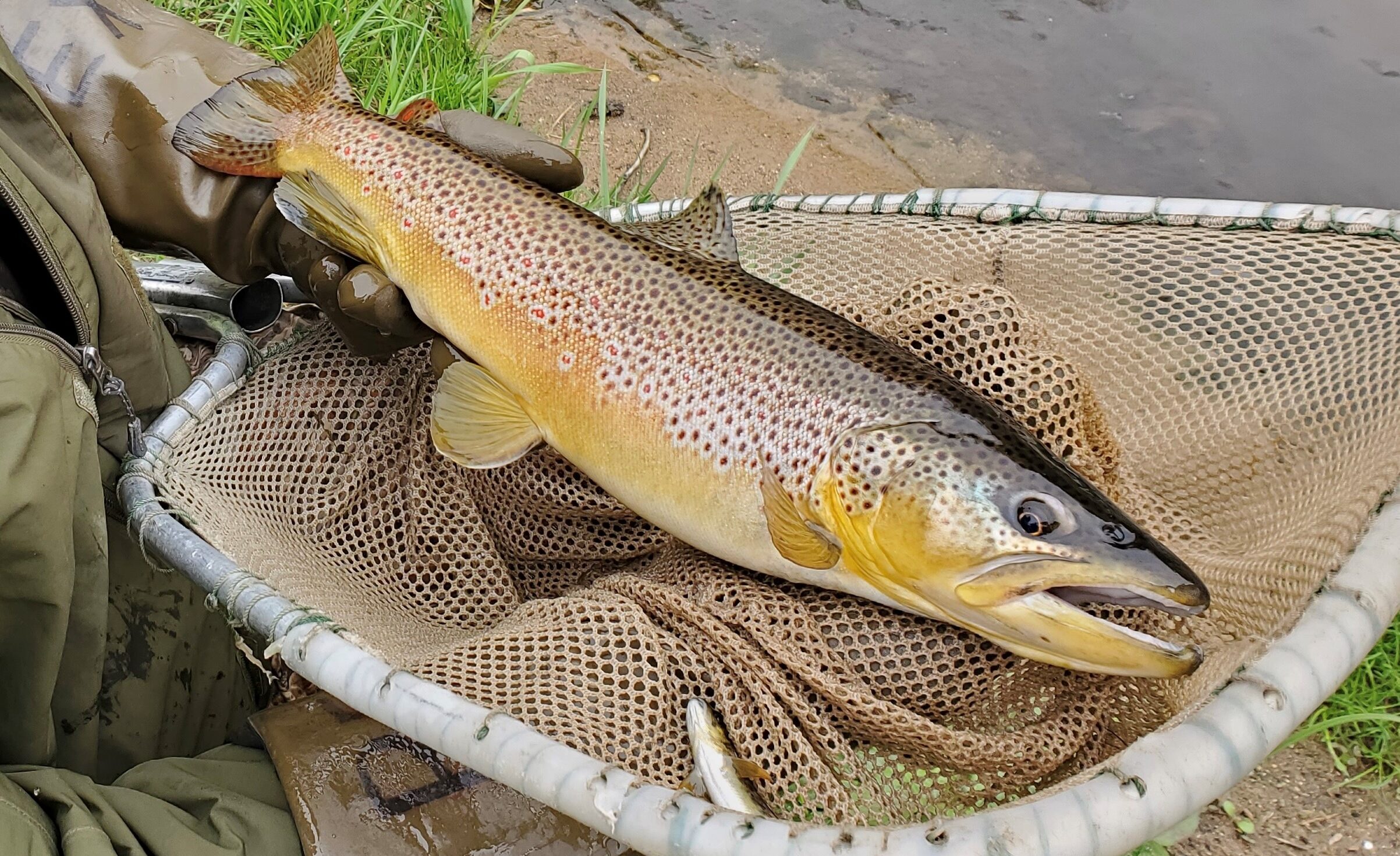
When talking to anglers in the Drfitless, they often marvel at observing and catching so many fish, but lament that most of them were under 10 inches. Biologists sometimes describe these situations as “bottlenecks.” Streams may contain very high numbers of trout, but comparatively fewer larger fish. The fish that are there may be less robust, or skinny, which is noticeable when the head is relatively long compared to the body. There is only so much high-quality habitat, food and territory available, and trout compete for all three. That’s why some fisheries staff encourage anglers to think selectively about harvest.
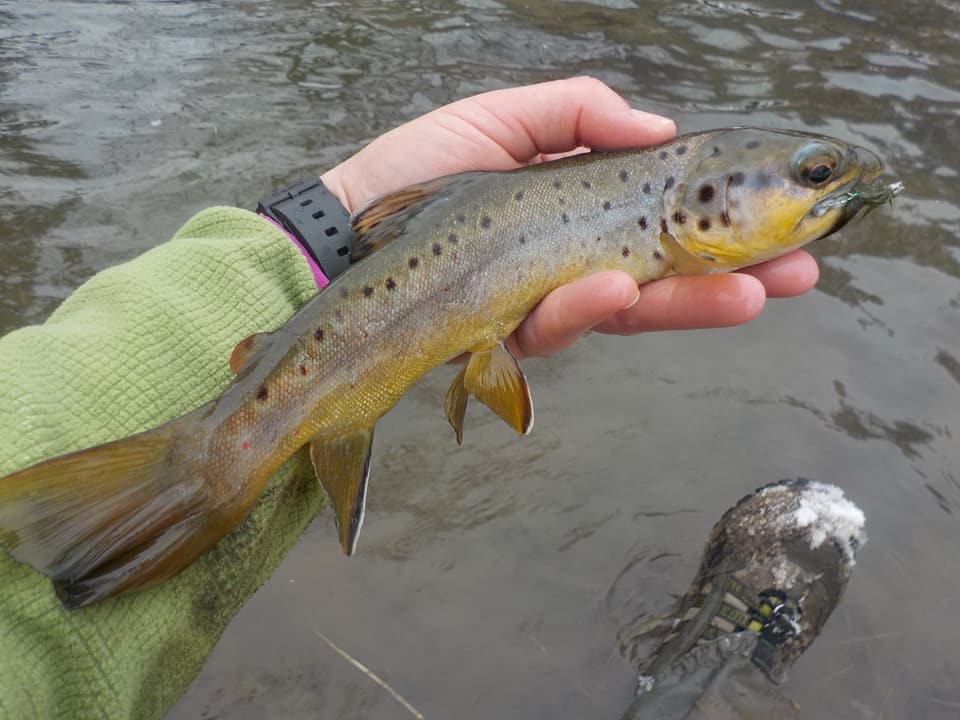
Keeping a few smaller brown trout from an overcrowded stream may slightly reduce competition among fish in that size class. Meanwhile, releasing larger brown trout, those fish that have already survived several years of competition and predation, can help preserve higher quality angling opportunities.
Importantly, DNR staff are careful not to oversell this concept. As Vaughn Snook, assistant area fisheries manager at the DNR’s Lanesboro office, put it, “It’s fantasy to think anglers can be used as a management tool” capable of dramatically reshaping trout populations through harvest alone. But selective harvest can still fit within the biology of these highly productive systems and for the trout anglers that have secretly been yearning to indulge on a freshly grilled, wild-caught trout, there is no shame or guilt to be had!
Brook trout and brown trout
Harvest discussions are even more interesting in streams where brook trout and brown trout overlap. Brook trout are Minnesota’s only native stream trout, while brown trout are an introduced species that thrive in Driftless streams. Browns are highly adaptable and often dominate the best habitat. In some waters, they can place pressure on brook trout populations through competition for food and space.
Because of that, anglers sometimes ask: Can harvesting brown trout help out the brook trout?
The answer is: potentially, in certain situations, but probably not at a scale large enough to dramatically alter stream dynamics on its own. And therein lies another challenge: culture.
Many anglers enthusiastically support brook trout conservation in theory, but relatively few consistently harvest brown trout. Snook, the assistant area fisheries manager, joked that after asking anglers how many brown trout they harvested to “help the brook trout,” the answer was usually the same: none. The ethic of catch and release runs wide and deep in the trout community, and even in streams where harvest is biologically sustainable. But despite this, perhaps local chapters could work with local DNR Fisheries staff to identify such streams where brookies might benefit from brown trout harvest and organize educational campaigns for local anglers or post signs with clear species identification and a call to action to consider harvesting browns.
Conservation includes harvest
To me, as both a trout angler and aquatic biologist, this may be the most important takeaway.
Conservation is not defined by whether every fish gets released. Conservation means understanding the resource and making informed decisions based on the ecology of a particular place. In southeast Minnesota, trout streams are resilient and extraordinarily productive. Responsible harvest of brown trout is compatible with that reality.
For anglers interested in trying selective harvest, fisheries staff often recommend a simple approach:
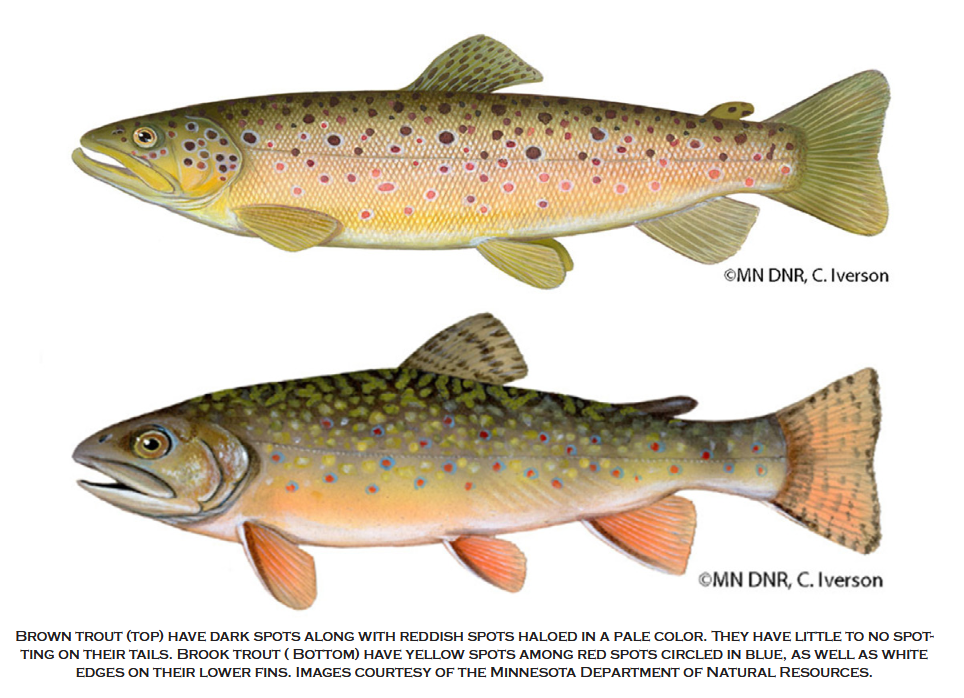
- Consider keeping a few abundant 9-to-12-inch brown trout from productive streams. Be sure you can tell brookies apart from browns! (See figures).
- Consider releasing larger fish that represent older age classes.
- Follow regulations carefully, especially on streams with protected slots or catch-and-release rules.
- If you want to know if there are particular streams where harvest is more or less recommended, contact your local DNR fisheries office.
- Most importantly, use what you keep.
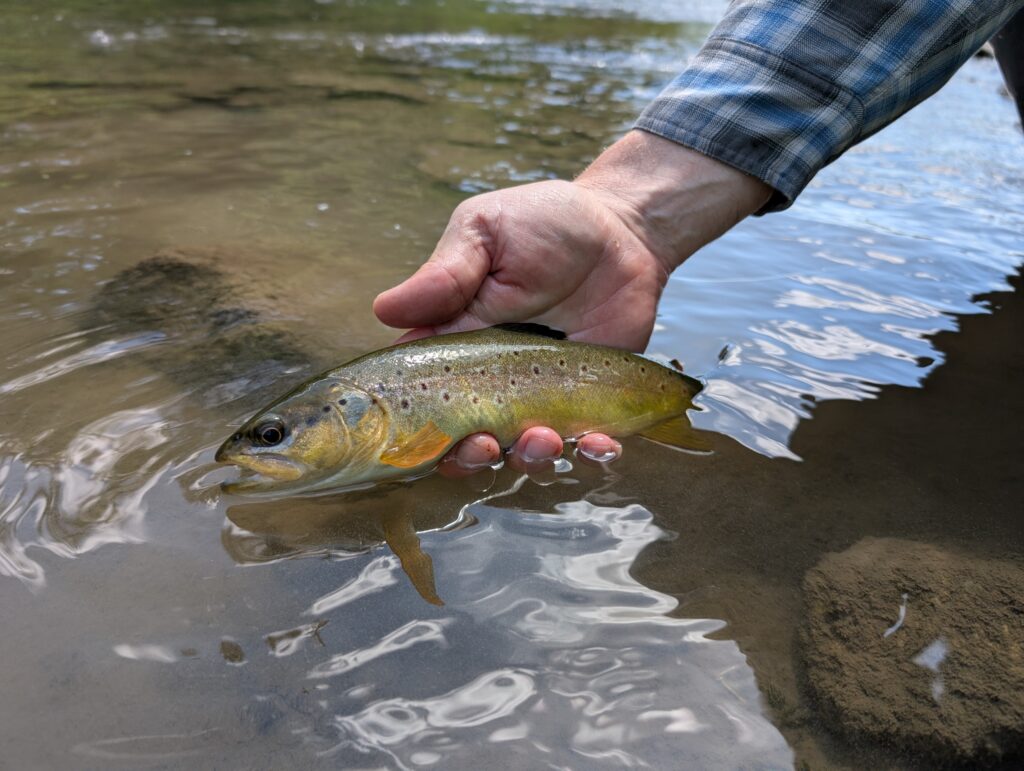
And yes, trout are excellent table fare. (Stay tuned for some recipes in upcoming MNTU newsletters).
For an amazing angling community built around conservation, it may feel strange to say it out loud, but perhaps it shouldn’t: Sometimes the most “natural” thing an angler can do in a productive Driftless trout stream is bring a couple fish home for dinner!
Special thanks to Minnesota Department of Natural Resources staff in assisting with this article, especially staff from the Lanesboro office, including Vaugn Snook, assistant fisheries supervisor; Melissa Wagner, fisheries supervisor; Dusty Hoffman, stream habitat specialist; and Brian Beyerl, fisheries specialist.