
Mousing at night for fall browns
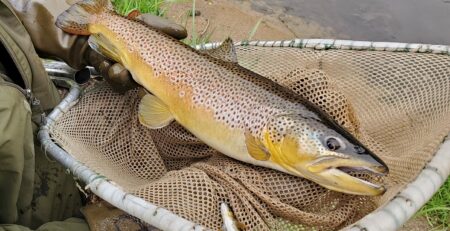
In addition to fly fishing the Hex hatch, which I wrote about last month, fishing with mouse patterns can be one of your best tactics to catch the fish of a lifetime!
Our days in Minnesota are starting to get shorter and our nights longer. Many of us are still trying to soak up as much sun as possible before the next inevitable winter when the trout rods get packed away, but if you embrace the darkness, you may find some of the biggest trout in the river!
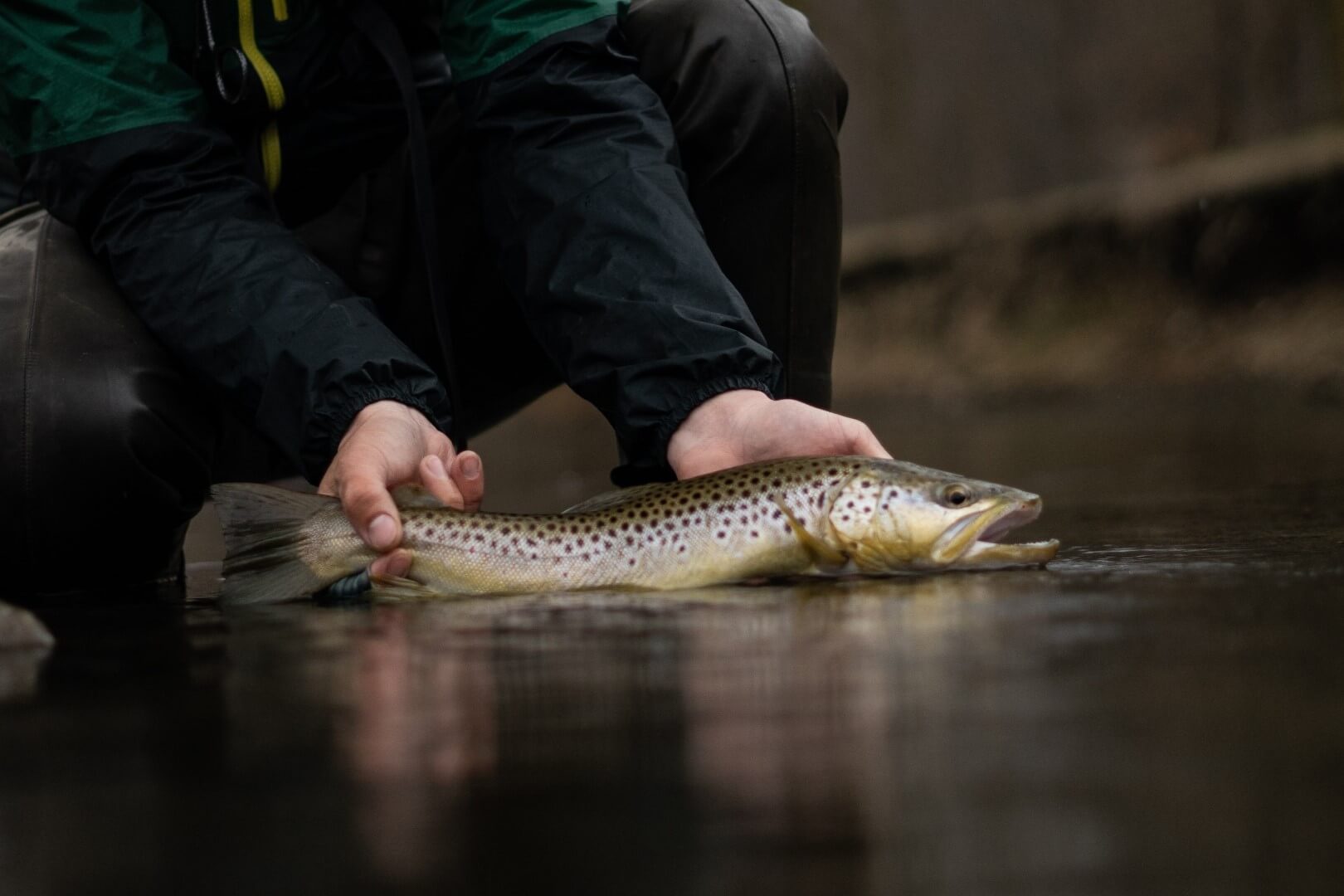
Late August and September are prime times for night mousing. As the fall approaches, these large brown trout shift behaviors and come out from those deep snags and undercut banks to feed in surprisingly shallow water.
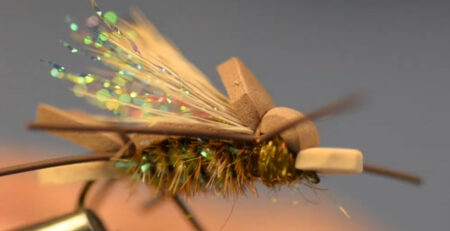
Skittering a high-floating deer-hair mouse can be one of the most effective ways to land these night-time monsters.
Safety First
Wading in the daytime can have its risks, let alone fishing in the darkness. Make sure you have a headlamp with a red light. The red light is much better than a white light at keeping your night vision. You can turn on your red light when tying knots or when wading to a new spot. Fishing with a buddy is generally a good idea as it can be beneficial in keeping you safe.
Fishing a familiar area is also a good option. At the very least, consider showing up early and scouting out ideal wading areas and casting lanes.
Gear Setup
Leave your delicate 3-weight fly rod and 6X tippet at home. You will need a heavy enough rod to turn over bulky deer hair or rabbit bodied flies. I would recommend a 9-foot 6-weight or 7-weight, but a 5-weight can work if that’s your only option.
Load up your favorite reel with a weight-forward floating fly line and a stout leader. You can purchase a tapered leader, but I prefer building my own with a 1-foot section of 25-pound mono and 4-to-5-foot of 12-poound mono.
This is all a very similar setup to bass fishing, so if you are already rigged up for some summer smallies you have a head start on rigging for mousing.
Techniques
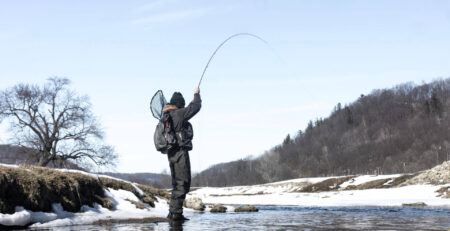
Mouse fishing doesn’t rely on delicate casting. Instead, it focuses on creating a noticeable surface disturbance, or ‘V-wake,’ that allows trout to track and locate the fly in the dark. Cast as close to the far bank or towards a log jam (ideally downstream at a 45-degree angle). As soon as your fly hits the water, move it slowly and steadily by making a long strip with your left hand (if you are right handed) then move your rod tip to keep your fly moving as you reach up to grab the fly line again. Every once in a while you can pause your fly and wait. You will often hear a splash or some sort of surface disturbance. Make sure you wait for the weight of the fish, then make a strip set or sweep the rod horizontally if you are already at the end of your last strip.
Flies
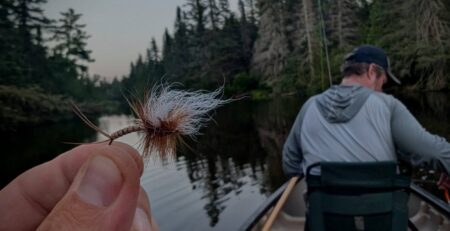
I enjoy tying flies, and I don’t enjoy losing flies in trees, especially if it is one that took a long time to tie. Adding the obvious challenges of fishing in the dark and you may understand that a fancy super realistic mouse pattern may not be as useful as one that you can tie up quickly, has a good action that floats high and creates a visible wake on the water’s surface. Some of my favorite patterns are the Morrish Mouse, the Master Splinter Mouse, and even a brown Dahlburg Diver (if I’ve scouted out my casting lanes).
Submit Your Photos
Did you catch a big fish mousing? Let us know. We’d love to see it! Send us an email andee.erickson@mntu.org with your recent mousing adventure.