

Feedlots
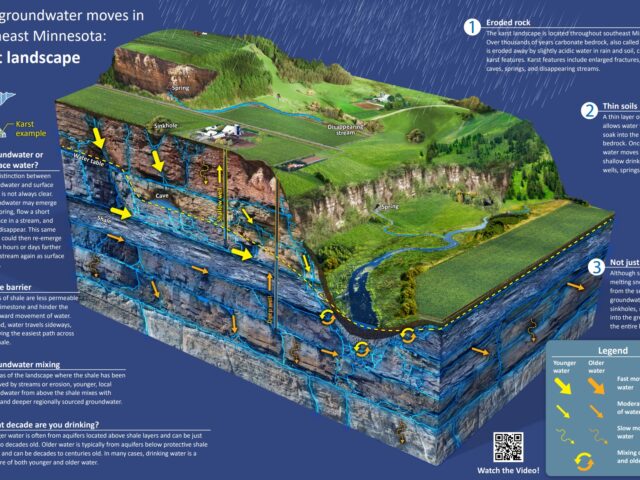
Livestock feedlot operations are polluting both surface waters and groundwater. The risk of water pollution is especially high in the “karst” geology which makes southeast Minnesota’s Driftless area such a phenomenal trout mecca. This karst region has porous bedrock close to the surface which creates the large, cold springs which in turn produce the amazing spring creeks concentrated here. Unfortunately, the porous bedrock also allows contaminants on the surface to easily reach this groundwater and our beloved trout streams.
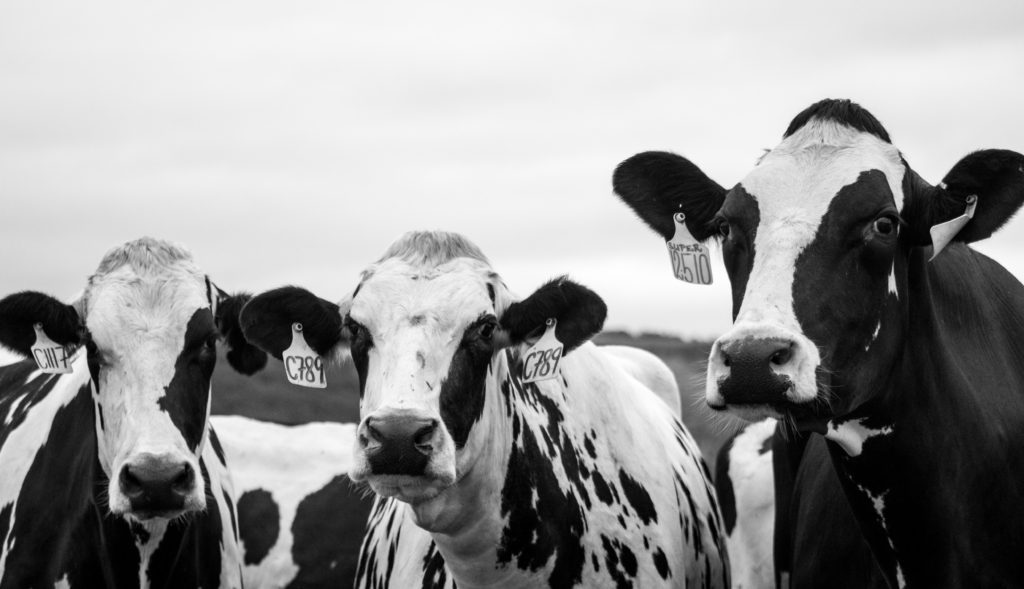
A livestock feedlot is a type of animal feeding operation used in intensive animal farming for finishing livestock, including beef cattle, swine, sheep, turkeys, and chickens prior to slaughter. Large feedlots are called “concentrated animal feeding operations” or “CAFOs”. Feedlots are used to increase the amount of meat each animal produces as quickly as possible. Animals confined in feedlots put on weight more quickly than pastured animals and allow a farm to raise more animals.
The Minnesota Pollution Control Agency (MPCA) regulates the collection, transportation, storage, processing and disposal of animal manure. It has developed feedlot rules which apply to most aspects of livestock management including the location, design, construction, operation and management of feedlots and manure handling facilities. Only CAFOs with 1,000 or more “animal units” need a permit.
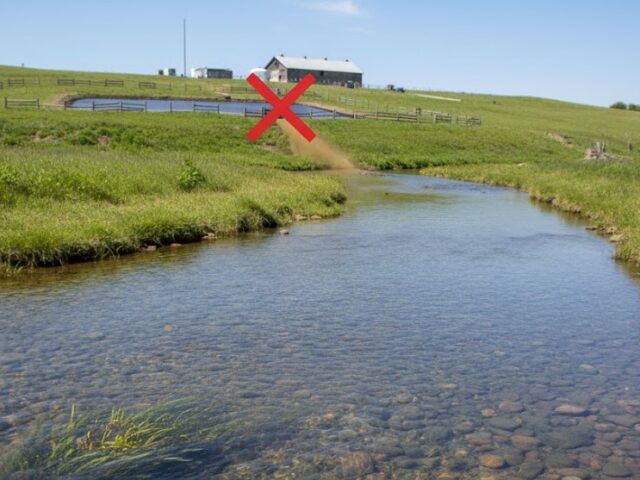
Manure contains a variety of nutrients, including Nitrogen which is converted to other forms such as nitrates and ammonium, when it interacts with soil micro organisms. When manure is applied and there is sudden rain-fall event, the manure washes directly into streams leading to oxygen depletion and fish kills. Manure has the capability to kill fish (and other aquatic life) because of potentially high concentrations of ammonia and/or heavy metals, and/or elevated Biological Oxygen Demand (BOD) levels that rob the water of dissolved oxygen. Ammonia is toxic to fish and can be lethal at low levels. The specific toxicity of ammonia in manure depends upon the pH of the manure and the water temperature, pH and dissolved oxygen levels of the receiving waters. The pH of the manure can change the water pH, shocking the fish fatally. Additionally, a direct shock of ammonia can fatally burn the gills and respiratory systems of fish.
There are two primary pathways by which feedlot operations can pollute groundwater and trout streams:
- Runoff of manure (primarily liquid) from the feedlot itself or manure storage area
- Runoff from the manure which is applied to cropland, typically over a wide area
Rising surface and groundwater nitrate levels and fish kills indicate that current feedlot rules are not adequate to protect our waters.
The MPCA’s monitoring of surface waters has shown elevated nitrate levels, particularly in Minnesota’s Southeastern corner. Very high nitrate levels in groundwater and trout streams harm both humans and aquatic ecosystems.
- Nitrates reduce the size and potentially survival of trout populations.
- Nitrates act as a fertilizer in water, just like on land, and this can lead to algal blooms, oxygen depletion, and a general deterioration of trout habitat.
- Increased nitrates in streams can lead to decreased suitability of habitat, especially for spawning and nursery areas, and stress adult fish which can make them more susceptible to disease and impact their reproductive success.
- Increased nitrates have been shown to decrease the number of aquatic insects available as a trout food.
How is MNTU Taking Action?
In the Spring of 2023, MNTU drafted and successfully helped pass a bill requiring state agencies to identify measures that could be taken to prevent fish kills. In January of 2024 Minnesota’s Departments of Agriculture, Health, and Natural Resources and Minnesota Pollution Control Agency released, the Preventing fish kills in Minnesota’s driftless region report. Read more here.
The MPCA asked for public comment onFeedlot Permits in 2024 and the Feedlot Rule in 2025 and MNTU provided comments.
Recent Feedlot Updates
Action alert: Protect coldwater streams through Minnesota’s feedlot rules
Minnesota’s trout streams and groundwater are some of our most valuable — and most vulnerable — resources. Minnesota Trout Unlimited… read more
Nitrates, feedlots and fish kills: MNTU pushes for stronger feedlot rules
MNTU has a long history of developing awareness of, and urging action to reduce, nitrate contamination, especially where contamination impacts… read more
Action alert: Share your comments on feedlot permits
The Minnesota Pollution Control Agency is asking for public comment to proposed changes to feedlot general permits issued to large… read more