Minnesota Trout UnlimitedMinnesota Trout Unlimited
  • HOME
  • About
    • Chapters
      • Headwaters Chapter
      • Gitche Gumee Chapter
      • Twin Cities Chapter
      • Hiawatha Chapter
      • Win-Cres Chapter
    • Our Mission
    • Join MNTU
    • Contact Us
    • Help Support MNTU
  • NEWS
    • Blog
    • Events
    • Monthly Enews
    • Trout Unlimited Minnesota Newsletter
  • HABITAT
  • EDUCATION
    • Education and Outreach
    • Trout in the Classroom
    • Fishing Skills Programs
    • Great Waters Fly Fishing Expo
    • Foster the Outdoors Program
    • T.U.N.E Camp
  • ADVOCACY
    • Agricultural Runoff
    • Data Centers
    • Feedlots
    • Neonics
    • Nitrates
    • Preventing Fish Kills
    • Public Waters
    • Sulfide Mining
  • FISHING
  • DONATE
  • HOME
  • About
    • Chapters
      • Headwaters Chapter
      • Gitche Gumee Chapter
      • Twin Cities Chapter
      • Hiawatha Chapter
      • Win-Cres Chapter
    • Our Mission
    • Join MNTU
    • Contact Us
    • Help Support MNTU
  • NEWS
    • Blog
    • Events
    • Monthly Enews
    • Trout Unlimited Minnesota Newsletter
  • HABITAT
  • EDUCATION
    • Education and Outreach
    • Trout in the Classroom
    • Fishing Skills Programs
    • Great Waters Fly Fishing Expo
    • Foster the Outdoors Program
    • T.U.N.E Camp
  • ADVOCACY
    • Agricultural Runoff
    • Data Centers
    • Feedlots
    • Neonics
    • Nitrates
    • Preventing Fish Kills
    • Public Waters
    • Sulfide Mining
  • FISHING
  • DONATE

Macro of the month: Winter-emerging midges

Jennifer Biederman - MNTU Habitat Director on February 7, 20242026-05-01T20:59:12+00:00
By Jennifer Biederman - MNTU Habitat Director on February 7, 2024

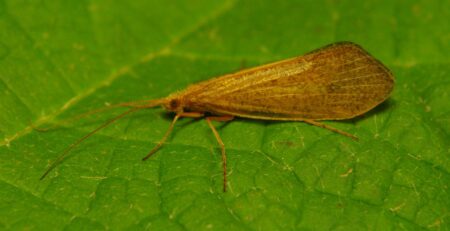
Winter-Emerging Midges

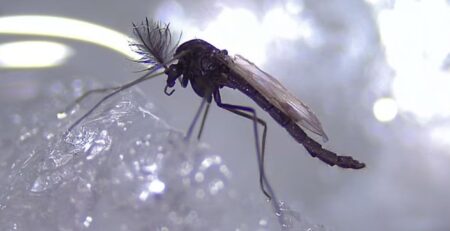
Photo credit: Chironomidae Research Group

In the frigid heart of winter, a hidden world of resilience unfolds beneath the icy surfaces of Minnesota’s streams. Enter the winter-emerging chironomids (aka “midges”), tiny aquatic flies belonging to the Chironomidae family. Resembling miniature black mosquitoes, some types of these resilient insects defy the cold, walking on snow, armed with an internal antifreeze protein. Among the at least 11 Minnesota species that brave the winter chill, the spotlight often falls on Diamesa, a cold-adapted genus with a remarkable life cycle. 

In the spring-fed streams of southeastern Minnesota, Diamesa larvae thrive on periphyton, a biofilm of algae and microbes, requiring cool waters with ample dissolved oxygen. Their journey from larvae to adults is a testament to survival strategies. Diamesa, particularly the widespread D. mendotae, exhibit freeze tolerance, allowing them to remain active in subzero temperatures. This ability not only aids in mating and ovipositing at low temperatures but also extends their adult lifespan, contributing to successive generations – perhaps 2 or 3 in a single winter season!  

Although much of their life is spent underwater as larvae, emergent adults may live around 18 days as adults, during which males and females mate in swarms on warm days when temperatures are below 0°C. After mating, female Diamesa return to the stream to lay masses of hundreds of eggs on substrates near the edge of the water. 

However, the significance of freeze tolerance in Diamesa larvae remains a mystery. While most are found in thermally buffered groundwater habitats, some brave streams that freeze in winter, leaving questions about their migration and potential exposure to freezing risks.  

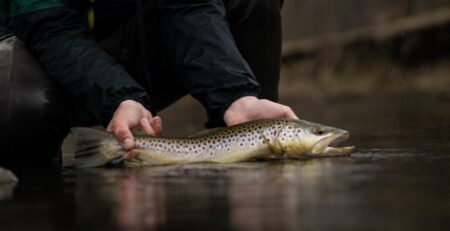
How important are midges for trout? Recent studies in southeastern Minnesota have shown that winter-emerging midges are an important food source for trout during winter, in part due to the fact that midge populations are thriving – actively growing, emerging, and reproducing –  during the coldest months when most other aquatic insects are in diapause. (Diapause means not growing, emerging, or reproducing – essentially populations become naturally depressed.) In fact, it’s not uncommon to find a trout stomach packed with dozens – or even hundreds – of midges during this time of year.   

To learn more about midges, check out the Bugs Below Zero project at the University of Minnesota – which also offers a citizen science and angler-friendly opportunity to help track these and other aquatic invertebrates that emerge in the colder months. To learn more about the science of winter-emerging midges, head to the Chironomid Research Group at the University of Minnesota.  

Check out this awesome video from MNTU member Paul Johnson on how to tie your own Zebra Midge Fly!

Sources: 

Winter-Active Chironomidae | Chironomidae Research Group (umn.edu) 

Jennifer Lynn Cochran-Biederman & Bruce Vondracek (2017) Seasonal feeding selectivity of brown trout Salmo trutta in five groundwater-dominated streams, Journal of Freshwater Ecology, 32:1, 653-673, DOI: 10.1080/02705060.2017.1386595 

What’s a macro and what’s it have to do with trout angling and conservation? Macros are on the trout menu for pretty much every meal. Macro means big and macroinvertebrates, or “macros,” are animals without a backbone, that are big enough to be seen by the human eye. They can be aquatic or land based, however aquatic insects make up the majority of a trout’s diet. They are also, of course, the inspiration for the flies we tie and use to catch trout. Learn about a new macro each month and how you can create your own to take with you on your next fishing trip!
Share this post

Facebook Twitter Email

Related Posts

Gear up for North Shore steelhead

The fishing gear you need for catching Steelhead on the North Shore of Lake Superior. From rod and reels, to... read more

All about fly fishing strike indicators

Learn everything you need to know about fly fishing with indicators. Is is ok if you call it a bobber?... read more

Photo credit: Chironomidae Research Group

Community science for winter anglers: Bugs below zero

I went to college at Saint Mary’s in Winona, and during the winter months I spent a lot of time... read more

Winter fly fishing in Minnesota’s Driftless Area

For many Minnesota anglers, January is a month spent leaning over an ice hole or a fly-tying vice, but if... read more

What happens to aquatic invertebrates as winter sets in?

Macro of the Month – December 2025 December has always been one of my favorite times to walk a trout stream.... read more

Macro of the Month: Northern caddisflies

Northern Caddisflies (Family Limnephilidae) Last month, we explored the importance of October foliage after it falls into a stream. Let’s take... read more

Macro of the Month: Beetles

All it takes is a little wind on the grass and you might be lucky enough to hear a little... read more

Macro of the Month: Grasshoppers

It’s August in Minnesota. The heat has settled in, and streamside vegetation hangs thick and heavy over the banks of... read more

Macro of the Month: Ants

One of my favorite surprises of summer trout fishing in Minnesota comes after a good soaking rain. When storms sweep... read more

Macro of the Month: Crane flies

Living on a trout stream in southeastern Minnesota, it doesn’t require too much effort to keep an eye on what’s... read more

Categories

Recent Posts

  • Action alert: Protect robust trout streams near proposed data center in Hermantown
  • Action alert: Recruit your out-of-state family and friends to protect the Boundary Waters
  • Get to know MNTU’s two new staff members
  • Trout release season: Your questions answered
  • South Creek project kicks off 

Chapters

  • Headwaters Chapter
  • Gitche Gumee Chapter
  • Twin Cities Chapter
  • Hiawatha Chapter
  • Win-Cres Chapter
Join
Donate
  • Facebook
  • YouTube
  • Instagram
Protect – Restore – Sustain

Find Your Chapter

  • Headwaters Chapter
  • Gitche Gumee Chapter
  • Twin Cities Chapter
  • Hiawatha Chapter
  • Win-Cres Chapter

Learn More

  • Recent News
  • Upcoming Events
  • Habitat Projects
  • Fishing Information
  • Contact Us

Get Involved

  • Join MNTU
  • Make a Donation
  • Subscribe
  • Follow on Facebook
  • Follow on Instagram
© Copyright 2026 Minnesota Trout Unlimited. All Rights Reserved.
Minnesota Trout Unlimited is a 501(c)(3) organization.