Minnesota Trout UnlimitedMinnesota Trout Unlimited
  • HOME
  • About
    • Chapters
      • Headwaters Chapter
      • Gitche Gumee Chapter
      • Twin Cities Chapter
      • Hiawatha Chapter
      • Win-Cres Chapter
    • Our Mission
    • Join MNTU
    • Contact Us
    • Help Support MNTU
  • NEWS
    • Blog
    • Events
    • Monthly Enews
    • Trout Unlimited Minnesota Newsletter
  • HABITAT
  • EDUCATION
    • Education and Outreach
    • Trout in the Classroom
    • Fishing Skills Programs
    • Great Waters Fly Fishing Expo
    • Foster the Outdoors Program
    • T.U.N.E Camp
  • ADVOCACY
    • Agricultural Runoff
    • Data Centers
    • Feedlots
    • Neonics
    • Nitrates
    • Preventing Fish Kills
    • Public Waters
    • Sulfide Mining
  • FISHING
  • DONATE
  • HOME
  • About
    • Chapters
      • Headwaters Chapter
      • Gitche Gumee Chapter
      • Twin Cities Chapter
      • Hiawatha Chapter
      • Win-Cres Chapter
    • Our Mission
    • Join MNTU
    • Contact Us
    • Help Support MNTU
  • NEWS
    • Blog
    • Events
    • Monthly Enews
    • Trout Unlimited Minnesota Newsletter
  • HABITAT
  • EDUCATION
    • Education and Outreach
    • Trout in the Classroom
    • Fishing Skills Programs
    • Great Waters Fly Fishing Expo
    • Foster the Outdoors Program
    • T.U.N.E Camp
  • ADVOCACY
    • Agricultural Runoff
    • Data Centers
    • Feedlots
    • Neonics
    • Nitrates
    • Preventing Fish Kills
    • Public Waters
    • Sulfide Mining
  • FISHING
  • DONATE

Electrofishing Insights: Tracking Stream Restoration Success in Northeast Minnesota

Kristen Poppleton2025-01-30T21:04:14+00:00

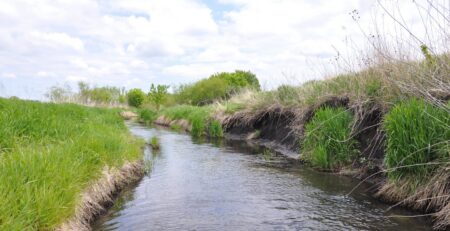
Standing by a newly restored stream, the benefits are often clear: the eroding banks, invasive plants, and barren channels have been replaced with gently sloped banks, deep pools, spawning riffles, and thriving native vegetation. It’s easy to see how these improvements boost fish populations by creating better habitat for food production, spawning, and cover for larger fish. But how can we truly document these changes? That’s where Dr. Michael Bush, an ecologist from Concordia College (Morehead, MN), came in with his undergraduate limnology class and a backpack electrofishing unit to help us gather some evidence.

What is backpack electrofishing? Backpack electrofishing is a technique used by scientists to safely catch and study fish in streams and rivers. The researcher wears a small electric generator on their back, which sends a mild electrical current into the water, temporarily stunning nearby fish so they can be easily netted without harm. It’s like a gentle “pause” button for fish, allowing biologists to study them up close before releasing them back into the water.

Day 1 – Keene Creek (Hermantown)

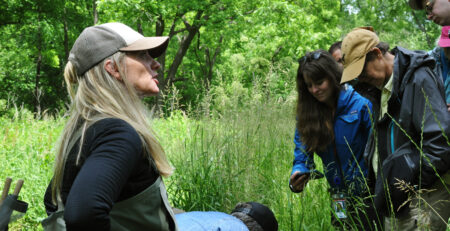
On Friday September 13th, Dr. Bush, his wife (also an ecologist), met us at Keene Creek in Hermantown, the location of two previous in stream habitat projects (completed in 2021 and 2022). Before electrofishing, project engineer Keith Anderson (Beaver River Consulting) and GGTU member and retired limnologist Dr. Peder Yurista, gave students a tour of the stream restoration project, explaining how elements of the design – like toewood, riffles, and deepened pools – serve to support the different life stages of brook trout.
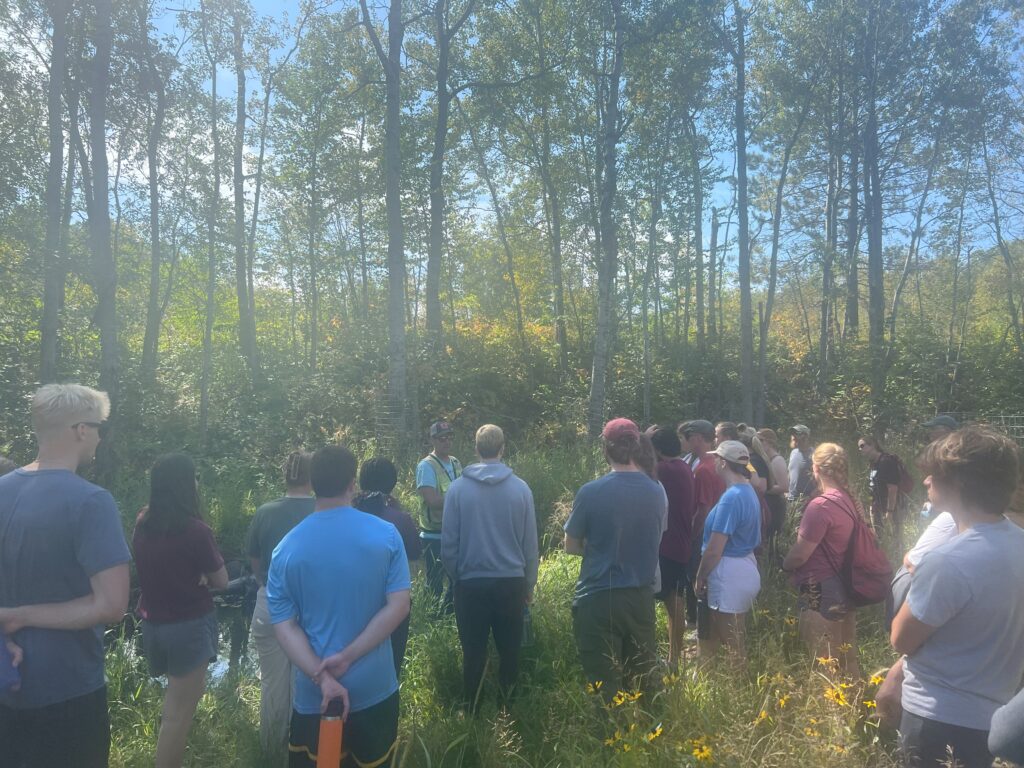
Project engineer Keith Anderson explains the restoration design at Keene Creek.

After that, Dr. Bush put on the backpack electrofishing unit, handed out some nets to his students, and fished the upper project (about 800 feet), which included several pools, riffles, boulders, and rootwads. It was exciting to see an impressive number of brook trout – approximately 100, as well as numerous nongame dace.
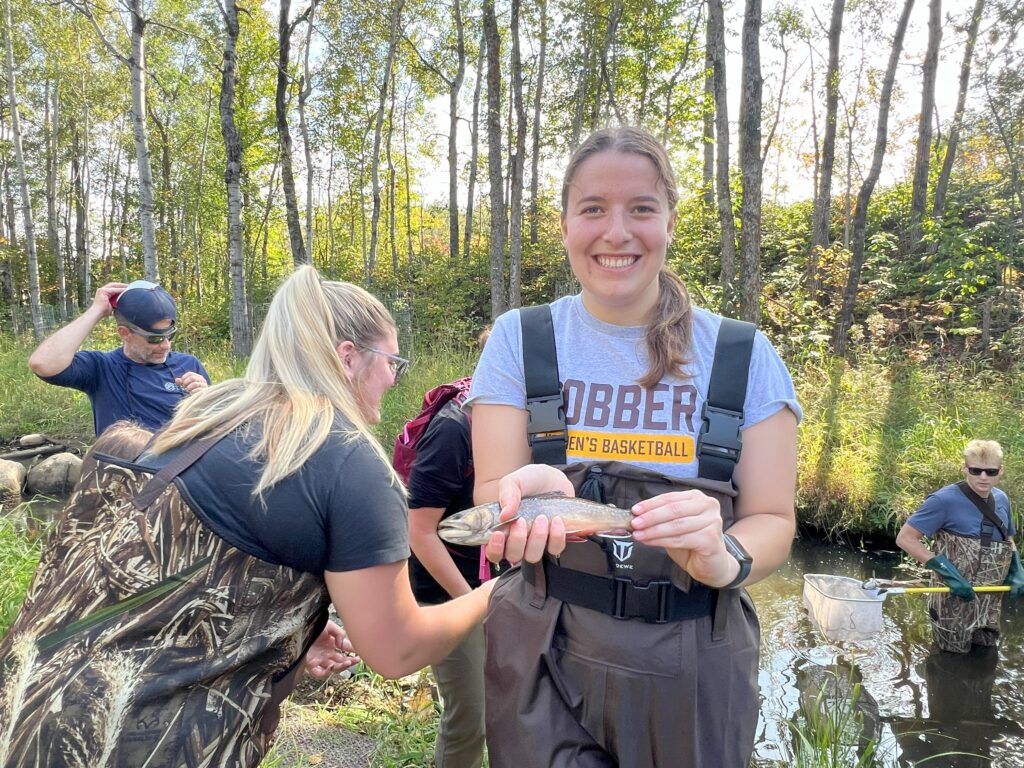
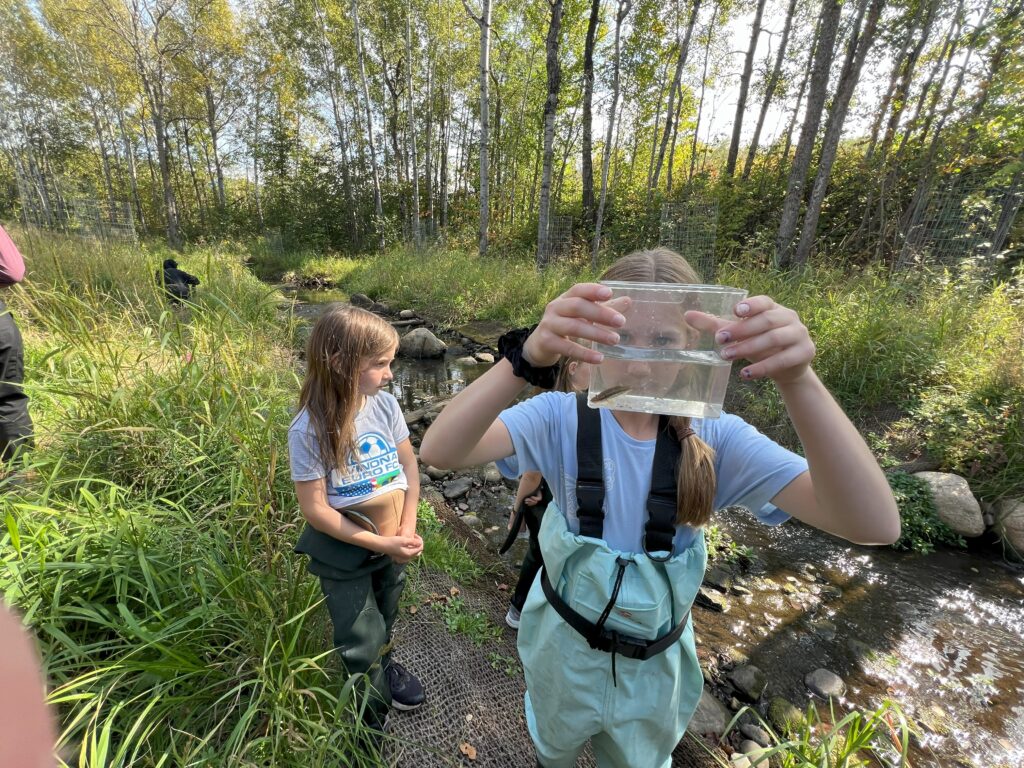
Concordia College student with a brookie collected during electrofishing Keene Creek.

One of our younger helpers admiring a dace collected in Keene Creek.

Also of note is that we collected brookies of all sizes, including age-0 young of the year, demonstrating positive recruitment into the population), and many mature adults of 7 to 11 inches, utilizing the deep pool and rootwad habitat.
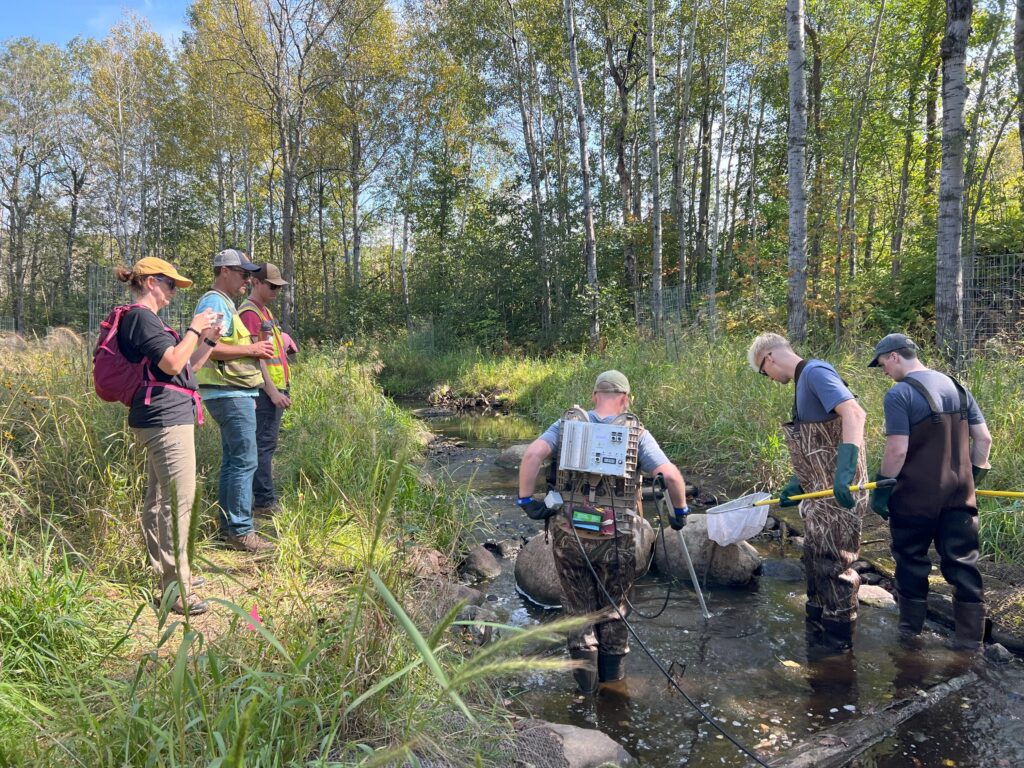
Dr. Bush and Concordia students electrofishing in Keene Creek

Day 2: Little Stewart River (Two Harbors)

The next morning, we met the students at the Little Stewart River – the location of recent habitat improvement projects outside of Two Harbors.

This site is also included in the MN DNR climate change research project that launched this year, where researchers have tagged 1000’s of brook trout and steelhead to track how patterns in movements relate to water temperature. So, to help them out, we brought along a handheld PIT tag reader to see if we could snag any tagged fish. Although we did not recapture any tagged fish and despite pretty low flows, we collected dozens and dozens of fish, including steelhead, bluntnose dace, and a few coho, throughout the reach. In the end, it was another exciting day of electrofishing, confirming the value of our ongoing restoration efforts to fisheries along our northeast shore.
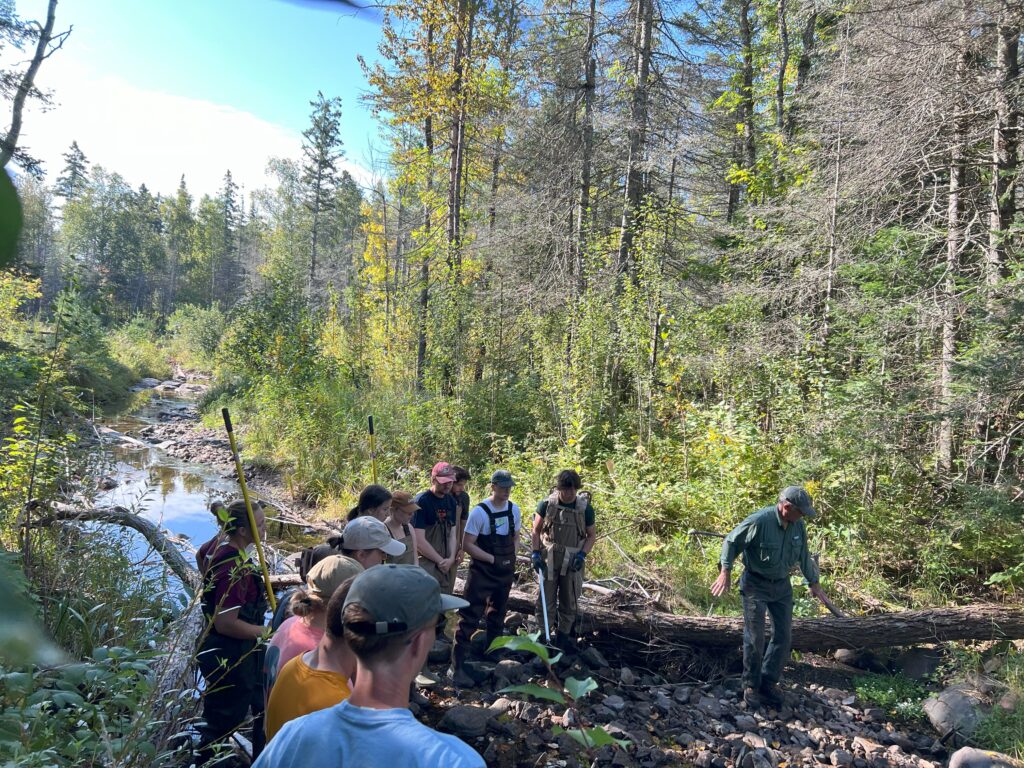
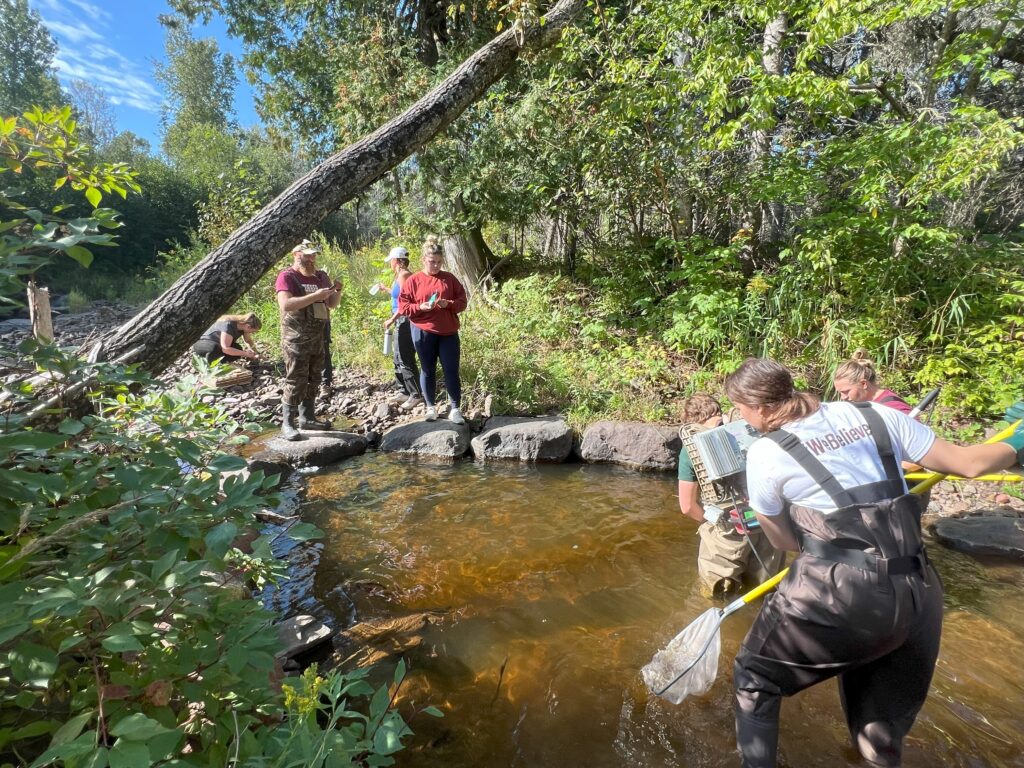
Dr. Peder Yurista of Gitche Gumee Trout Unlimited sharing the history of the Little Stewart restoration projects by MNTU
Concordia College students electrofishing below a step pool on the Little Stewart River.
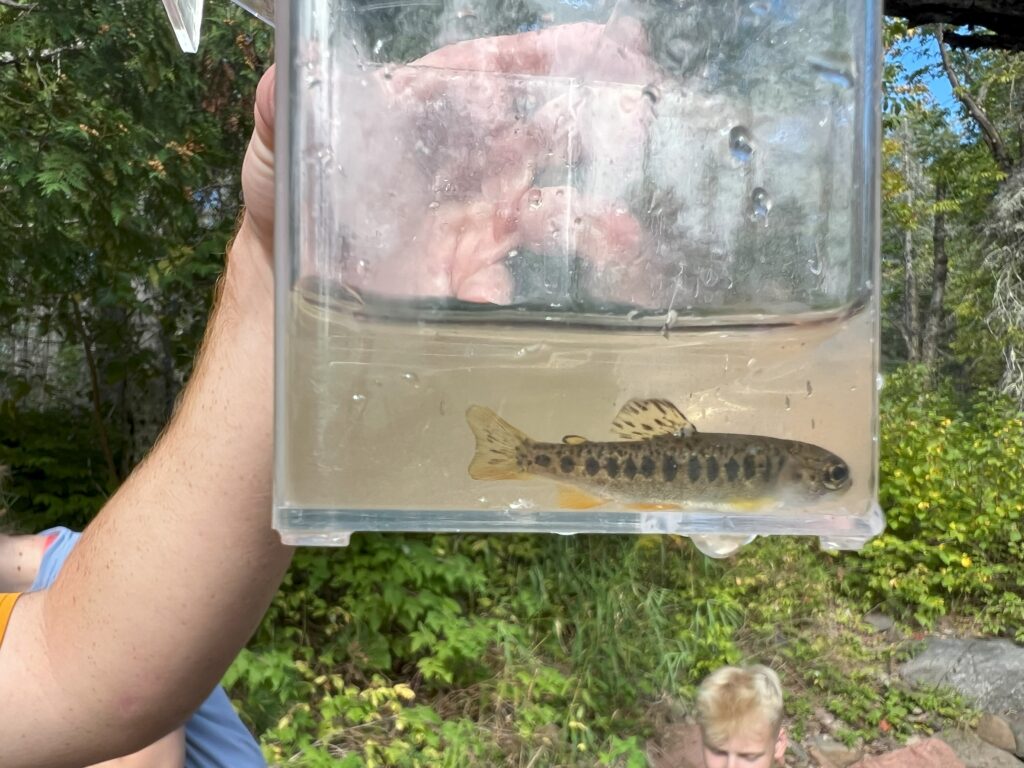
Age-0 young-of-year steelhead, born on MNTU Little Stewart River project site.
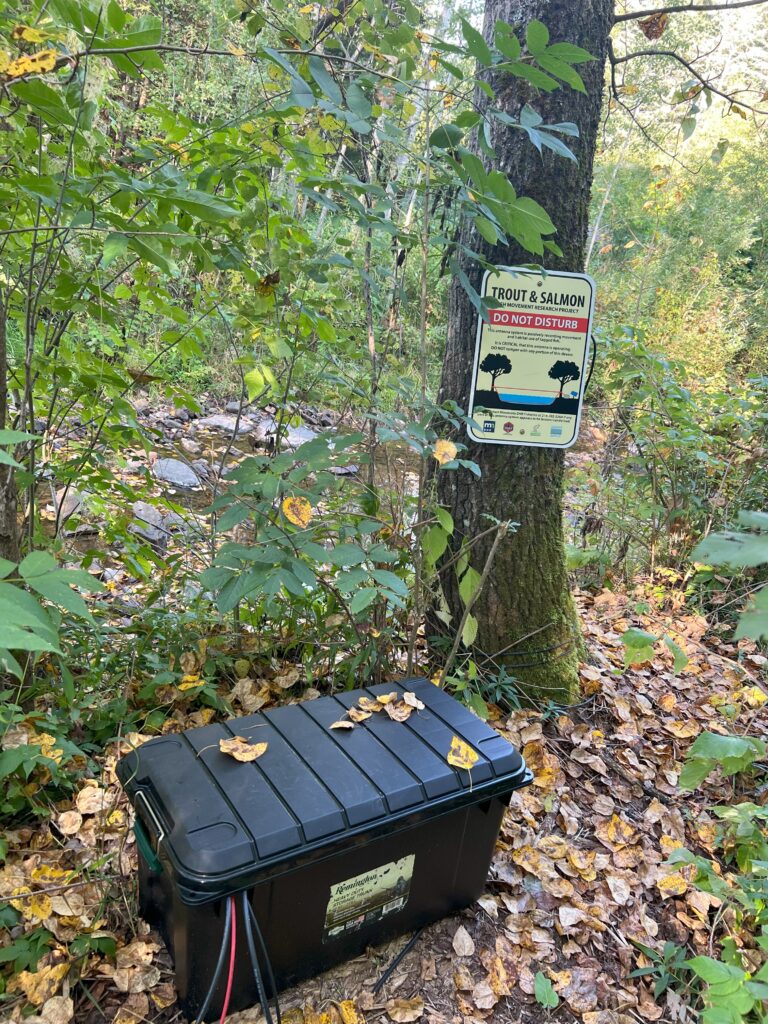
PIT tag receiving station along the shore of the Little Stewart River that detects and records the movement of tagged fish.

Share this post

Facebook Twitter Email

Related Posts

Restoring Riparian Forests for North Shore Cold-Water Fisheries

Minnesota Trout Unlimited is undertaking a critical planting project to restore healthy forests within riparian corridors along the high-quality cold-water... read more

Bob Luck Eagle Creek Brook Trout

MNTU Habitat E-news: February 2026

Spotlight: Eagle Creek Habitat Improvement Project (Savage, MN) This spring, Minnesota Trout Unlimited (MNTU) will begin construction on a 2,000-foot trout... read more

The Importance of Pools as Trout Habitat in Stream Restoration

On a rainy afternoon a few months ago, I stopped at a newly constructed project on my way home to... read more

Moving the Needle on Fish Passage in Northeastern Minnesota

Fish passage is not always just about fish passage. A culvert replacement might start as a solution to a barrier... read more

Evaluating Stream Habitat Designs Across Southeast Minnesota

Over the past few decades, Minnesota has made tremendous progress in restoring and enhancing its coldwater streams. Across the state,... read more

Why Toewood Is Showing Up Along Minnesota Trout Streams

For MNTU, the goal of using toewood is not just to “hold the bank”. It’s to restore function, including banks... read more

What Happens After Stream Restoration? From Bare Soil to Cover Crops to Thriving Native Habitat

When a stream restoration project wraps up, the work on the ground is just beginning. During construction, streambanks are graded... read more

Duluth’s Amity Creek Receives New Protection!

MNTU is proud to be a part of an effort to add the highest level of protections to over 1,100... read more

Habitat Director’s Report from the Field, July 2025

July is the heart of field season when it comes to carrying out stream restoration work across the state. Tackling... read more

MNTU’s barrier removal projects also benefit aquatic invertebrates

When most trout anglers think about culvert replacements, they rightly think of trout passage to critical habitat.   Undersized, perched, and... read more

Categories

Recent Posts

  • MNTU Testimony in Support of Legislation Regulating Neonicotinoids
  • All About Fly Fishing Strike Indicators
  • Trout in the Classroom at Shakopee High School
  • Restoring Riparian Forests for North Shore Cold-Water Fisheries
  • Action Alert: Protect Minnesota’s Trout Streams and Groundwater

Chapters

  • Headwaters Chapter
  • Gitche Gumee Chapter
  • Twin Cities Chapter
  • Hiawatha Chapter
  • Win-Cres Chapter
Join
Donate
  • Facebook
  • YouTube
  • Instagram
Protect – Reconnect – Restore – Sustain

Find Your Chapter

  • Headwaters Chapter
  • Gitche Gumee Chapter
  • Twin Cities Chapter
  • Hiawatha Chapter
  • Win-Cres Chapter

Learn More

  • Recent News
  • Upcoming Events
  • Habitat Projects
  • Fishing Information
  • Contact Us

Get Involved

  • Join MNTU
  • Make a Donation
  • Subscribe
  • Follow on Facebook
  • Follow on Instagram
© Copyright 2026 Minnesota Trout Unlimited. All Rights Reserved.
Minnesota Trout Unlimited is a 501(c)(3) organization.