
Lessons learned from Duluth’s Tischer Creek fish kill
This article was originally published in our June 2026 issue of Trout Unlimited Minnesota.
DULUTH – Prior to the July 2024 fish kill in Duluth’s Tischer Creek, the release of drinking water into storm sewer systems was generally considered to be not impactful.
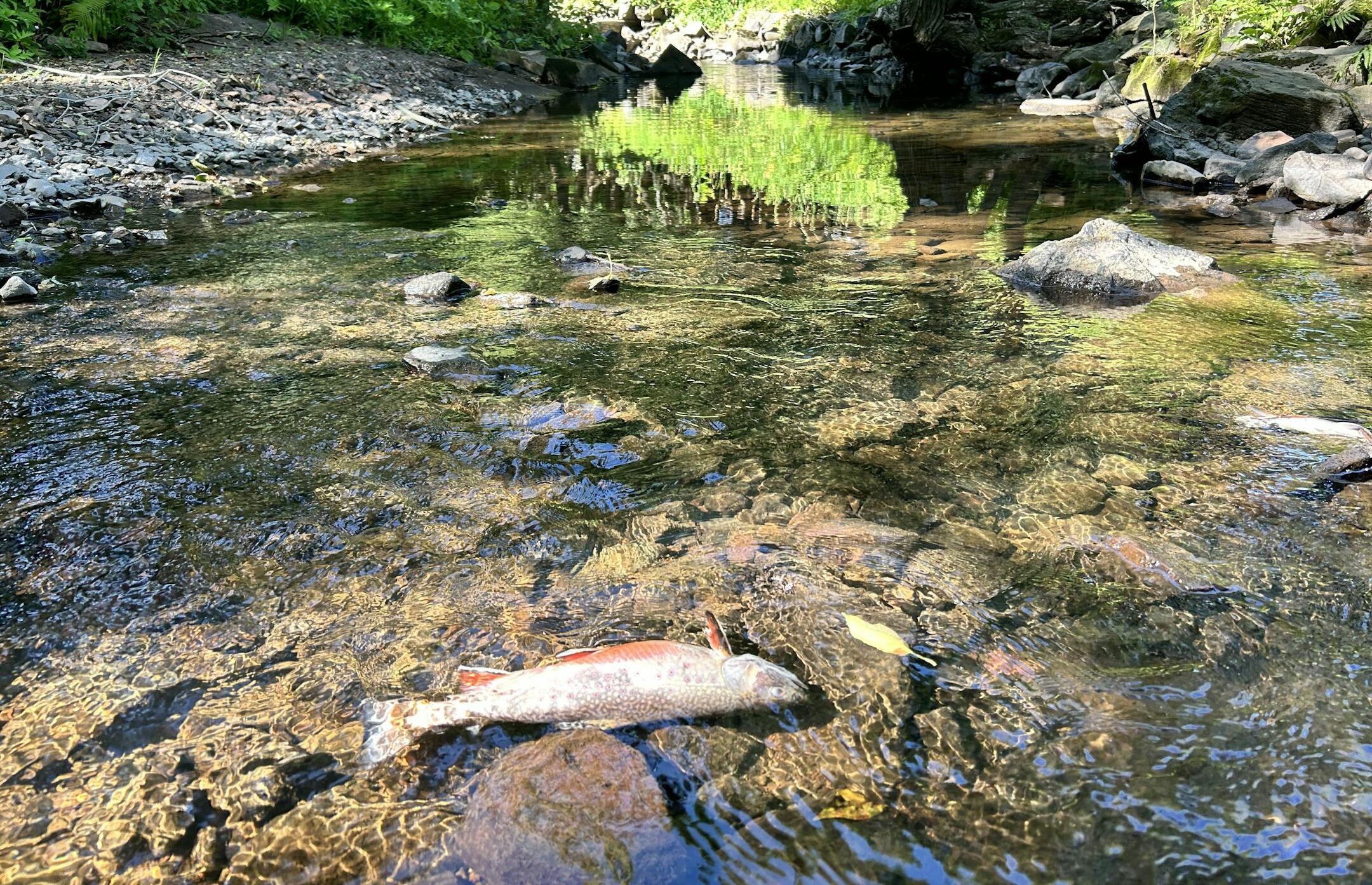
That changed after the City of Duluth released 1.7 million gallons of chloramine-treated drinking water from a Woodland neighborhood reservoir. For over 15 hours the water drained into Tischer Creek, killing 1,600 brook trout and hundreds of other fish, while causing extensive harm to other aquatic organisms and the greater ecosystem of the creek.
The city has since reached a settlement agreement with the Minnesota Pollution Control Agency (MPCA) in which Duluth is responsible for investing $190,000 in estimated damage into restoration projects chosen by state agencies. City staff have also created and implemented new standard operating procedures to prevent future fish kills.
“Although it’s a really unfortunate event, we’re trying to turn this into an opportunity to learn from and to do better from,” said Ryan Granlund, the City of Duluth’s utility programs coordinator and trout angler. “I think that Duluth will definitely do better with these operational changes. We’ve learned a lot, but also the other water resource professionals around here have learned a lot.”
How the fish kill happened
Duluth has used chloramine—a stabilized form of chlorine mixed with ammonia—to treat its drinking water for decades. Chlorine is toxic to trout at 0.038 ppm. The chlorine level in the treated water at the time of the fish kill was 1.6 ppm, a normal level for drinking water and more than lethal to trout.
City staff drained the in-ground reservoir for inspection and maintenance not knowing the threat the water posed to the receiving water’s ecosystem. The reservoir was built over 100 years ago and had likely never been drained before 2024, according to the city’s knowledge. It was designed to drain into storm sewer systems and then into receiving waters, like Tischer Creek.
“We knew the makeup of the system was connected to the storm sewer. I don’t think the vulnerability was on our radar,” Granlund said. “This is just potable water. Safe to drink, safe to consume. So a lot of folks were just treating it as that.”
To make matters worse, Tischer Creek’s water levels were low at the time of the fish kill, though it’s unclear if higher stream levels would have diluted the treated-drinking water enough to avoid ecological damage. The reservoir drained at a flow rate of 10.7 cubic feet per second, while the stream was flowing at a rate of 0.19 cubic feet per second at the time of release.
Two miles of the stream were impacted by the event.
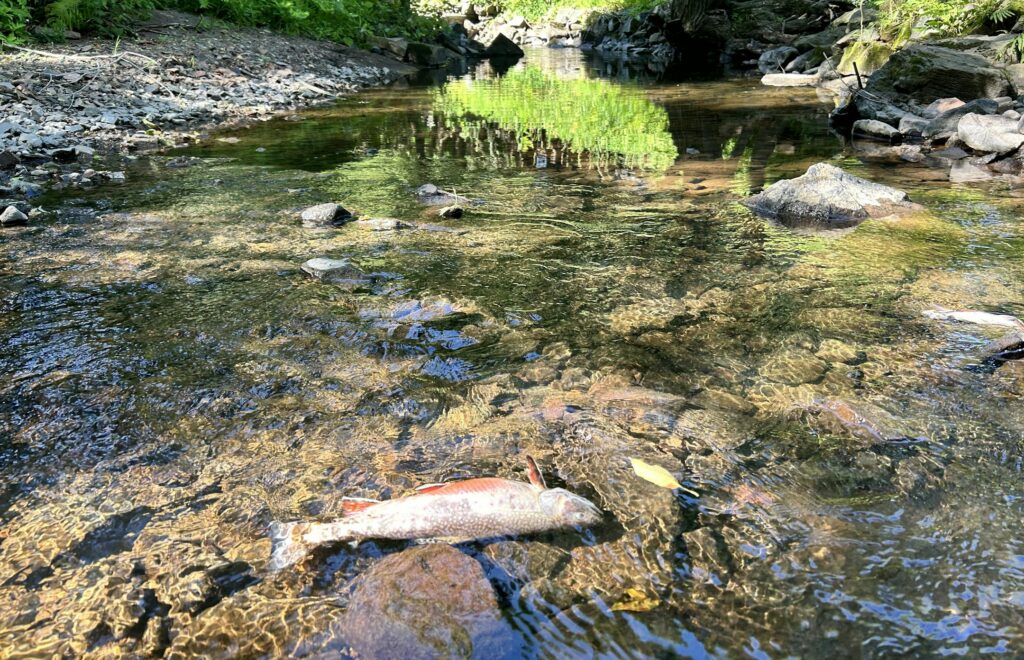
What’s changed since the fish kill
With 16 designated trout streams running through the city along with aged, in-ground water systems, risks remain when moving chloramine-treated water through the city.
Duluth’s new set of standard operating procedures are now part of its Stormwater Pollution Prevention Program (SWPPP) regulated by the MPCA. Minnesota communities that operate separate storm sewer systems are required to follow a SWPPP in order to reduce pollutants from entering lakes, rivers and wetlands through storm sewer systems.
“It’s novel because there are no other cities that have this,” Granlund said of the city’s new operating procedures. “There is no provision in there to have to have some sort of system for potable water draining to a storm sewer.”
Duluth’s new procedures include:
- A tag-and-lock system on all reservoir drains and valves to ensure staff can’t operate one without knowing it needs a discharge plan
- Adding dechlorinating diffusers to all hydrant flushing
- Noting critical valves and watersheds in the city’s mapping of the system
- Testing water downstream, upstream and at the site of suspected leaks
- More training for water system operators
- Reporting any unplanned releases, no matter how small, and water main breaks to the MPCA
Reporting unplanned releases and water main breaks to the MPCA is a way for the city to track patterns in its infrastructure in order to identify a larger problem before it happens, said MPCA water ecologist, Jeff Jasperson.
In the fall of 2025, about a year after the Tischer Creek fish kill, a water main break discharged treated drinking water into another one of Duluth’s designated trout streams. This time Coffee Creek near Skyline Parkway.
The state documented around 45 dead brook trout and another 45 living brook trout that appeared to be in good condition.
“I think those incidents have probably happened more than we’ve ever known and since Tischer Creek happened. I think the worry is out and the understanding of it is out,” Jasperson said. “The important part is now we understand this better and the process is much, much better.”
Jasperson said the MPCA and the city have become more aware of drinking-water infrastructure as potential pollution sources to trout streams.
For years, an underground water main leak has been slowly flowing into Tischer Creek that Jasperson said was thought to be a natural groundwater spring. This past winter Granlund found in the city’s utility data that a 100-year-old pipe was underground in the same area. The MPCA collected water samples and confirmed that treated drinking water had been leaking from the pipe and into the creek. The city is obtaining permits to repair the water main this summer.
“Those are the types of things we’re catching now that we’re spending more time looking around downstream,” Granlund said. “Now when we have a leak that we can control, we’re jumping on it.”
The fish kill has highlighted the need to do a better job inspecting existing water infrastructure, Jasperson said.
“I think this is a super unique case nationwide. I’ve never heard of anything like this happening,” Jasperson said of the Tischer Creek fish kill.
He’s hopeful that Duluth can leverage what it’s learned to secure grant funding for water system upgrades, though the city and state have yet to develop a grant-application plan.
MNTU did not get a response from the MPCA’s municipal stormwater team about whether the knowledge gained from the Tischer Creek fish kill has informed water management in other municipalities with designated trout streams.
Rebuilding an ecosystem
The Minnesota Department of Natural Resources (DNR) estimates it will take eight years for brook trout to make a full recovery in Tischer Creek.
Dan Wilfond, DNR Duluth area fisheries supervisor, said there is no plan to restock brook trout.
“The primary reason for that is the lack of a genetic source similar to what we have in Tischer Creek,” Wilfond said. “We didn’t want to disrupt the genetics that may have evolved to this urban environment.”
And since the entire ecosystem was wiped out, including the brook trouts’ food source, Wilfond said they didn’t want to restock the stream before the macroinvertebrates have had a chance to recover.
Brook trout in the west branch of Tischer Creek were not affected and Wilfond is optimistic they will quickly repopulate the rest of the stream as it naturally recovers.
The city’s settlement agreement with the state includes a $12,000 fine and $190,000 for restoration.
Proposed projects include:
- $50,000 for a fishing program at the Hartley Nature Center in Duluth that will teach people about the importance of native fish, particularly brook trout.
- $40,000 for the removal of a low-head dam on Tischer Creek to improve habitat connectivity for fish.
- $80,000 for a project that has yet to be chosen. One potential option is habitat improvement work on a tributary stream of Tischer Creek, near Hartley Nature Center.
“It’s an unfortunate situation for sure, but we’re hopeful we’ll be able to turn this into a positive and get some projects done we wouldn’t have been able to do,” Wilfond said. “This is quite the resource. It’s worth investing our time and resources into this brook trout fishery.”