
An 8-Year Look at the MNTU Education Program
In this new year, I wanted to do a recap about the last 8 years of MNTU’s education program. See below to learn about all of the great things our education team has accomplished!
Trout in the Classroom
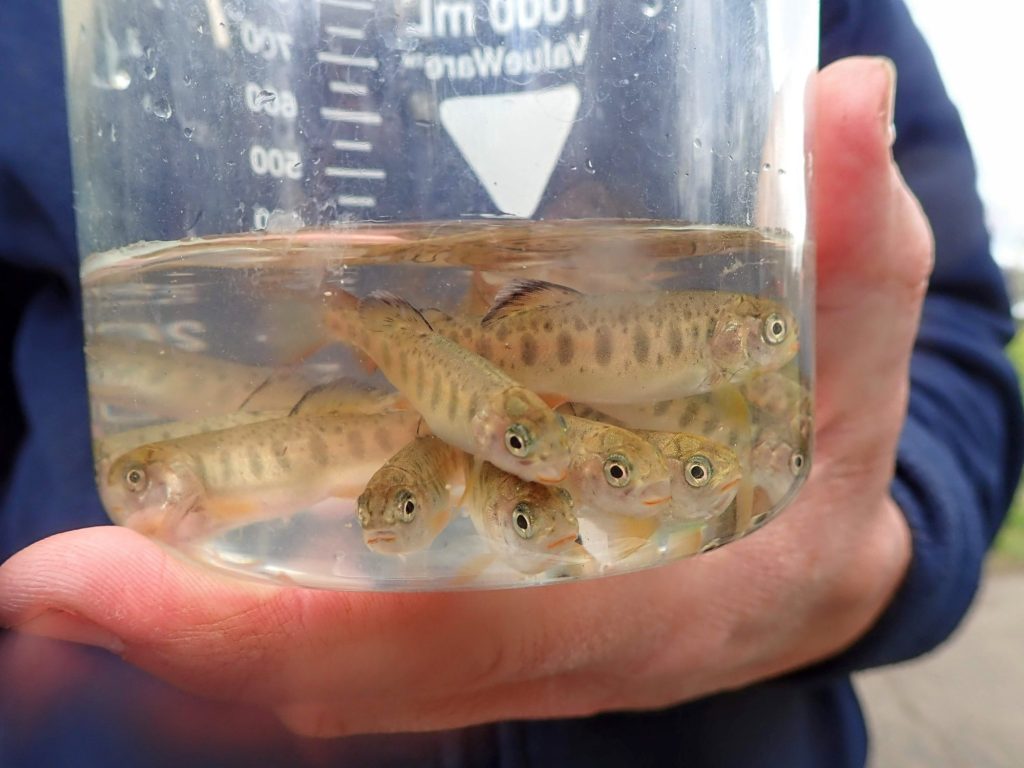
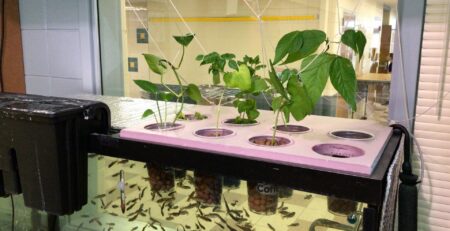
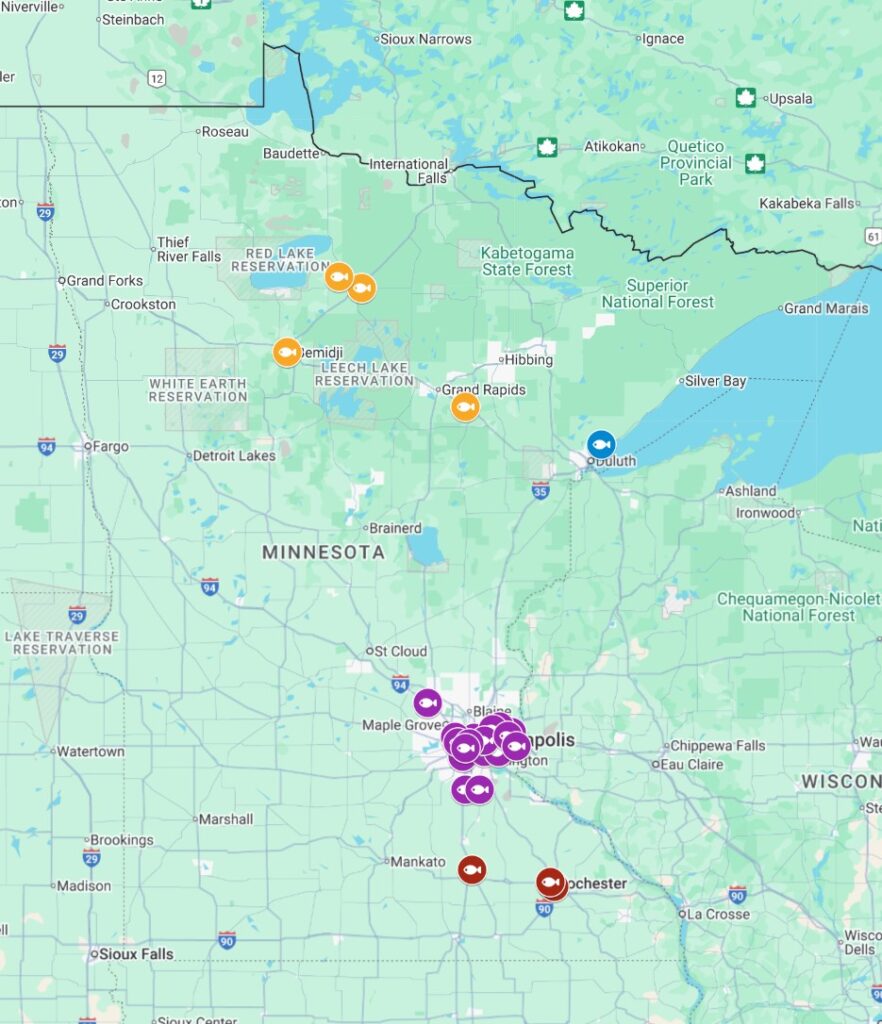
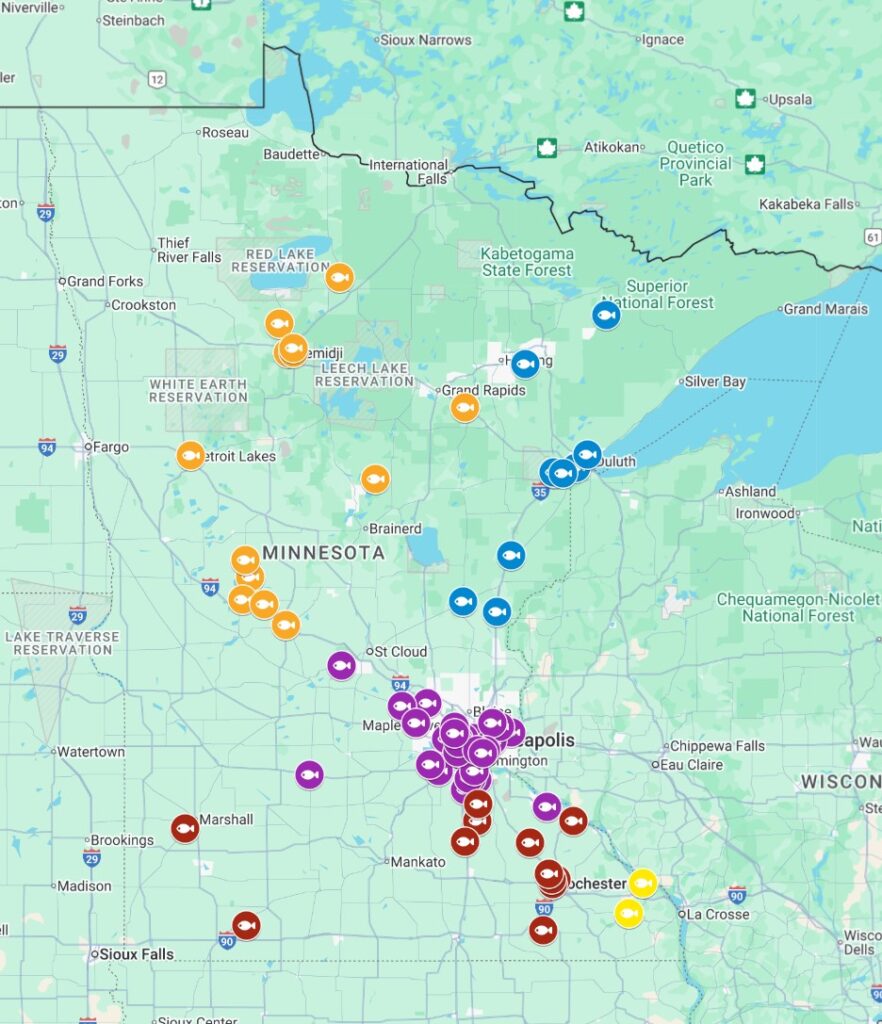
- From fall 2018 to spring 2025, the number of TIC schools throughout Minnesota increased from 27 to 68. There are also 2 nature centers that run tanks each year and use them for education with schools and the general public.
- The maps below show the where the schools were in Minnesota as of 2018 and where they are now currently in the 2025-2026 school year.
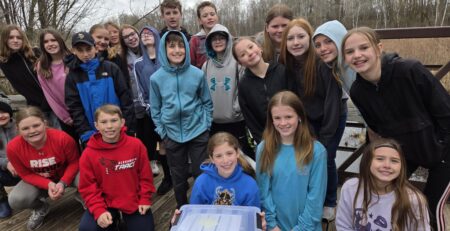
- TIC and the learning that surrounds it impacts thousands of students. Since fall 2018, our education team has worked directly with almost 25,000 students. This number does not include the students that engaged in TIC related lessons with their teachers, volunteers, and other organizations each year.
- So far this year, 1,433 students learned with our educators this fall and another 1,670 will participate in MNTU led lessons this winter. Our team will work with hundreds more excited students at their trout releases this spring.
Fishing Skills programs
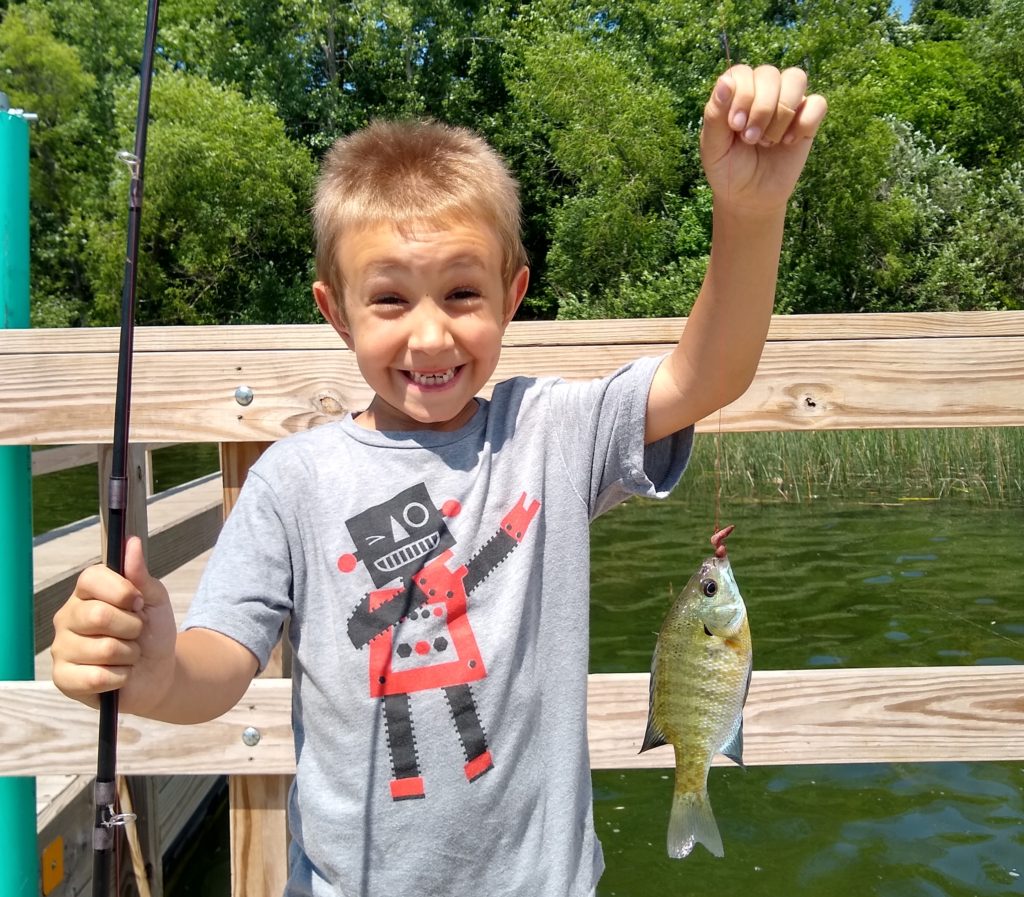
- During the summers, from 2019 to 2024, MNTU led fishing skills programs. 1,964 people learned about both spin and fly fishing on lakes and rivers around Minnesota.
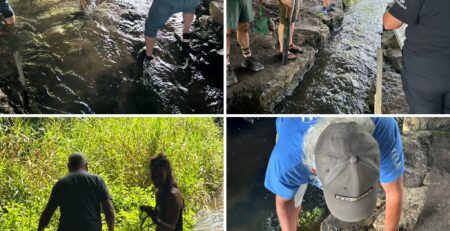
- In 2024, our education team planned and led some more robust, half day programs on bodies of water called “Meet a Stream” days. These were held MNTU restored bodies of water including Hay creek, Trout Run, Whitewater, and the Vermillion River. Attendees walked the stream and learned about MNTU’s work and trout habitat, learned about finding and identifying insects in the water to understand what flies to use, then had a few hours to practice casting and try catching a trout.
Volunteers
- The volunteer pool in the metro area for education started growing in 2022. Since then, over 900 volunteer hours have been contributed to assisting with TIC and fishing skills programs.
- There are over 30 volunteers that work with me, teachers, and one another each year to safely delivery thousands of eggs across the state. There are some that drive 4 hours one way to get eggs to schools. This year we did 2 days of deliveries and I have plenty of willing and excited volunteers to assist with both.

Programs:
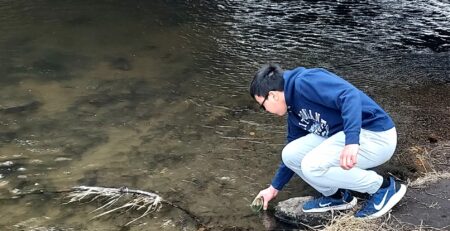
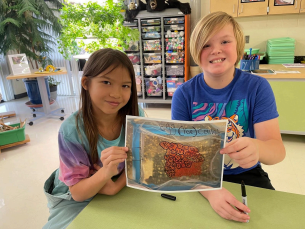
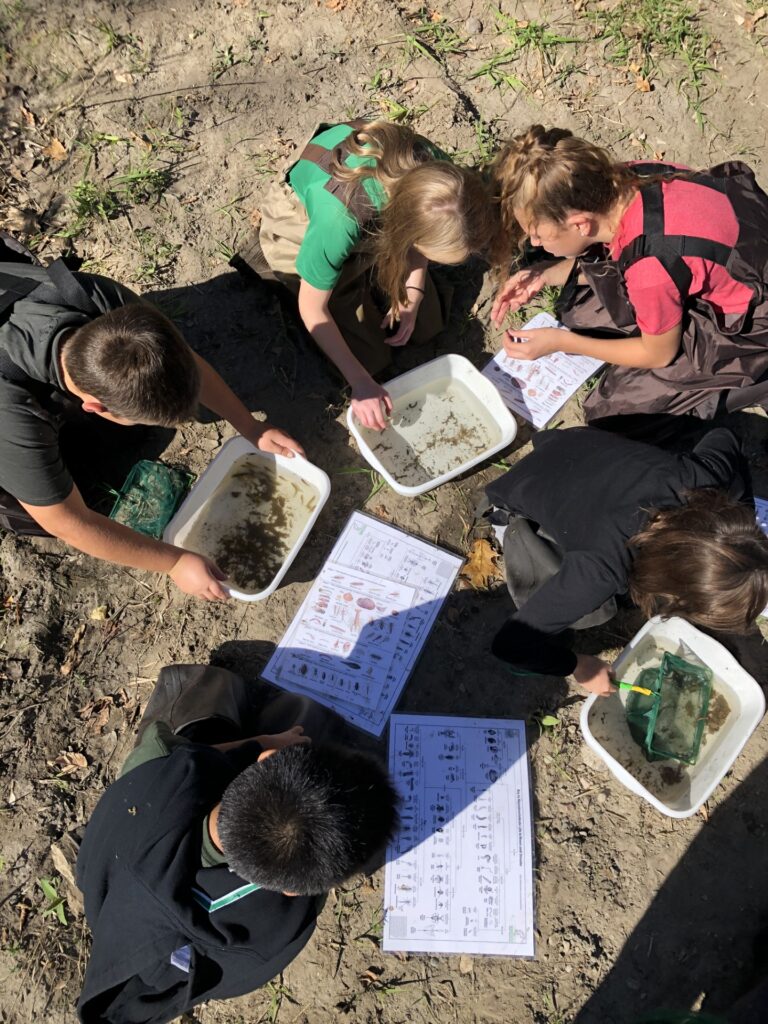
- Fall field days focus on getting students into bodies of water where they can collect, identify, and examine the aquatic insects that live there. These hands on, experiential field trips introduce students to Minnesota watershed ecology through the fish, insects, crayfish, worms, and other aquatic creatures discovered. They use dichotomous keys and biotic indexes for further analysis on the diversity of organisms present.
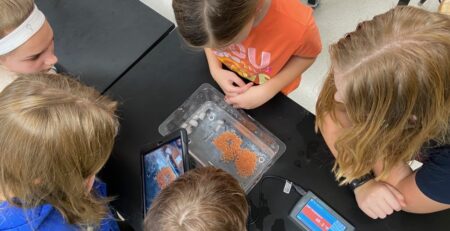
- Winter programs bring MNTU educators into the classroom to teach lessons about fly tying and biomimicry, trout habitat restoration and design, and fish ID, and adaptations. Schools that can get offsite also have the option of ice fishing on a lake in their community.
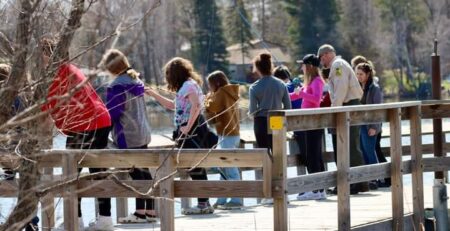
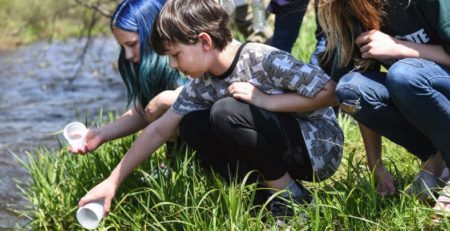
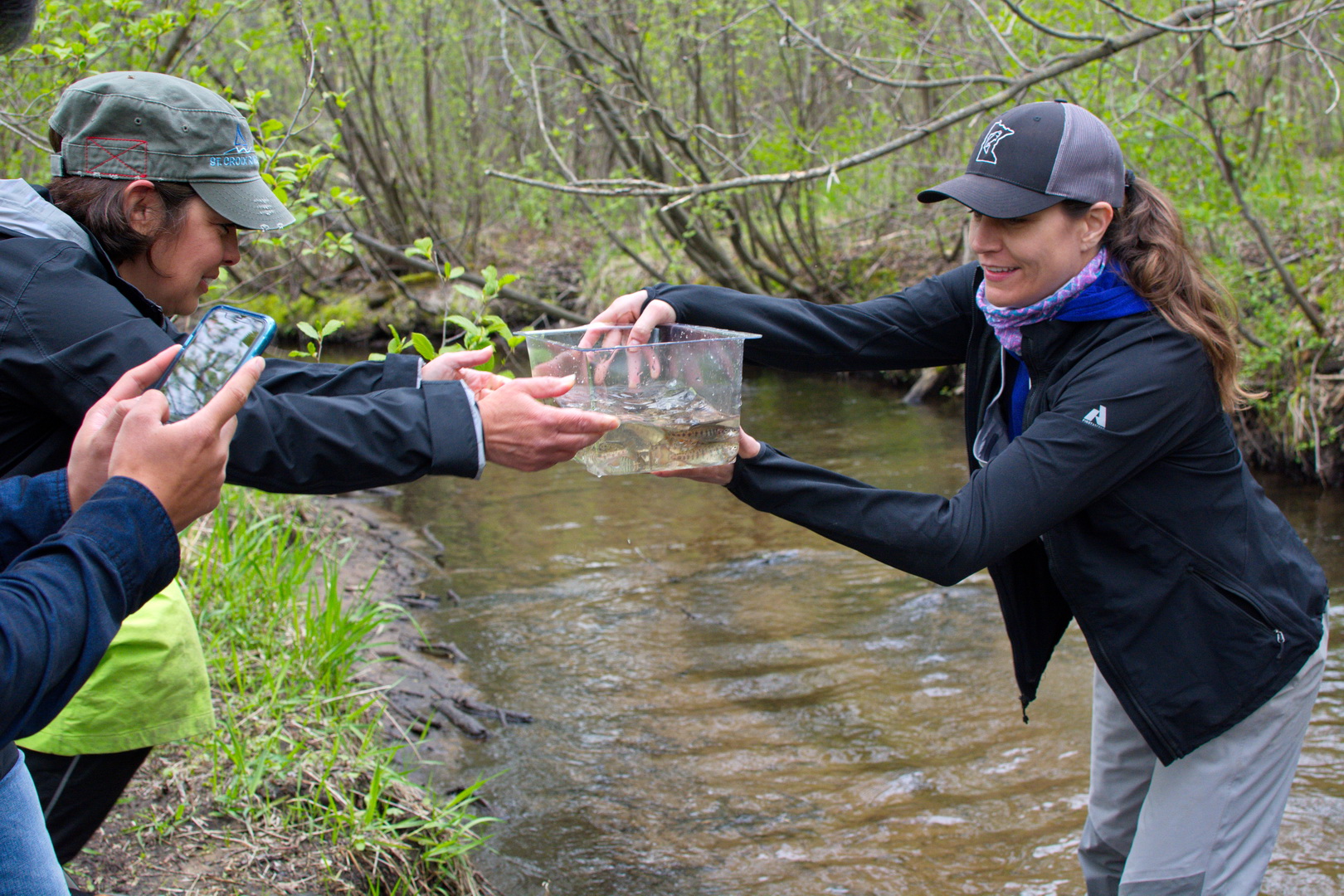
- Spring releases are the culminating event of the year. These trout technicians work hard all year to raise their fish and learn a lot along the way. Releases are an opportunity for additional lessons about trout and their habitat as well as celebrating an entire school year of fun.
Teacher communications and support:
- Update emails with important program information are sent to all teachers at the beginning of each month with forms, links, resources, reminders, and anything else that is pertinent to that month.
- Two in person trainings were held this summer, one in Duluth and another in Prior Lake. Teachers learned about TIC and how to raise fish in the morning before visiting MNTU habitat sites on Keene and Eagle creeks with some of the stream restoration engineers that worked on the project.
- A resource folder provides teachers access to TIC related lessons, activities, videos, readings, required paperwork, hatchery feeding spreadsheet, current copy of the resource guide, and more.
- Monthly virtual trainings are offered throughout the year to cover various topics. They are recorded and shared with all teachers so those that cannot attend are able to watch.
- A MNTIC google group is available for teachers to communicate amongst each other to ask questions, send pictures, give ideas, troubleshoot, etc.