Minnesota Trout UnlimitedMinnesota Trout Unlimited
  • HOME
  • About
    • Chapters
      • Headwaters Chapter
      • Gitche Gumee Chapter
      • Twin Cities Chapter
      • Hiawatha Chapter
      • Win-Cres Chapter
    • Our Mission
    • Join MNTU
    • Contact Us
    • Help Support MNTU
  • NEWS
    • Blog
    • Events
    • Monthly Cast Newsletter
    • Trout Unlimited Minnesota Newsletter
  • HABITAT
  • EDUCATION
    • Education and Outreach
    • Trout in the Classroom
    • Fishing Skills Programs
    • Great Waters Fly Fishing Expo
    • Foster the Outdoors Program
    • T.U.N.E Camp
  • ADVOCACY
    • Agricultural Runoff
    • Data Centers
    • Feedlots
    • Neonics
    • Nitrates
    • Preventing Fish Kills
    • Public Waters
    • Sulfide Mining
  • FISHING
  • DONATE
  • HOME
  • About
    • Chapters
      • Headwaters Chapter
      • Gitche Gumee Chapter
      • Twin Cities Chapter
      • Hiawatha Chapter
      • Win-Cres Chapter
    • Our Mission
    • Join MNTU
    • Contact Us
    • Help Support MNTU
  • NEWS
    • Blog
    • Events
    • Monthly Cast Newsletter
    • Trout Unlimited Minnesota Newsletter
  • HABITAT
  • EDUCATION
    • Education and Outreach
    • Trout in the Classroom
    • Fishing Skills Programs
    • Great Waters Fly Fishing Expo
    • Foster the Outdoors Program
    • T.U.N.E Camp
  • ADVOCACY
    • Agricultural Runoff
    • Data Centers
    • Feedlots
    • Neonics
    • Nitrates
    • Preventing Fish Kills
    • Public Waters
    • Sulfide Mining
  • FISHING
  • DONATE

Call to action: Speak up for Minnesota streams during neonics comment period

Minnesota Trout Unlimited on July 14, 20262026-07-14T22:39:00+00:00
By Minnesota Trout Unlimited on July 14, 2026

Minnesota trout fisheries need your voice. 

The Minnesota Department of Agriculture (MDA) is accepting public comments on whether the state’s current rules adequately protect our natural resources from the contamination of neonicotinoid-treated seeds. 

The public comment period closes July 31.

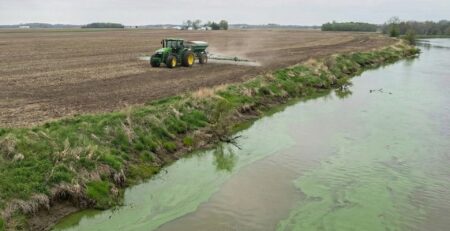
Minnesota’s surface water is widely contaminated with neonicotinoids at levels expected to cause harm to the aquatic invertebrates that form the base of the food webs supporting our valuable trout fisheries.

Neonicotinoids (or neonics) are systemic insecticides commonly applied as crop seed coatings to protect the plant from insects. However, only a small percentage of the insecticide is absorbed by the plant as it grows, typically leaving over 90% on the surface of the seeds or in the surrounding soil.  When rain falls or irrigation water is applied, these residues can wash into nearby aquifers, streams and public water bodies.  

The MDA’s own data shows that concentrations of these pesticides in Minnesota streams routinely exceed safe levels for aquatic invertebrates.

What to consider for your comments

  1. Comments that provide citations to studies, supportive data and include direct observations will help MDA correct its decision, whereas simply expressing support for new restrictions will not.
  2. Include your own observations you’ve noticed in aquatic insect hatches and stream health in Minnesota’s agricultural watersheds, such as southeastern Minnesota. 
  3. Ask that the MDA reviews its own water monitoring data to conclude that its current non-regulatory approach is not adequate to protect Minnesota’s natural resources from the harm caused by neonic-coated crop seeds:

MDA’s reports:

  • Detection Patterns of Neonicotinoid Insecticides in Minnesota Rivers and Streams, 2018 through 2022
  • 2025 Water Quality Monitoring Report

Key points you might include: 

  • Aquatic insects form the base of food webs that support trout fisheries. 
  • Neonicotinoid chemicals are engineered to kill insects indiscriminately and they continue to kill insects after they wash into public waters. 
  • The concentrations of two neonics – clothianidin and imidacloprid – are routinely found in Minnesota streams at levels harmful and lethal to aquatic insects.
  • MDA monitoring and reports identify neonicotinoid-treated seeds as a primary source of these highly toxic, persistent neonics in Minnesota waters.  
  • MDA water samples have shown spikes in neonics following rainfall-runoff events.
  • Recent research in Minnesota showed neonics in 97% of water samples from rivers and streams and in 74% of groundwater samples, including at levels above that kill aquatic insects. 
  • MDA data confirms that neonic-treated seeds are the leading source of harmful neonic contamination in Minnesota waters.  Highest levels are detected in May, June and July and are correlated with corn and soybean planting season.
  • MDA concluded that neonicotinoids from seed treatments are the primary source of detections in water samples and are rapidly transported to rivers and streams after planting.

How to comment 

Submit your comments using the MDA’s online comment form: here or by emailing them to TreatedSeed.MDA@state.mn.us 
Share this post

Facebook Twitter Email

Related Posts

Action alert: Speak up to protect MNTU’s habitat improvement funding  

The Outdoor Heritage Fund bill, which supports Minnesota Trout Unlimited’s habitat improvement projects, is still at a standstill in the... read more

Action alert: Funding for habitat restoration is stalled

The Minnesota legislative session ends in two weeks and a few bills that would help safeguard the future of our... read more

Action alert: Protect robust trout streams near proposed data center in Hermantown

The proposed data center in Hermantown 278-acre sits between West Rocky Run and Adolph Creek - two streams containing some... read more

Action alert: Recruit your out-of-state family and friends to protect the Boundary Waters

The resolution to reverse the 20-year ban on mining near the Boundary Waters Canoe Area Wilderness is expected to reach... read more

Action alert: Protect Minnesota’s trout streams and groundwater

The deadline to notify the Minnesota Department of Agriculture (MDA) that the Groundwater Protection Rule is failing to prevent nitrate... read more

Action alert: Contact your senators to protect the BWCAW

The U.S. Senate vote on the Joint Resolution that would overturn the 20-year ban on mining upstream of the Boundary... read more

Judge orders state to assess if fertilizer rules protect Minn. from nitrate pollution

DATE: 09/08/25 CONTACT: Sarah Horner, MCEA, shorner@mncenter.org, 612-868-3024 Saint Paul, Minn – A Ramsey County District Court judge ordered the Minnesota... read more

Inform our policy platform

We are looking ahead to the next state legislative session and preparing our policy platform. Preventing Fish Kills will continue... read more

2025 legislative session recap

Legislative session was more a game of defense, rather than much momentum forward this year. In general we held the... read more

Action alert: Protect coldwater streams through Minnesota’s feedlot rules

Minnesota’s trout streams and groundwater are some of our most valuable — and most vulnerable — resources. Minnesota Trout Unlimited... read more

Categories

Recent Posts

  • Call to action: Speak up for Minnesota streams during neonics comment period
  • Volunteer spotlight: Twin Cities chapter tackles wild parsnip along trout streams
  • The most impactful way to leave a legacy is the simplest
  • Restoring a healthier stream: Your questions answered about the South Creek project
  • Should anglers rethink catch and release in southeast Minnesota?

Chapters

  • Headwaters Chapter
  • Gitche Gumee Chapter
  • Twin Cities Chapter
  • Hiawatha Chapter
  • Win-Cres Chapter
Subscribe
   
Join MNTU
   
Make A Donation
Protect – Restore – Sustain

Find Your Chapter

  • Headwaters Chapter
  • Gitche Gumee Chapter
  • Twin Cities Chapter
  • Hiawatha Chapter
  • Win-Cres Chapter

Learn More

  • Recent News
  • Upcoming Events
  • Habitat Projects
  • Fishing Information
  • Contact Us

Get Involved

  • Join MNTU
  • Make a Donation
  • Monthly Cast Newsletter
  • Follow on Facebook
  • Follow on Instagram
© Copyright 2026 Minnesota Trout Unlimited. All Rights Reserved.
Minnesota Trout Unlimited is a 501(c)(3) organization.