
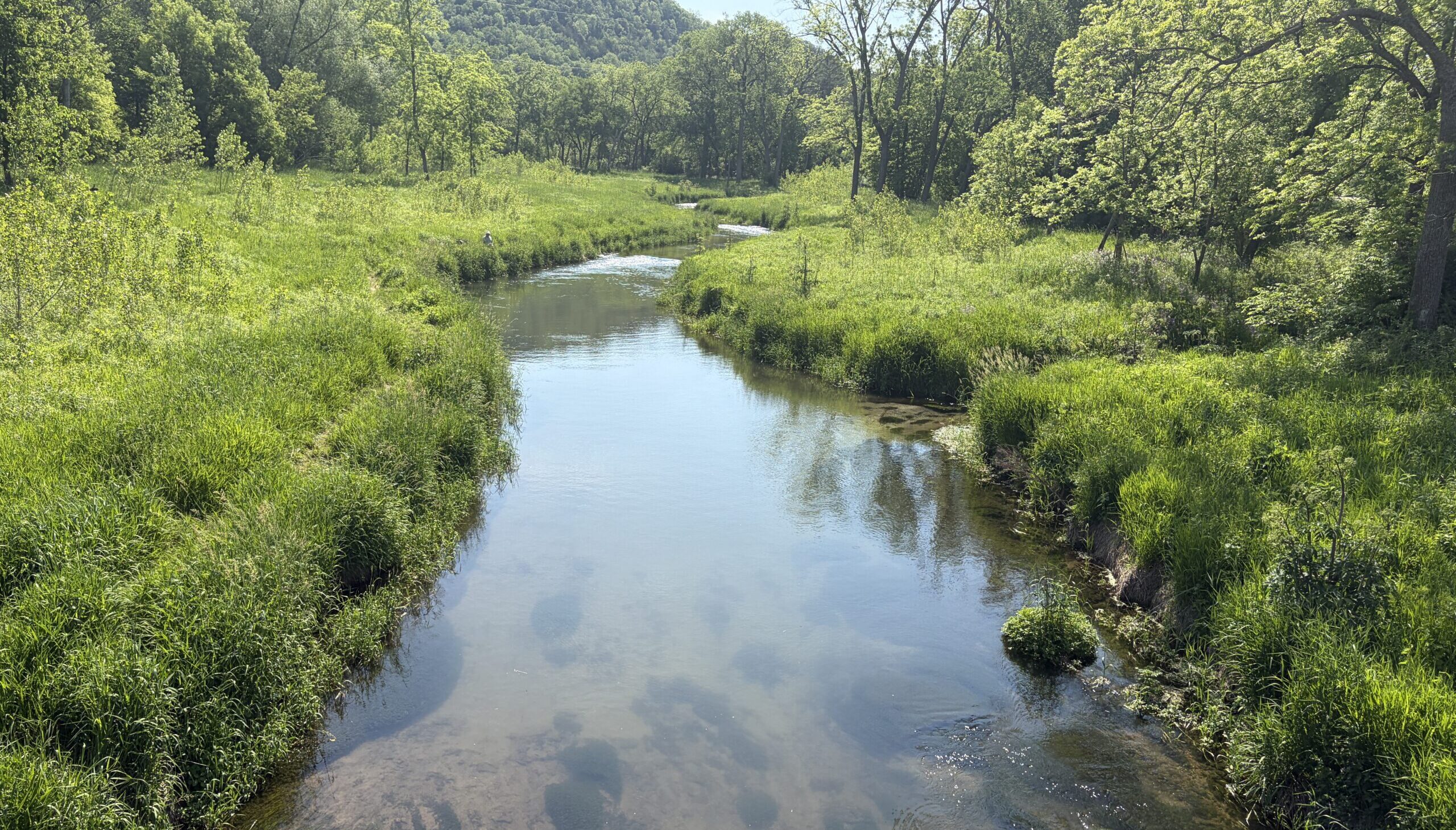
South Branch Whitewater River in Winona County
Minnesota Trout Unlimited habitat restoration project
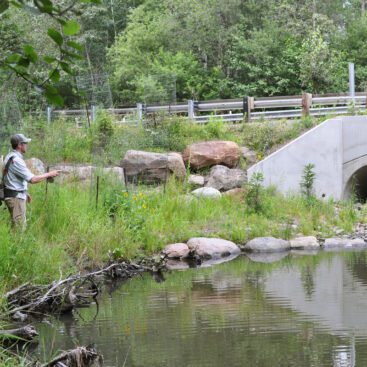
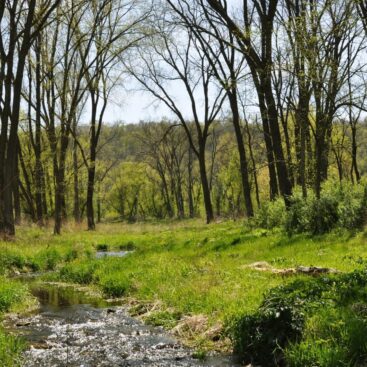
In 2020, we restored nearly 8,000 feet of trout habitat on the South Branch Whitewater River. The project reach, which has long served as a popular destination for all kinds of anglers, is located within the Whitewater Wildlife Management Area, near Elba, Minnesota.
Key project accomplishments:
- Restored trout and aquatic insect habitat with the addition of in-stream habitat features
- Created runs and riffles for trout spawning habitat and food production
- Deepened pools with added overhead cover for trout, including large pool logs, boulders, boulder toe and root wads
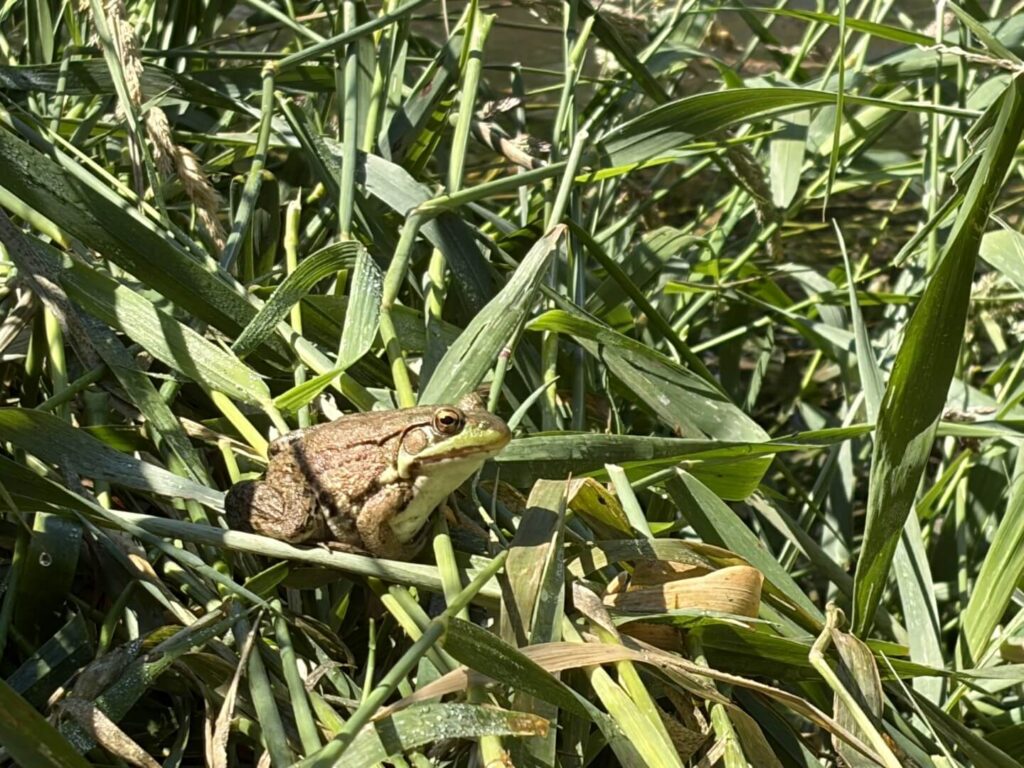
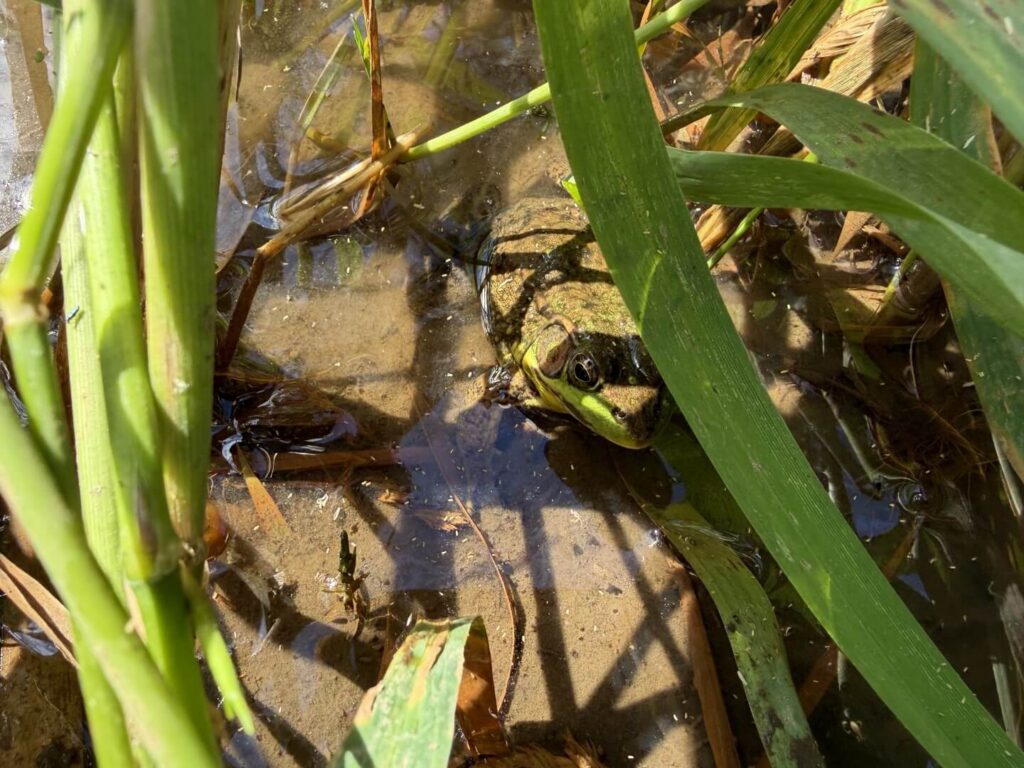
- Added floodplain wetlands and ponds as well as slower side channels for juvenile fish and non-game wildlife, including amphibians.
- Reconnected the stream to its floodplain and restored the stream’s pattern
Self-sustaining designs
Our habitat restoration designs focus on rebuilding conditions that allow a stream to maintain itself. Deep, clean pools, which are critical habitat for trout, are challenged by sedimentation in the Driftless Area. Poor land use practices like the deforestation for farming that occurred during the 19th and early 20th centuries have to led to the accumulation of soil along riverbanks
Without the protective cover of native vegetation and forests, the exposed soil became vulnerable to erosion. Heavy rain washed upland soil into valleys and stream channels, leading to the buildup of large amounts of sediment seen today along Driftless Area streams.
That’s why excavating steep, eroding banks and reconnecting streams to their natural floodplains is a critical piece of our habitat restoration process. It halts the release of sediment into streams. And when a high-velocity flow comes along, the floodplain reconnection allows the stream to spill over the riverbank and slow itself down, filtering sediment in the process and keeping streams clean for trout.
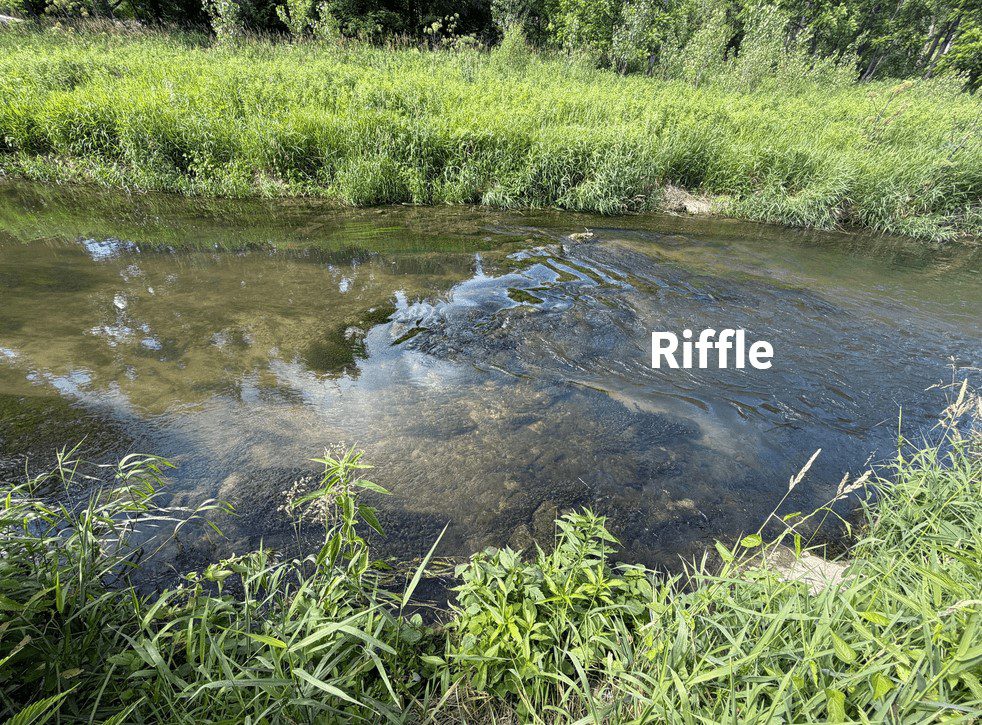
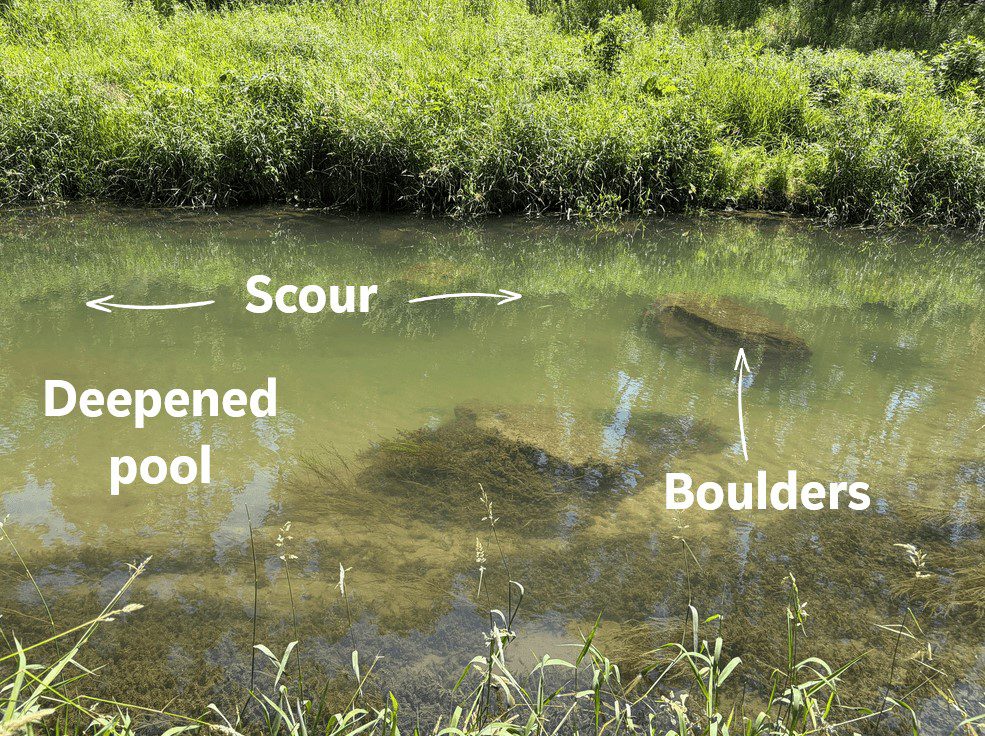
Rebuilding riffles also plays a role in the stream’s ability to maintain healthy habitat. Riffles, which precede a pool, accelerate the water and concentrate the flow downward as it enters a pool. This energy scours the bottom of the pool, keeping it deep and clearing sediment.
Habitat features, like boulders, also contribute to the creation of turbulence that keeps pools scoured out and hospitable to trout, while also serving as protective overhead cover.
Restoration work benefits aquatic insects
Our habitat restoration work seeks to improve conditions for both trout and the aquatic insects that make up the bulk of their diet. Diversity in macroinvertebrates in a stream is a critical indicator of a healthy ecosystem.
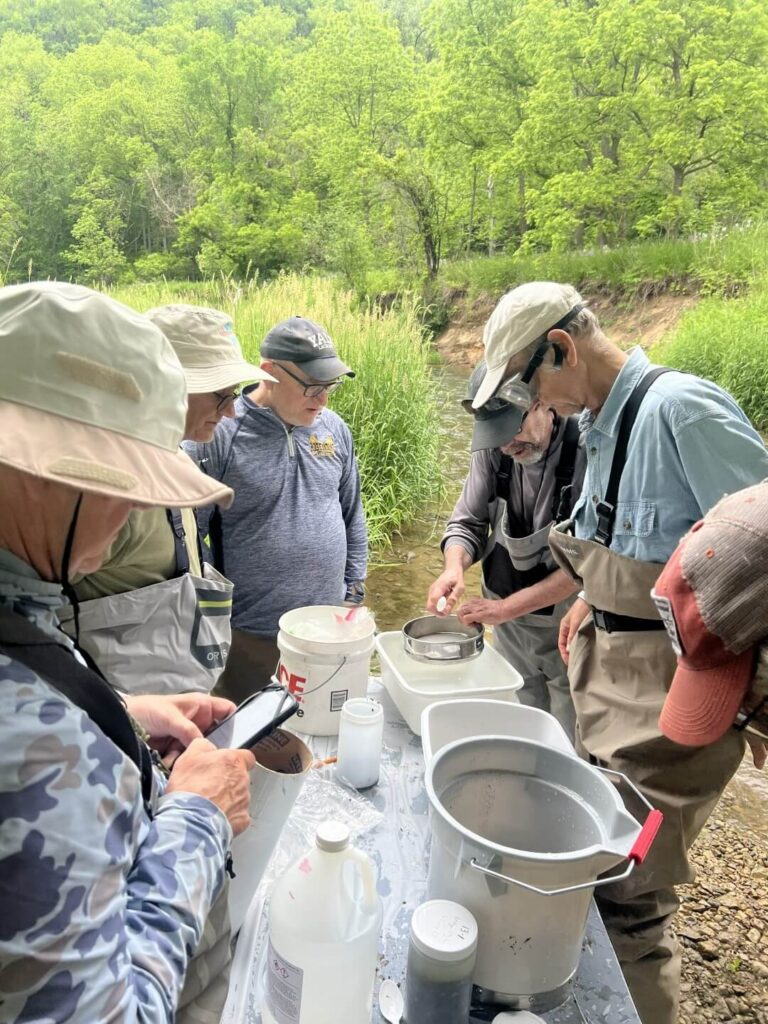
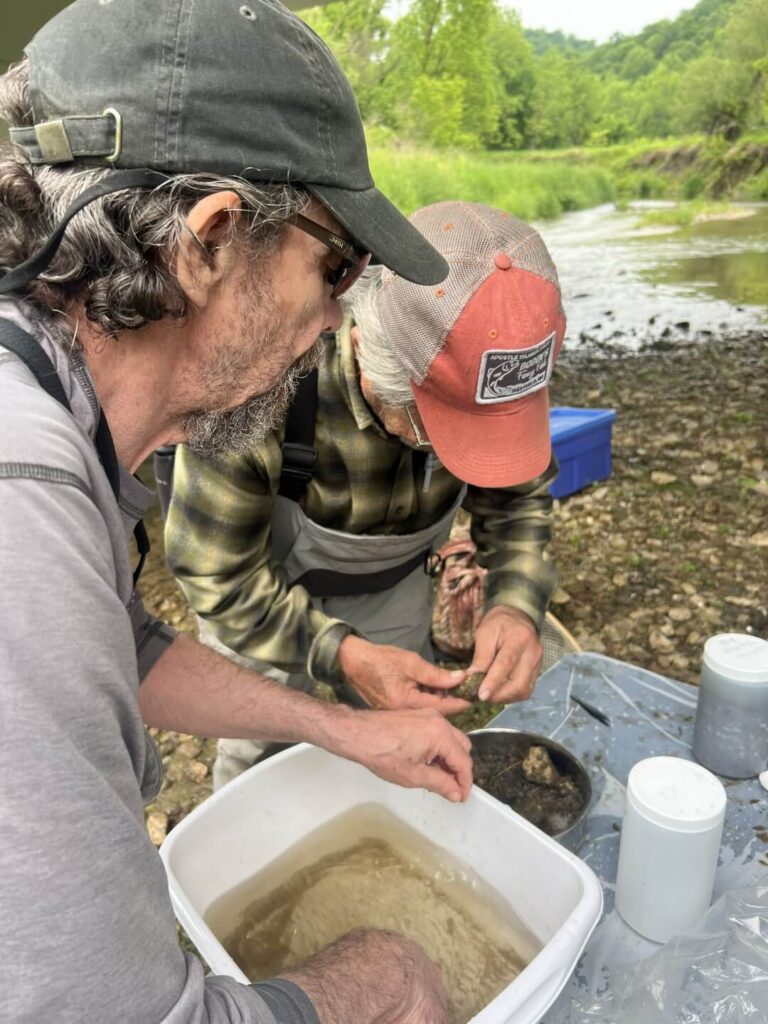
A 2025 macroinvertebrates sampling effort at a restored location within the South Branch of Whitewater River found a “notable increase” in aquatic insects since a 2018 monitoring effort that used the same methods and locations.
Both the 2018 and 2025 surveys utilized a scoring system developed for southeastern Minnesota coldwater streams by the Minnesota Pollution Control Agency. The purpose of the 2025 survey was to evaluate long-term trends following our habitat restoration and the Minnesota Buffer Law passed in 2014. The law requires perennial vegetation buffers up to 50 feet along lakes and streams to filter out phosphorus, nitrogen and sediment, all of which degrade water habitat.
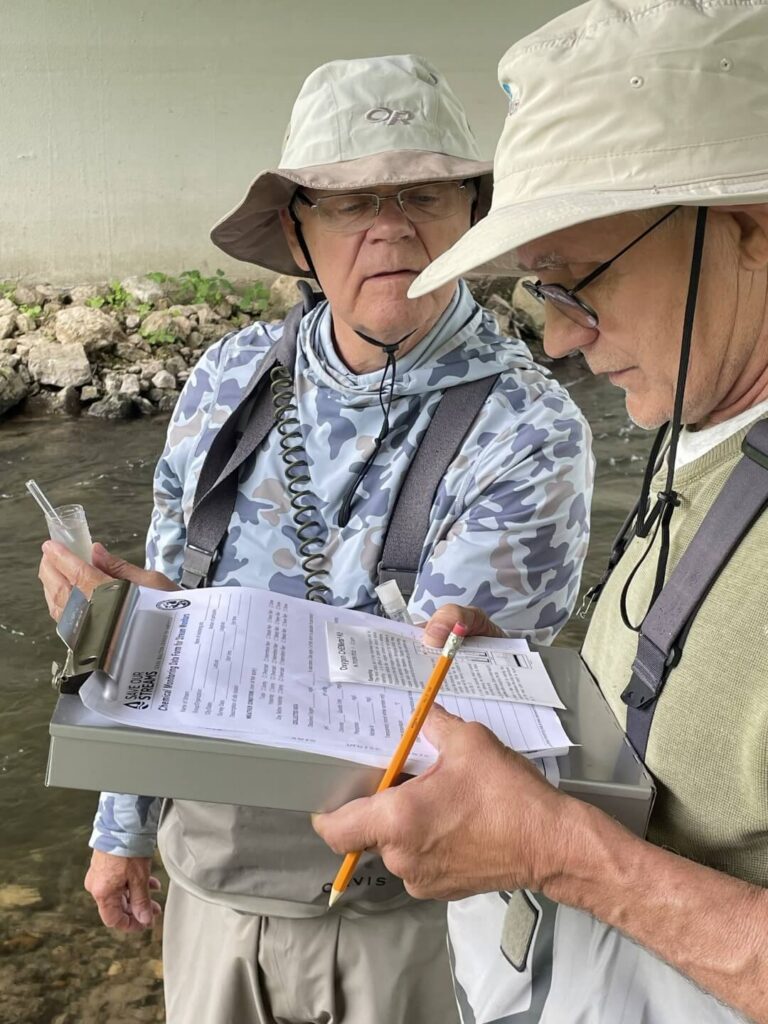
The 2025 survey — conducted by Minnesota Trout Unlimited staff and Twin Cities Trout Unlimited volunteers — also evaluated macroinvertebrates at a location outside of our habitat restoration reach and found no increase in aquatic insects.
A healthy river meanders
Another critical piece of our habitat work is restoring bends and meanders to streams. Unlike degraded rivers that have been historically moved and straightened by humans, a meandering river supports ecosystem diversity and the longer, winding path allows the stream to dissipate energy, reducing erosion and flooding.
Faster water along the outside bank of a bend is what carves the scour and maintains that deep, sediment-cleared pool habitat for trout.
Other wildlife considered in our designs
While our main goal is restoring habitat for trout and the bugs that feed them, our designs also consider the other wildlife within the river corridors.
A few ways we factor in non-game wildlife:
- We leave behind dead trees that provide habitat woodpeckers and other birds
- Slow backwater channels and seasonal pools within the wetland provide habitat for young-of-year trout, amphibians and waterfowl
- We plant native species along the river corridor that provide habitat for pollinators
- Basking logs for turtles and sandy shore area for turtle nesting

Funding for this project was provided by the Outdoor Heritage Fund as appropriated by the Minnesota State Legislature and recommended by the Lessard-Sams Outdoor Heritage Council (LSOHC).