Minnesota Trout UnlimitedMinnesota Trout Unlimited
  • HOME
  • ABOUT
    • Chapters
    • About
    • Join TU
    • Contact Us
    • How to Support Us
  • NEWS
    • Blog
    • Events
    • Monthly Enews
    • Trout Unlimited Minnesota
  • HABITAT
    • Visit Recent Projects
  • EDUCATION
    • Education and Outreach
    • Trout in the Classroom
    • Fishing Skills Programs
    • Great Waters Fly Fishing Expo
    • Foster the Outdoors Program
    • T.U.N.E Camp
  • ADVOCACY
    • Agricultural Runoff
    • Data Centers
    • Feedlots
    • Neonics
    • Nitrates
    • Preventing Fish Kills
    • Public Waters
    • Sulfide Mining
  • FISHING
  • DONATE
  • HOME
  • ABOUT
    • Chapters
    • About
    • Join TU
    • Contact Us
    • How to Support Us
  • NEWS
    • Blog
    • Events
    • Monthly Enews
    • Trout Unlimited Minnesota
  • HABITAT
    • Visit Recent Projects
  • EDUCATION
    • Education and Outreach
    • Trout in the Classroom
    • Fishing Skills Programs
    • Great Waters Fly Fishing Expo
    • Foster the Outdoors Program
    • T.U.N.E Camp
  • ADVOCACY
    • Agricultural Runoff
    • Data Centers
    • Feedlots
    • Neonics
    • Nitrates
    • Preventing Fish Kills
    • Public Waters
    • Sulfide Mining
  • FISHING
  • DONATE

Riffles: Essential Habitat for Healthy Macroinvertebrate Communities (Also, Trout Food!)

Kristen Poppleton2025-01-30T21:03:22+00:00

by Dr. Jennifer Biederman

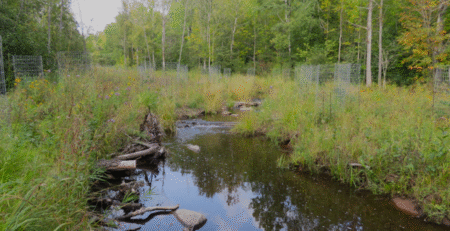
Riffle habitats in trout streams are essential little ecosystems that provide an ideal environment for aquatic macroinvertebrates, which are small, aquatic organisms that play a crucial role in freshwater ecosystems – and the most important food source of stream dwelling trout in Minnesota. What is a riffle? Riffles are characterized by fast-moving, shallow water over a substrate of gravel and cobbles, creating conditions – crevices, surfaces, nooks, and crannies -that support diverse and abundant macroinvertebrate communities.

One of the primary reasons macroinvertebrates thrive in riffles is the high oxygen levels found in the turbulent water. The constant movement of water increases gas exchange, ensuring that these organisms have access to the oxygen necessary for respiration. Additionally, the flow of water in riffles helps to deliver food particles, such as detritus and algae, which are essential for many macroinvertebrate species. The turbulence also dislodges organic material from the substrate, making it readily available as a food source.

Riffles serve as a habitat for a variety of macroinvertebrates, including mayflies, stoneflies, and caddisflies, which often have specialized adaptations for life in fast currents. For example, many of these organisms have flattened bodies or hooks that allow them to cling to rocks and other substrates, preventing them from being swept away. The complex structure of riffles, with its varied sizes of gravel and cobbles, provides numerous microhabitats for different species, promoting biodiversity.

Furthermore, riffles act as breeding and nursery grounds for many macroinvertebrates. The gravel substrate offers protection for eggs and juvenile stages, which can hide from predators while benefiting from the high nutrient flow in these habitats.

Healthy, abundant riffle habitat is a top priority when MNTU designs a stream improvement project – degraded streams typically lack this habitat. Following the installation of new riffles in the stream, the habitat is quickly colonized to establish abundant and diverse communities of aquatic macroinvertebrates – and subsequently improving the capacity for the local population of trout to increase.
Share this post

Facebook Twitter Email

Related Posts

Bob Luck Eagle Creek Brook Trout

MNTU Habitat E-news: February 2026

Spotlight: Eagle Creek Habitat Improvement Project (Savage, MN) This spring, Minnesota Trout Unlimited (MNTU) will begin construction on a 2,000-foot trout... read more

The Importance of Pools as Trout Habitat in Stream Restoration

On a rainy afternoon a few months ago, I stopped at a newly constructed project on my way home to... read more

Moving the Needle on Fish Passage in Northeastern Minnesota

Fish passage is not always just about fish passage. A culvert replacement might start as a solution to a barrier... read more

Evaluating Stream Habitat Designs Across Southeast Minnesota

Over the past few decades, Minnesota has made tremendous progress in restoring and enhancing its coldwater streams. Across the state,... read more

Why Toewood Is Showing Up Along Minnesota Trout Streams

By Dr. Jennifer Biederman Walk a recently restored bend of a trout stream anywhere in Minnesota and you may notice a... read more

What Happens After Stream Restoration? From Bare Soil to Cover Crops to Thriving Native Habitat

When a stream restoration project wraps up, the work on the ground is just beginning. During construction, streambanks are graded... read more

Duluth’s Amity Creek Receives New Protection!

MNTU is proud to be a part of an effort to add the highest level of protections to over 1,100... read more

Habitat Director’s Report from the Field, July 2025

July is the heart of field season when it comes to carrying out stream restoration work across the state. Tackling... read more

MNTU’s barrier removal projects also benefit aquatic invertebrates

When most trout anglers think about culvert replacements, they rightly think of trout passage to critical habitat.   Undersized, perched, and... read more

Trees for Trout: An Update on MNTU’s Riparian Reforestation Project 

If you’ve fished along a trout stream in northeast Minnesota lately, you’ve probably noticed the standing dead spruce and balsam... read more

Join MNTU
Donate

Recent Posts

  • Contact your Senators to protect the BWCAW
  • Community Science for Winter Anglers: Bugs Below Zero
  • Trout in the Classroom Update – February 2026
  • MNTU Habitat E-news: February 2026
  • An 8-Year Look at the MNTU Education Program

Categories

  • Action Alerts
  • Advocacy
  • Donations
  • Education
  • Fishing
  • Habitat
  • Legislation
  • Macro of the Month
  • News
  • Policy
  • Trout In The Classroom
  • Volunteer Spotlight
Minnesota Trout Unlimited
  • Facebook
  • Instagram
  • YouTube
  • Contact your Senators to protect the BWCAW
  • Community Science for Winter Anglers: Bugs Below Zero
  • Trout in the Classroom Update – February 2026
  • MNTU Habitat E-news: February 2026
  • An 8-Year Look at the MNTU Education Program
  • Winter Fly Fishing in Minnesota’s Driftless
  • The Importance of Pools as Trout Habitat in Stream Restoration
  • What Happens to Aquatic Invertebrates as Winter Sets In?
  • Moving the Needle on Fish Passage in Northeastern Minnesota
  • 12,000 Eggs Delivered for Trout In The Classroom
  • November 2025 Macro of the Month- Northern Caddisflies
  • Action Alerts
  • Advocacy
  • Donations
  • Education
  • Fishing
  • Habitat
  • Legislation
  • Macro of the Month
  • News
  • Policy
  • Trout In The Classroom
  • Volunteer Spotlight

Send all correspondence to:

Minnesota Trout Unlimited

P.O. Box 845

Chanhassen, MN 55317

Join MNTU
Donate

© Copyright 2026 Minnesota Trout Unlimited. All Rights Reserved.