
The Importance of Pools as Trout Habitat in Stream Restoration
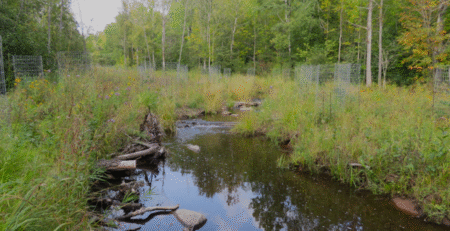
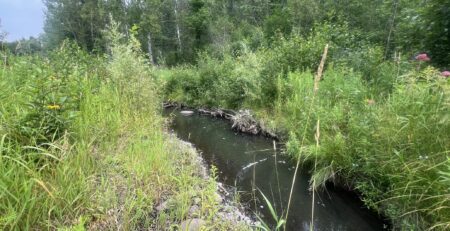
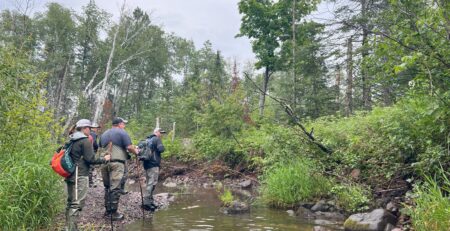
On a rainy afternoon a few months ago, I stopped at a newly constructed project on my way home to see how it was reacting to the higher flows. Walking the stream, in-particular, a section where a restored riffle curved into a nice deep pool with toewood tucked into the outside bend caught my attention. Although a lot of science was involved in the planning of that pool, its appearance (as with most pools) was so remarkably simple. The deeper water was against the outside bank with a soft seam of current sliding along the edge, and a clean tailout that faded into gravel as it turned into a run.
As a former ecologist, I like to sit and watch the stream function. So, I sat there and observed. Along the seam, tiny bits of foam and leaf fragments were collected and a few drifting invertebrates (probably some terrestrials washed in from the rain). As an angler, I knew that, at some point, this would turn into a late afternoon snack. Of course, it did! It was really fun to watch the fish feed in the pool (even without my fly rod).
In my work as MNTU’s habitat director, I spend a lot of time talking with our project partners about features like riffles, bank elevation, toewood, and floodplains as we design restoration projects. These are all important features of healthy, functioning trout streams. But pools are a feature that, at times, are less talked about, but no less important. And, when I talk to anglers about our projects, they often reinforce the importance of pools in holding larger fish and encourage us to make sure our projects maintain and create pool habitat.
The Importance of Pools for Trout
Yes, pools have deep water where larger trout like to hang out, but there are specific reasons they are there – which we consider when evaluating stream habitat and designing projects.
Foremost, we think of pools as “refuges” for trout. There are three ways pools help trout:
- Thermally: Deeper water changes temperature more slowly, so in the summer, pools are often a cool refuge for trout in the afternoons when shallower riffles and runs may heat up. On the other hand, in winter, pools are often insulated with depth and can remain a bit warmer than riffles and runs which are more likely to supercool and form frazil ice.
In the northeast, where there is less groundwater to maintain consistent seasonal temperatures, it is especially important that our restoration projects prioritize deep, shaded pool habitat.
- Energetically: In a good pool, trout can hold in the slower water and slide out to feed along the seam. This gives their meal a lot more bang for its buck when contrasted with fighting current to feed benthically along the bottom of a riffle. (That burns a lot of calories!)
- Protection: Depth, undercut banks, rootwads, boulders, and overhead cover give trout places to hide from predators. Although trout are the top of the food chain in most trout streams, there are terrestrial predators that are eager to snag a trout for lunch – especially blue herons and eagles.
Driftless pools
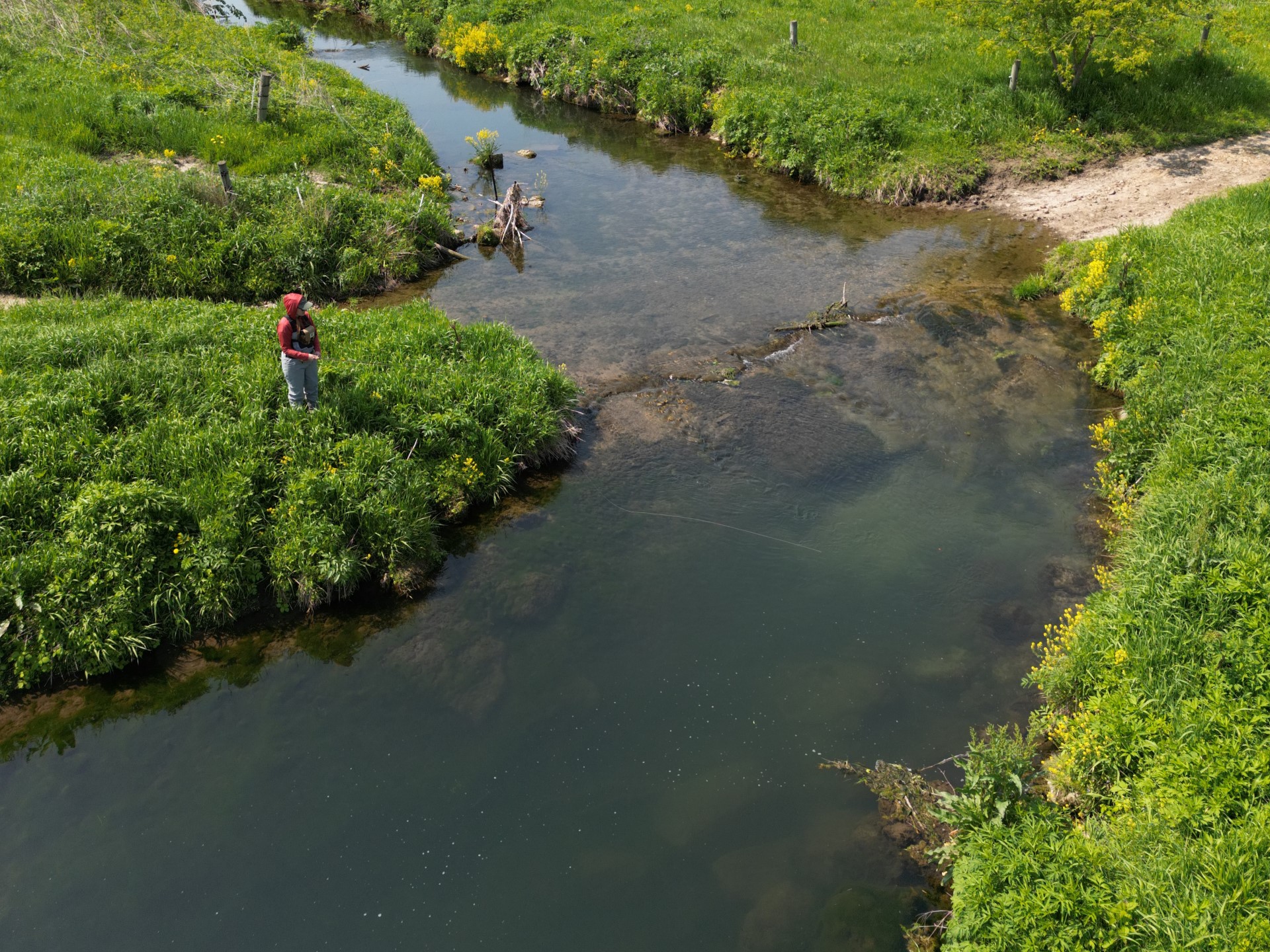
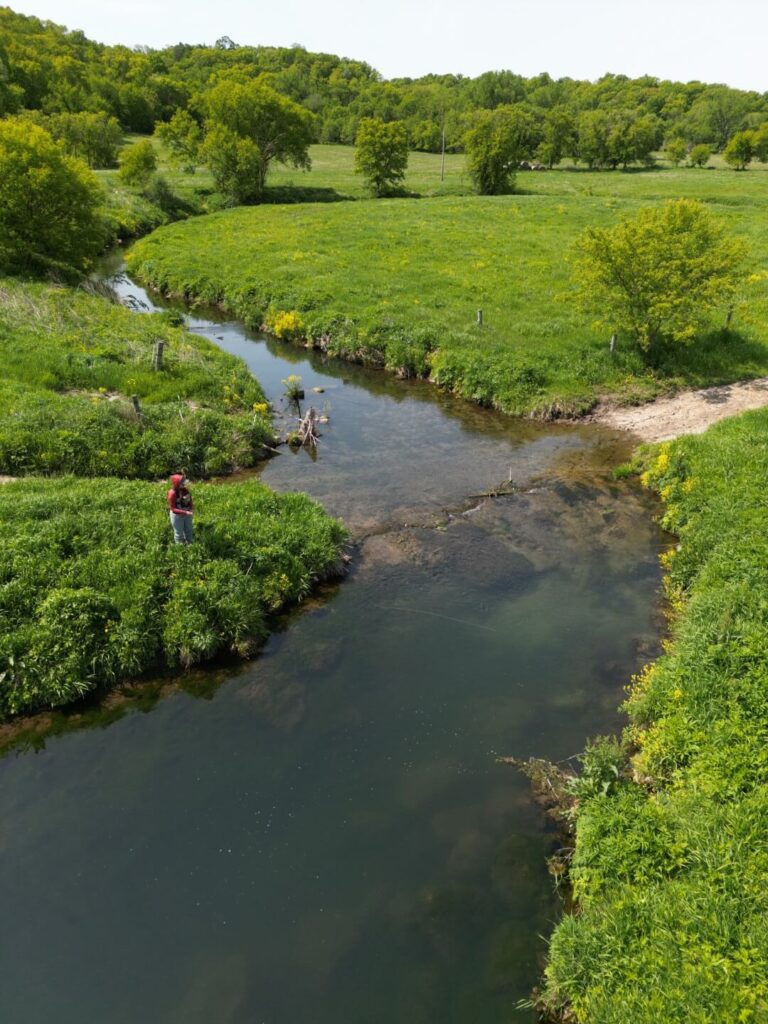
In the Driftless, pools are often tied to groundwater. Most southeast trout streams are impressively spring-fed, and this steady groundwater is the reason many of those streams stay cold enough for trout even when summer air temperatures are hot.
But Driftless pools are challenged by sediment. Fine sediment fills pools from bank erosion and unstable channels, and when that happens, pools don’t actually “disappear,” they just slowly transform into shallow, warm, featureless water – and lost is the depth, cover, and cool pockets of water that are so important for trout.
Northeast pools
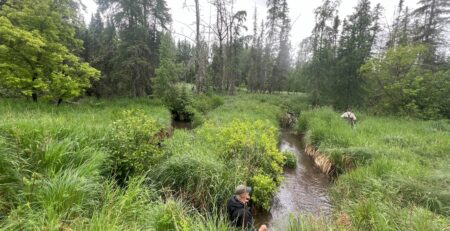
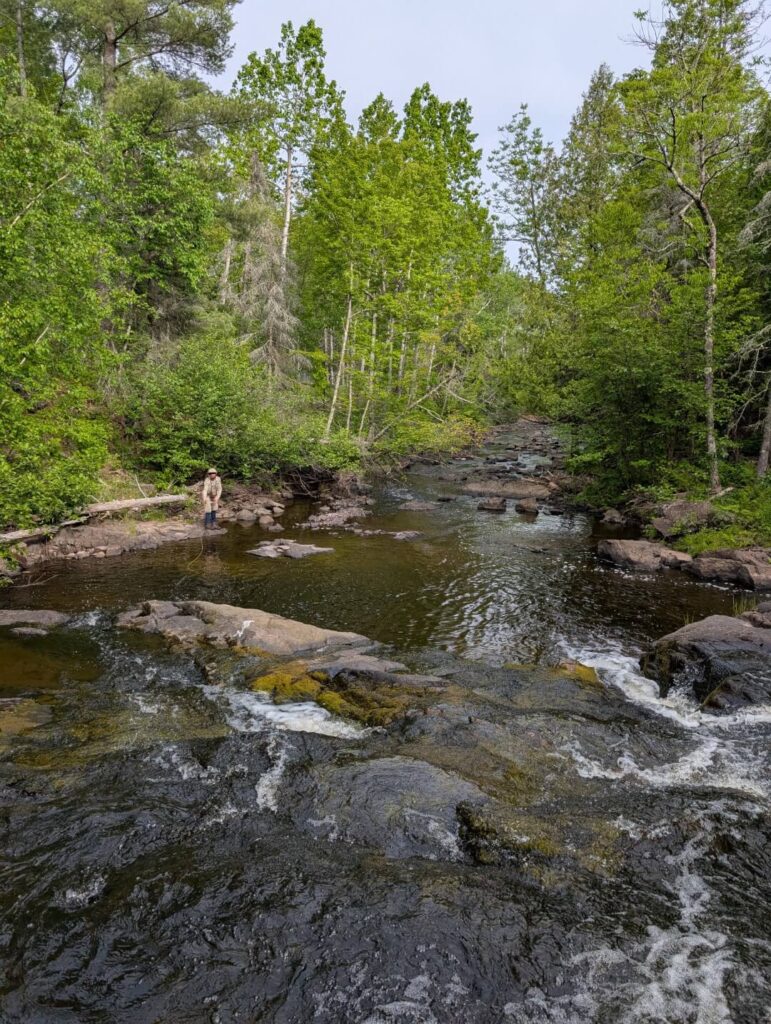
Northeast Minnesota is different. You can absolutely find cold water up there, but many North Shore streams don’t get the same steady groundwater buffering that Driftless spring–fed streams do. They’re often steeper, rockier, and flashier. Rain comes hard, water rises fast, and the stream has a lot of “muscle”. In these streams, a pool is a place trout can tuck into when flows spike, when winter gets harsh, or when low water shrinks everything else. These pools are frequently built and maintained by structures, including boulders, bedrock, and fallen trees. Also, with less groundwater, these pools are critical for both overwintering and serving as cool refugia in the summer.
Pools as a Part of Restoration
People sometimes assume we restore pools by excavating them like a pond. That doesn’t work on its own! Although we do excavate pools, it will only be maintained with the right flows and structure (not going back in with a backhoe). Our project designs focus on rebuilding the conditions that let the stream scour and maintain pools naturally:
- Rebuilding riffle–pool rhythm: Riffles help set grade and concentrate flow so pools can scour and stay deep.
- Adding cover that makes depth “stick”: Toewood, rootwads, boulders, and large wood create turbulence and scour while also giving fish a place to live.
- Reducing sediment inputs: Stabilizing eroding banks and restoring floodplain access helps keep pools from filling in.
- Restoring riparian vegetation: Shade matters for temperature, and roots matter for bank stability – both help pools maintain depth and serve as habitat over time.
In recent years, Minnesota has experienced heavier rain events, longer dry periods, and warmer summers. All of that makes refuge habitat more valuable and more critical in our stream projects. Pools are where trout go when conditions are bad. And sooner or later, conditions get bad – whether you’re in a spring-fed creek in the Driftless or a bouldery North Shore stream that just took a two-inch rain.
A really simple way to “read” a trout stream in terms of habitat is to look for at the pools. Are they deep enough to matter? Do they have cover? Are they connected to riffles and runs, or are they isolated and filling with sand? Are there shady edges and clean seams?
Habitat benefits aside, pools are honestly pretty incredible. After almost twenty years working on trout streams, they’re still the spot that can stop me in my tracks. I could sit and watch a good pool for hours.