
Restoring Riparian Forests for North Shore Cold-Water Fisheries
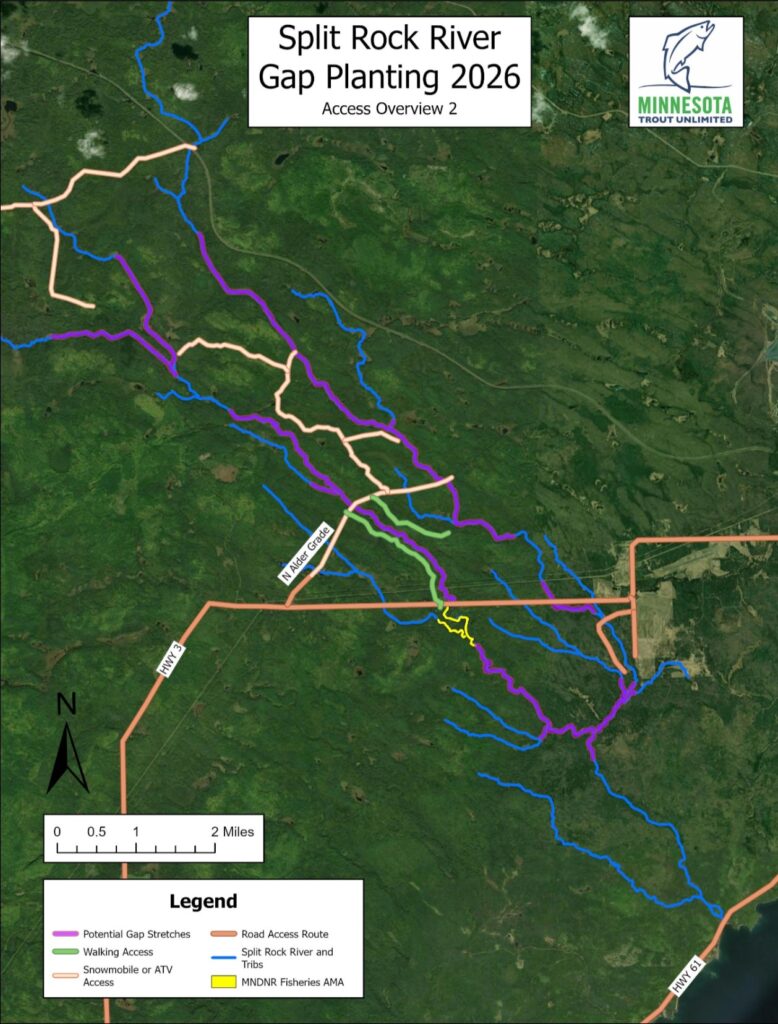
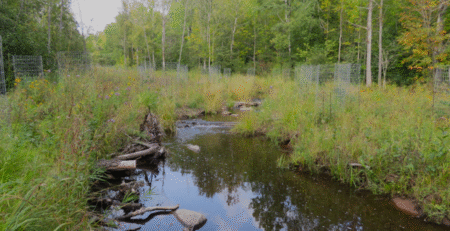
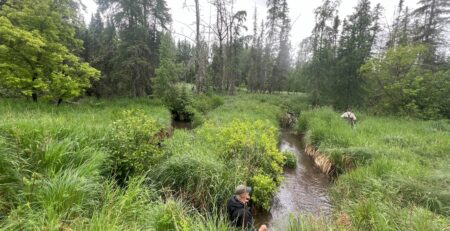
Minnesota Trout Unlimited is undertaking a critical planting project to restore healthy forests within riparian corridors along the high-quality cold-water rivers of Lake Superior’s North Shore.
Along these vital trout streams, stands of dead and dying trees including balsam, spruce, and ash are being replaced with selected conifers and other long-lived species. This proactive strategy is essential for managing riparian forests and sustaining the future of northeast Minnesota’s fisheries.
Protecting Native Brook Trout
Spruce budworm outbreaks, deforestation, and climate change pose significant risks to native forest ecosystems and the aquatic systems that depend on them. Restoring these forests by replanting stands of dead trees with a diverse mix of long-lived tree species is a critical step in supporting native brook trout populations.
Why it matters: Trout rely on cold, oxygen-rich water. Healthy riparian forests provide the shade, water storage, groundwater recharge, and bank stability necessary to maintain cool water temperatures during the summer months.
This Year’s Planting Strategy
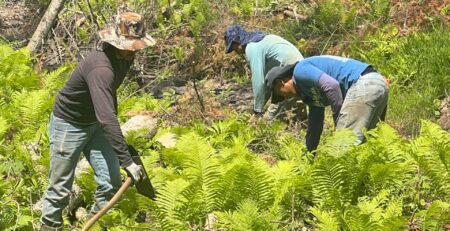
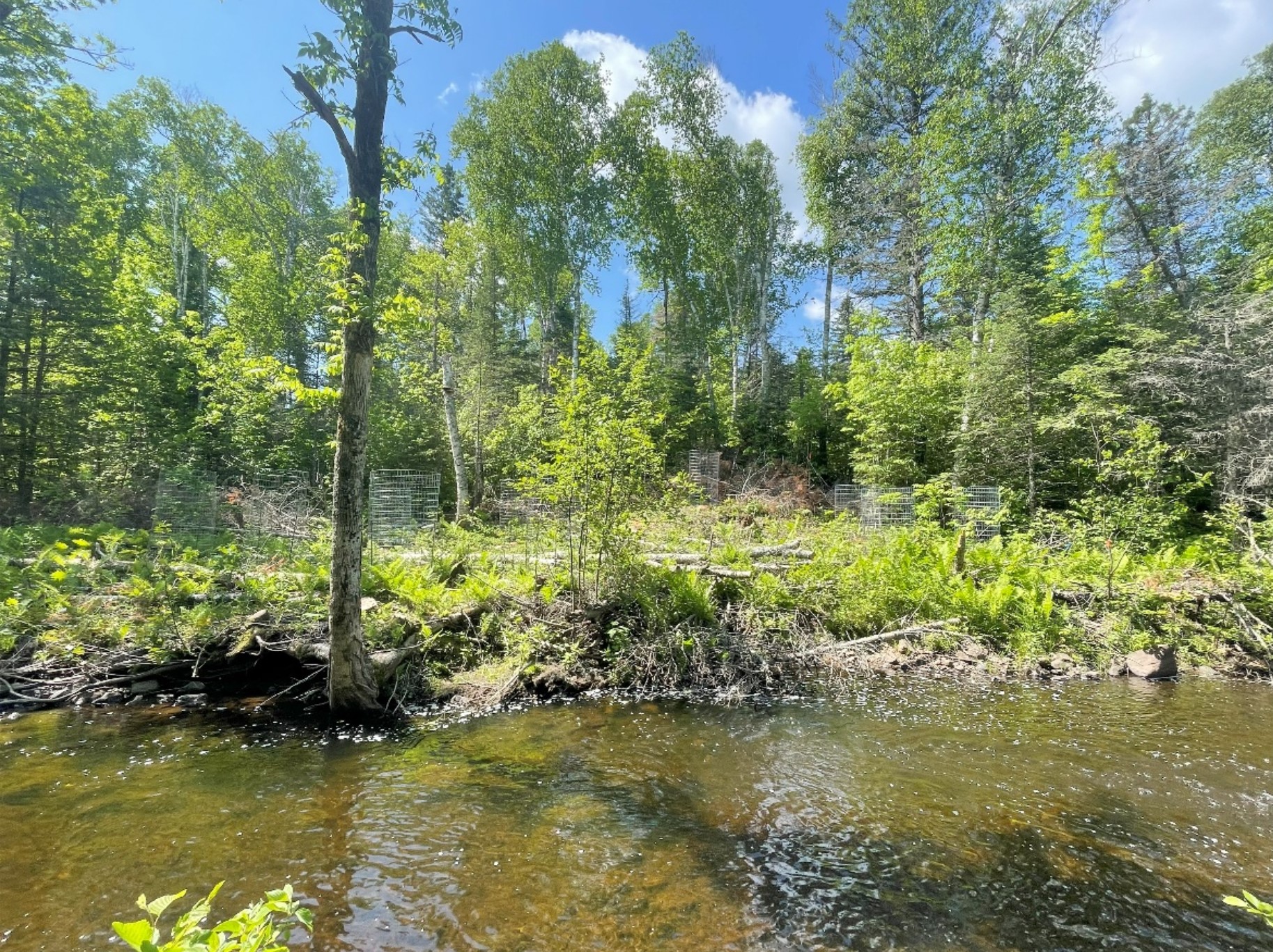
Our target for this year’s project is the successful cutting and planting of 300 forest gaps. To ensure the highest survival rate for these new trees, we are implementing rigorous protection measures:
- Soil Preparation: Every planting area is scalped to prepare the ground.
- Weed Suppression: All trees receive a 20-inch biodegradable fiber weed mat.
- Species-Specific Protection: To prevent browse damage, White Cedar and White Pine will be protected with:
- 6-foot tall cages (3 feet wide).
- Two lengths of rebar for structural support.
Trees being planted in the Split Rock Watershed:
- White Cedar: 1500
- White Pine: 1500
- White Spruce: 1500
- Tamarack: 100
- Sugar Maple: 500
- Oak: 500
- Yellow Birch: 500