Minnesota Trout UnlimitedMinnesota Trout Unlimited
  • HOME
  • About
    • Chapters
      • Headwaters Chapter
      • Gitche Gumee Chapter
      • Twin Cities Chapter
      • Hiawatha Chapter
      • Win-Cres Chapter
    • Our Mission
    • Join MNTU
    • Contact Us
    • Help Support MNTU
  • NEWS
    • Blog
    • Events
    • Monthly Cast Newsletter
    • Trout Unlimited Minnesota Newsletter
  • HABITAT
  • EDUCATION
    • Education and Outreach
    • Trout in the Classroom
    • Fishing Skills Programs
    • Great Waters Fly Fishing Expo
    • Foster the Outdoors Program
    • T.U.N.E Camp
  • ADVOCACY
    • Agricultural Runoff
    • Data Centers
    • Feedlots
    • Neonics
    • Nitrates
    • Preventing Fish Kills
    • Public Waters
    • Sulfide Mining
  • FISHING
  • DONATE
  • HOME
  • About
    • Chapters
      • Headwaters Chapter
      • Gitche Gumee Chapter
      • Twin Cities Chapter
      • Hiawatha Chapter
      • Win-Cres Chapter
    • Our Mission
    • Join MNTU
    • Contact Us
    • Help Support MNTU
  • NEWS
    • Blog
    • Events
    • Monthly Cast Newsletter
    • Trout Unlimited Minnesota Newsletter
  • HABITAT
  • EDUCATION
    • Education and Outreach
    • Trout in the Classroom
    • Fishing Skills Programs
    • Great Waters Fly Fishing Expo
    • Foster the Outdoors Program
    • T.U.N.E Camp
  • ADVOCACY
    • Agricultural Runoff
    • Data Centers
    • Feedlots
    • Neonics
    • Nitrates
    • Preventing Fish Kills
    • Public Waters
    • Sulfide Mining
  • FISHING
  • DONATE

MNTU’s barrier removal projects also benefit aquatic invertebrates

Jennifer Biederman - MNTU Habitat Director on June 10, 20252026-05-13T22:05:01+00:00
By Jennifer Biederman - MNTU Habitat Director on June 10, 2025

When most trout anglers think about culvert replacements, they rightly think of trout passage to critical habitat.   Undersized, perched, and crumbling culverts block trout from reaching cold water refuges, spawning grounds, and more habitat. Removing those barriers is a huge benefit to trout fisheries.

But often overlooked is the fact that culvert replacements also help rebuild the larger aquatic food web. Reconnecting stream sections creates better habitat for aquatic macroinvertebrates—the mayflies, caddisflies, stoneflies, and other critters that trout snack on from birth.
Old Culverts = No Room for Bugs

Most older culverts were designed to push water through a pipe as quickly as possible. That means high-velocity flows, no connection to the natural streambed, and very little habitat diversity. For aquatic insects, it’s like trying to live on a slip-n-slide.

Without pools, riffles, woody debris, and streambed material like gravel and cobble, macroinvertebrates can’t establish the complex life cycles that support fish. These bugs aren’t just floating around, they rely on very specific habitat features to cling to, burrow into, or emerge from.

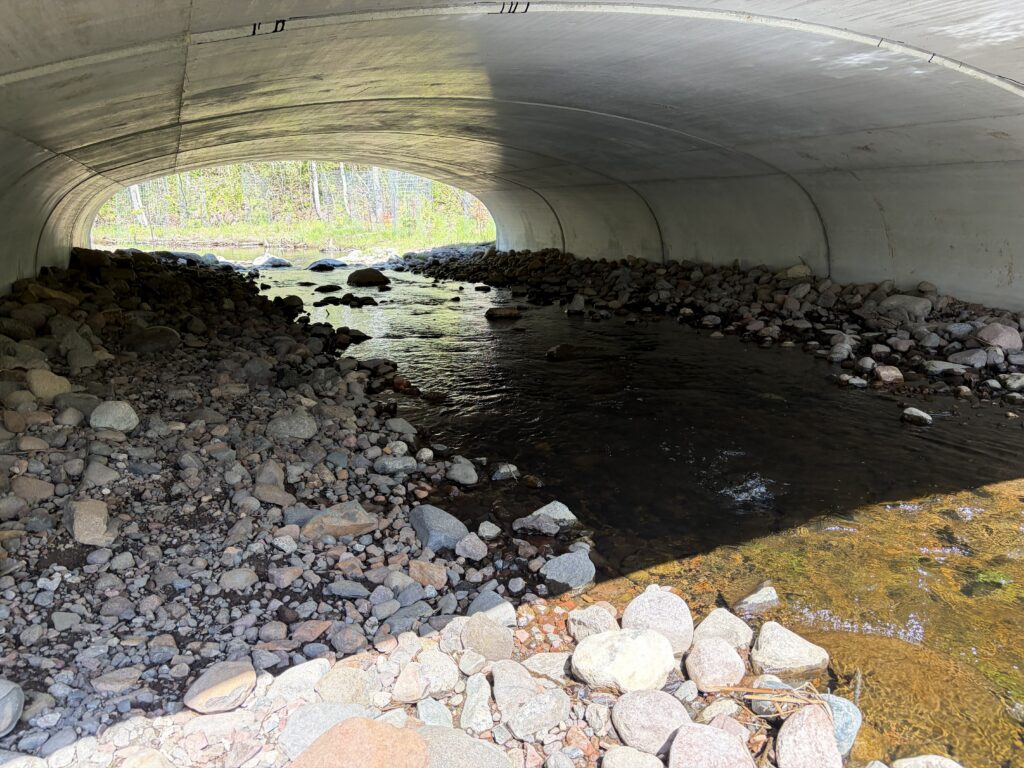
When we replace an old culvert with a geomorphically sized one (that mimics a natural stream channel, reconnects upstream and downstream habitats, and allows for floodplain function) we’re not just making life easier for trout, we are rebuilding their food supply from the gravel up.
More Bugs = Healthier Streams

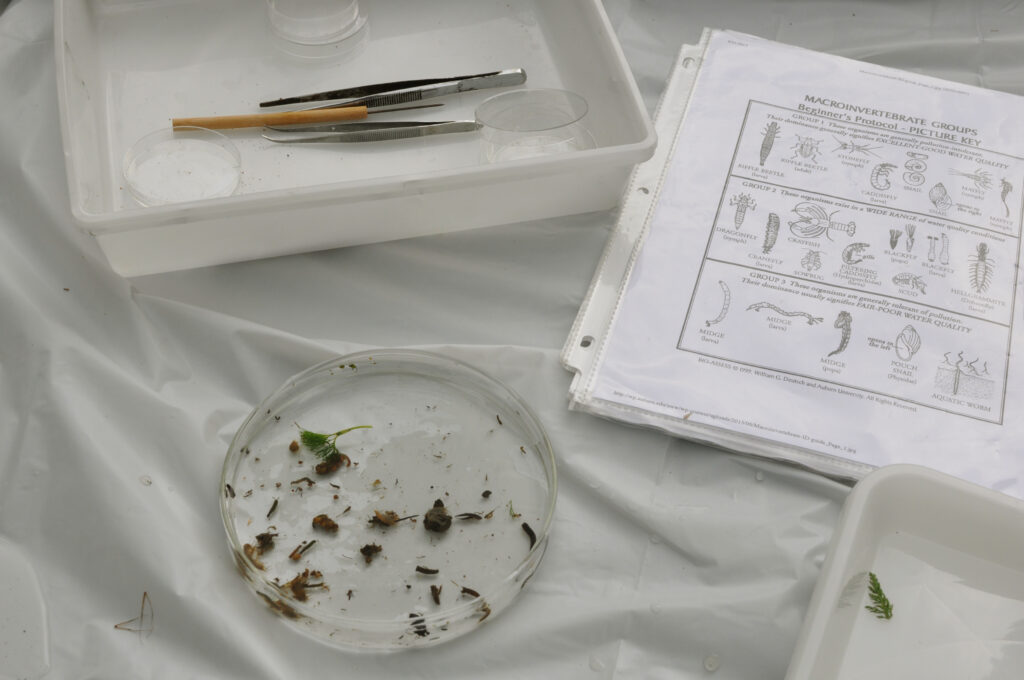
A well-functioning stream with a natural bottom and good hydrology supports a diverse community of macroinvertebrates. These insects are critical indicators of water quality, and their abundance and diversity tell us a lot about stream health. When we see EPT taxa – Ephemeroptera (mayflies), Plecoptera (stoneflies), and Trichoptera (caddisflies) – making a comeback after a culvert replacement, we know the stream is on the mend.

And for trout the buffet line is reopening. More bugs mean more foraging options, better growth, and healthier fish populations.

MNTU’s Current Culvert Project

MNTU is in the process of removing a barrier on a small, cold tributary of the Baptism River near Finland, Minnesota. The old culvert was undersized, perched, and impassable to fish. It also created a high-velocity bottleneck that scoured the streambed and left little room for aquatic insects to survive.

MNTU’s design team used a geomorphic approach that reconnects upstream habitats, restores natural flow, and reestablishes the kind of stream bed complexity that bugs and trout need. Once in place, this new structure won’t just let fish move through, it will boost food production by allowing fine sediments to settle out, organic matter to accumulate, and riffle-pool sequences to re-form.

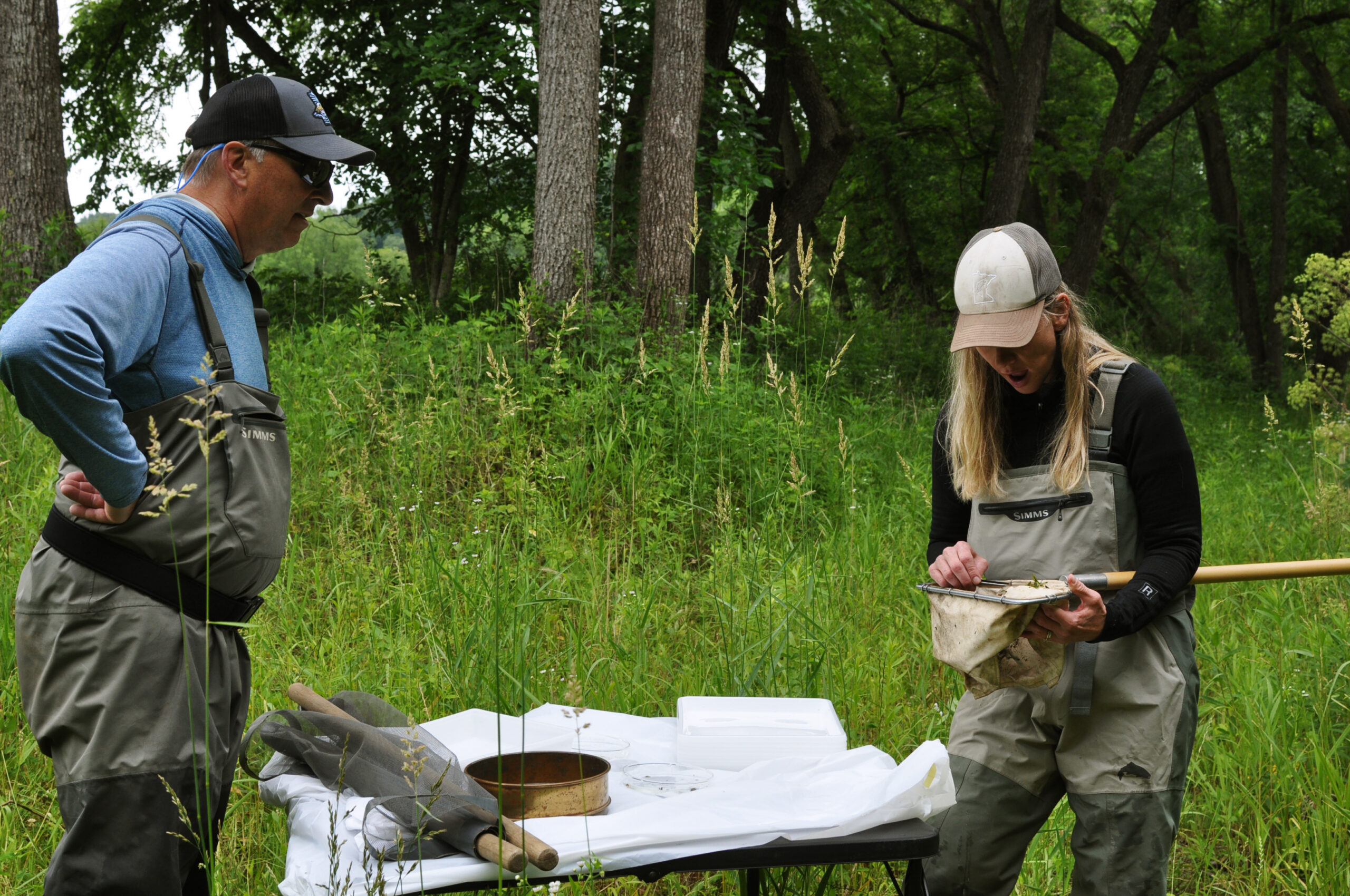
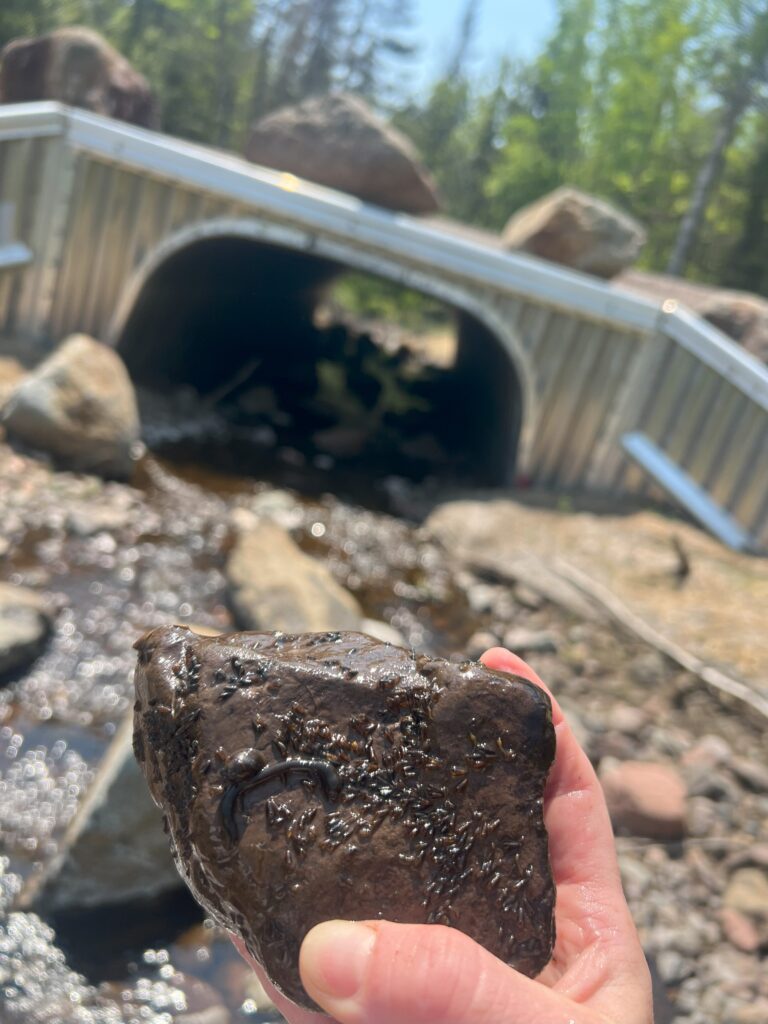
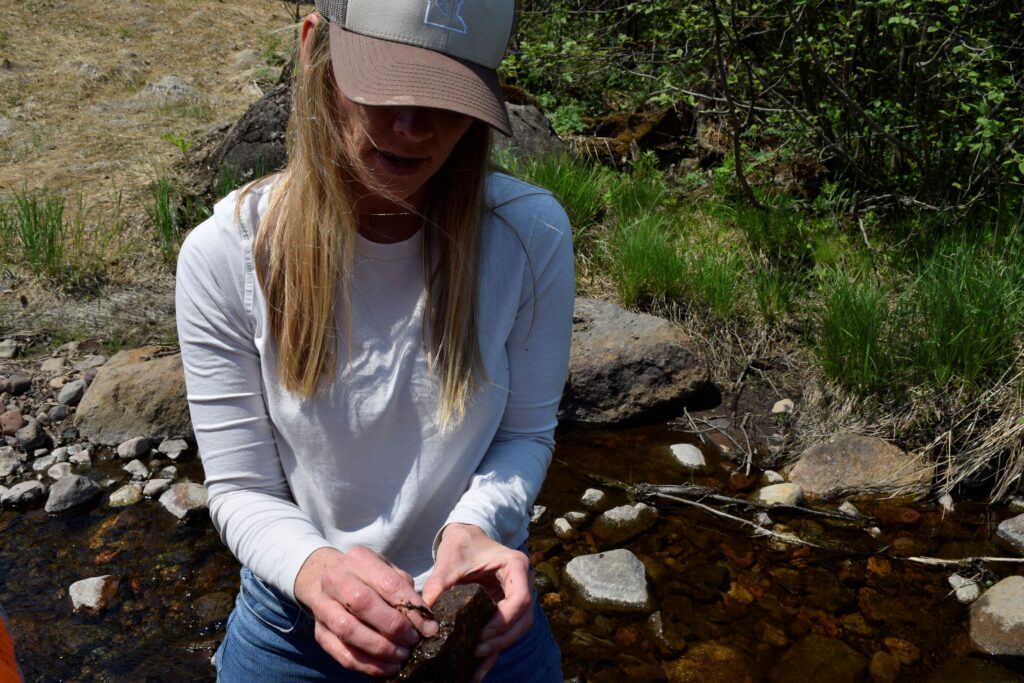
Last week we visited one of last year’s culvert projects in the Baptism River watershed and spent some time turning over rocks. We were happy to see a thriving community of caddis, mayflies, midges, and black fly larvae!
One Project, Many Benefits

Minnesota Trout Unlimited understands the connections between land, water, and fish. Projects removing barrier culverts illustrate these connections and how one fix leads to better fish passage, more resilient infrastructure, and a serious boost for stream productivity.

At the end of the day, healthy trout need more than just a place to live.  They also need a place to eat.

Want to see these projects in action? Follow along at mntu.org or check out our volunteer events to help us restore fish-friendly, bug-filled streams near you.

Share this post

Facebook Twitter Email

Related Posts

Construction for Eagle Creek restoration begins in May 

Minnesota Trout Unlimited will begin a major habitat improvement project on Eagle Creek, one of the most unique and historically... read more

South Creek project kicks off 

Minnesota Trout Unlimited and partners kicked off the design of a major habitat improvement project on South Creek. read more

Restoring riparian forests for North Shore coldwater fisheries

Minnesota Trout Unlimited is undertaking a critical planting project to restore healthy forests within riparian corridors along the high-quality cold-water... read more

Bob Luck Eagle Creek Brook Trout

Planning underway for Eagle Creak habitat improvement

This spring, Minnesota Trout Unlimited will begin construction on a 2,000-foot trout stream habitat improvement project on Eagle Creek in... read more

The importance of pools as trout habitat in stream restoration

On a rainy afternoon a few months ago, I stopped at a newly constructed project on my way home to... read more

Moving the needle on fish passage in northeastern Minnesota

Fish passage is not always just about fish passage. A culvert replacement might start as a solution to a barrier... read more

Evaluating stream habitat designs across southeast Minnesota

Over the past few decades, Minnesota has made tremendous progress in restoring and enhancing its coldwater streams. read more

Why toewood is showing up along Minnesota trout streams

For MNTU, the goal of using toewood is not just to “hold the bank”. It’s to restore function, including banks... read more

What happens after stream restoration? From bare soil to cover crops to thriving native habitat

When a stream restoration project wraps up, the work on the ground is just beginning. read more

Duluth’s Amity Creek receives new protection

Minnesota Trout Unlimited is proud to be a part of an effort to add the highest level of protections to... read more

Categories

Recent Posts

  • Action alert: Speak up to protect MNTU’s habitat improvement funding  
  • Construction for Eagle Creek restoration begins in May 
  • Photos: Mahtomedi students release trout and identify bugs
  • Action alert: Funding for habitat restoration is stalled
  • Action alert: Protect robust trout streams near proposed data center in Hermantown

Chapters

  • Headwaters Chapter
  • Gitche Gumee Chapter
  • Twin Cities Chapter
  • Hiawatha Chapter
  • Win-Cres Chapter
Subscribe
 
Join MNTU
 
Make A Donation
  • Facebook
  • YouTube
  • Instagram
Protect – Restore – Sustain

Find Your Chapter

  • Headwaters Chapter
  • Gitche Gumee Chapter
  • Twin Cities Chapter
  • Hiawatha Chapter
  • Win-Cres Chapter

Learn More

  • Recent News
  • Upcoming Events
  • Habitat Projects
  • Fishing Information
  • Contact Us

Get Involved

  • Join MNTU
  • Make a Donation
  • Monthly Cast Newsletter
  • Follow on Facebook
  • Follow on Instagram
© Copyright 2026 Minnesota Trout Unlimited. All Rights Reserved.
Minnesota Trout Unlimited is a 501(c)(3) organization.