
Moving the needle on fish passage in northeastern Minnesota
Fish passage is not always just about fish passage. A culvert replacement might start as a solution to a barrier in a watershed, but when MNTU gets involved, it becomes an opportunity to address habitat beyond the ability for a trout to get from point A to point B. When we address fish passage projects, we look for opportunities to restore substrate, add physical complexity, and reconnect floodplains.
Over the past decade – especially since about 2012 – Minnesota Trout Unlimited (MNTU) and an expanding network of agency, tribal, local government, and nonprofit partners have achieved pretty amazing progress on coldwater fish passage across the Arrowhead. A recent review of completed, funded, and proposed projects across northeastern Minnesota shows not just an increase in the number of projects, but a clear evolution in how we approach them.
A decade of progress and growing momentum
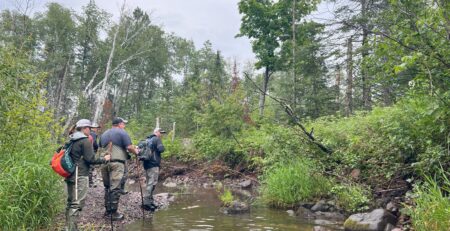
Across Cook, Lake, St. Louis, Carlton, and surrounding counties, dozens of road–stream crossings have been replaced, upgraded, or removed entirely. Many of these projects focused on streams long recognized for their coldwater potential; places like the Baptism River watershed and tributaries such as Hockamin, Lindstrom, Cranberry, and Fredenberg creeks.
The data tell a compelling story. Most projects were completed between 2012 and 2024, with a noticeable increase in activity from 2020 through 2024. In fact, 2021 stands out as a peak year for completed projects across the region, reflecting years of assessment work, partnership building, and funding coordination finally coming together on the ground.
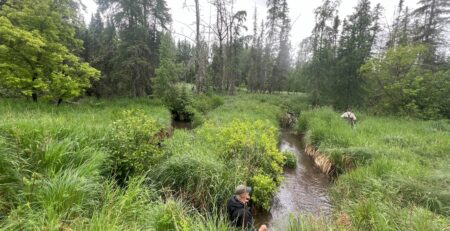
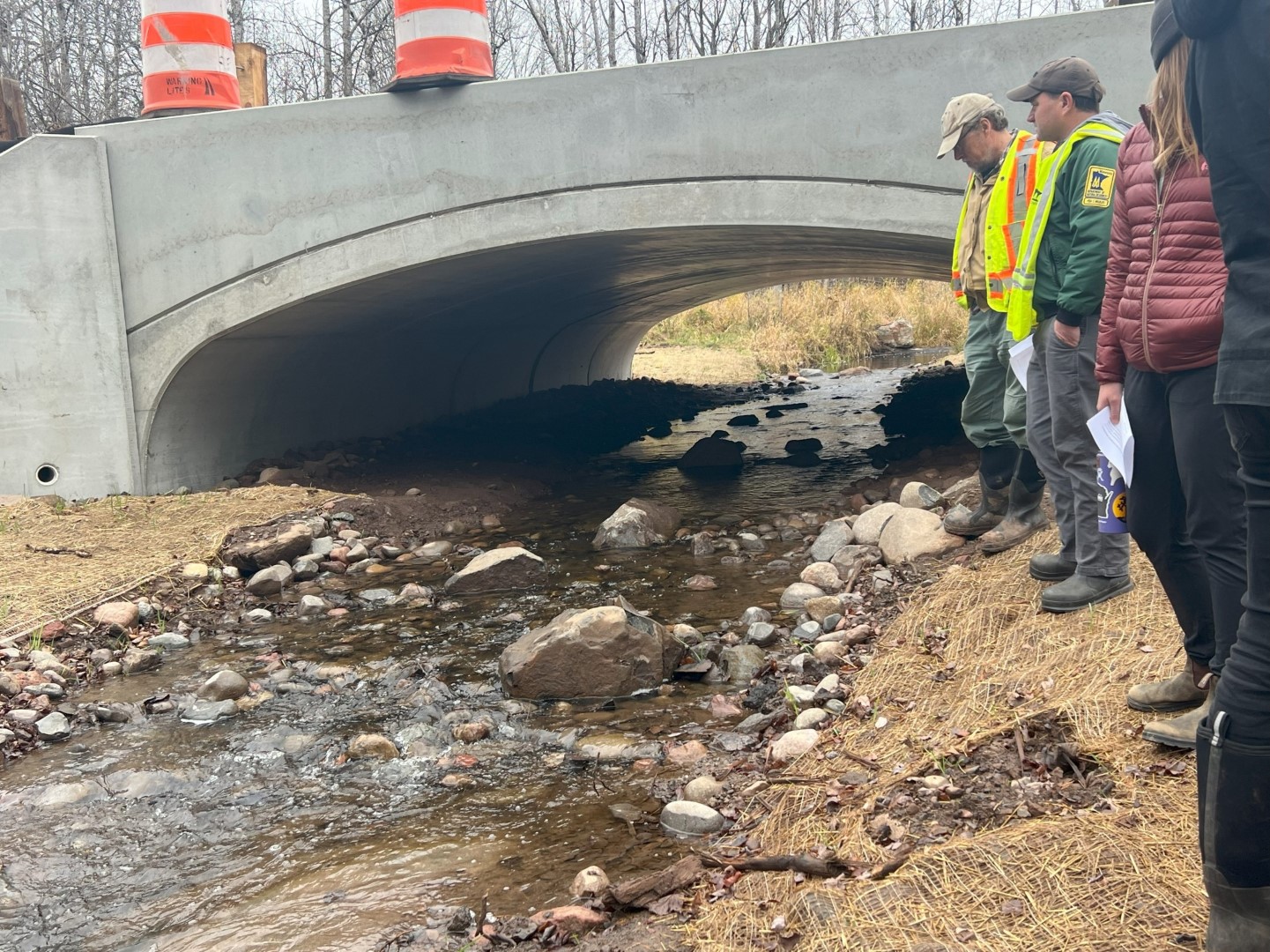
Equally important is how these crossings were designed. Bottomless arch culverts, pipe arches, freespan bridges, and full bridge replacements now dominate the project list. These designs do more than simply let fish move upstream: they allow the stream to behave like a stream again.
Reconnecting habitat at a meaningful scale
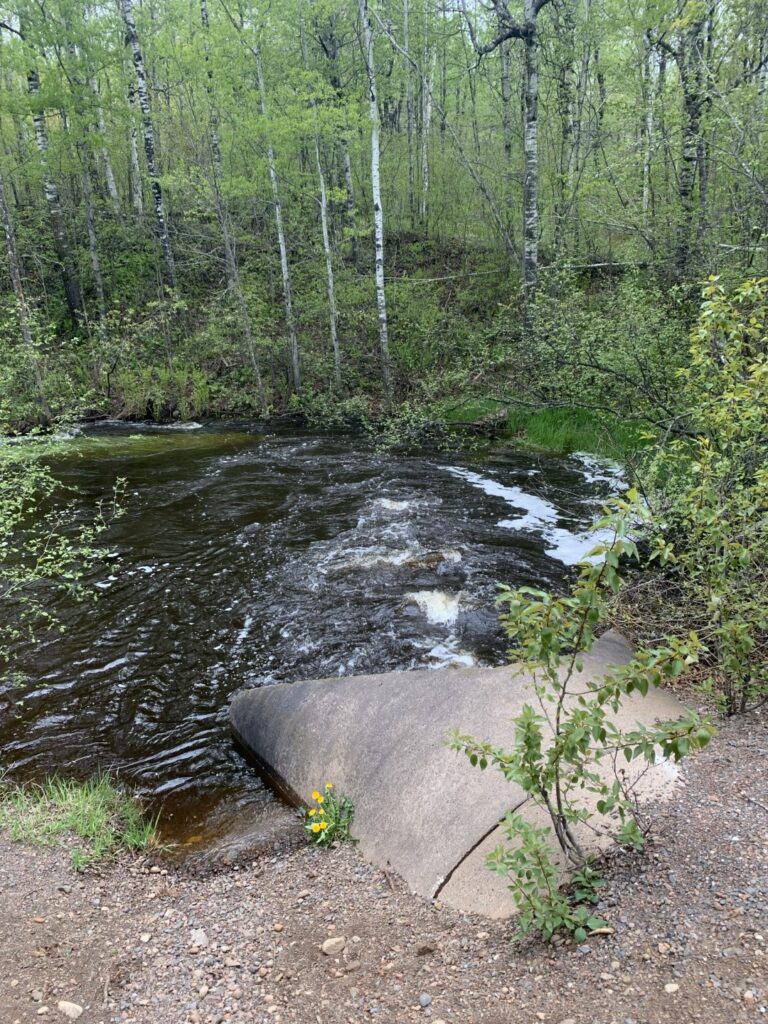
One of the most exciting outcomes of this work is the amount of habitat that has been reconnected. While some projects restored a few hundred feet of channel, others reconnected miles to tens of miles of coldwater habitat upstream of a single barrier. In Lake County alone, several projects reopened more than 30 miles of upstream habitat in groundwater-influenced systems.
For native brook trout, this connectivity matters. It allows fish to move in response to seasonal temperature shifts, seek refuge during floods or droughts, access spawning habitat, and recolonize reaches after disturbance. For streams facing increasing climate variability, connectivity is one of the most powerful resilience tools we have.
Fish passage as a habitat multiplier
At MNTU, we rarely view fish passage projects in isolation. Instead, we treat them as opportunities for broader habitat restoration.
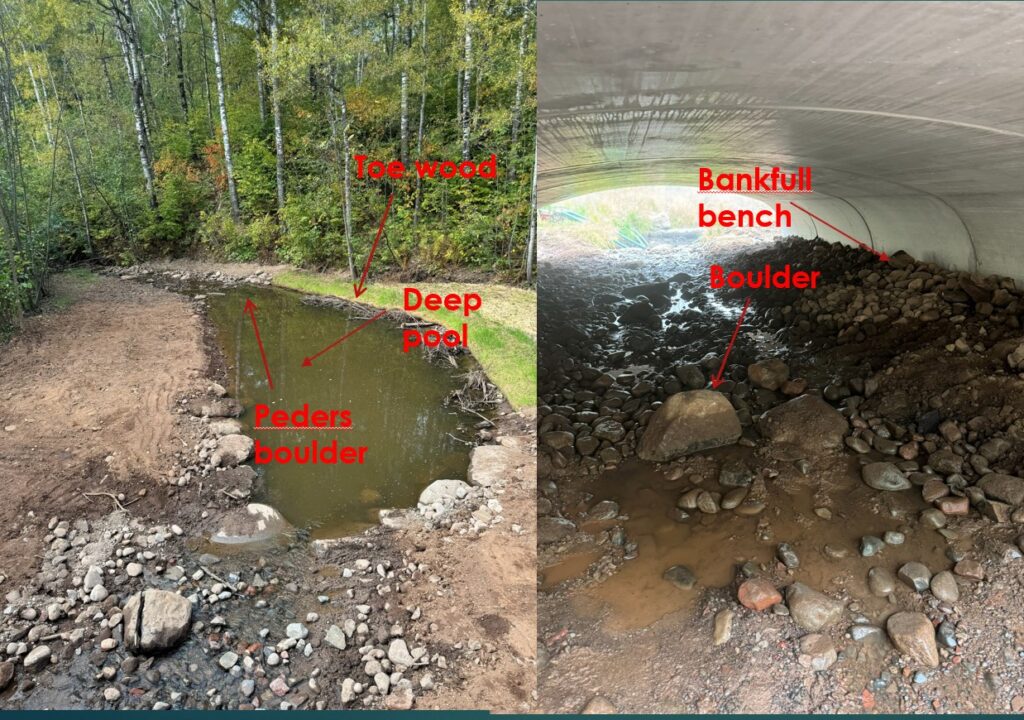
When an undersized or perched culvert is removed, we gain access (literally and figuratively!) to fix other limiting factors:
- Substrate: Many old, undersized and perched culverts created downstream scour pools and upstream sediment plugs. During replacement, we can re-establish natural gravel and cobble substrates that support macroinvertebrates and spawning trout.
- Woody structure and boulders: Crossing projects often provide the chance to add large wood and boulders upstream and downstream, restoring cover, creating velocity diversity, and improving pool-riffle sequences.
- Deep pools: Passage projects with channel reconnection often allow us to build or protect deep pools that serve as thermal refugia and overwintering habitat.
- Floodplain connection: Freespan bridges and wide bottomless arches reduce constriction of channels, allowing high flows to spread out, dissipate energy, and reduce erosion. This benefits both the stream and the road.
In other words, fish passage projects become habitat multipliers. These projects are an opportunity for us address to multiple stressors at once, often more cost-effectively than tackling each issue separately.
Collaboration is an engine
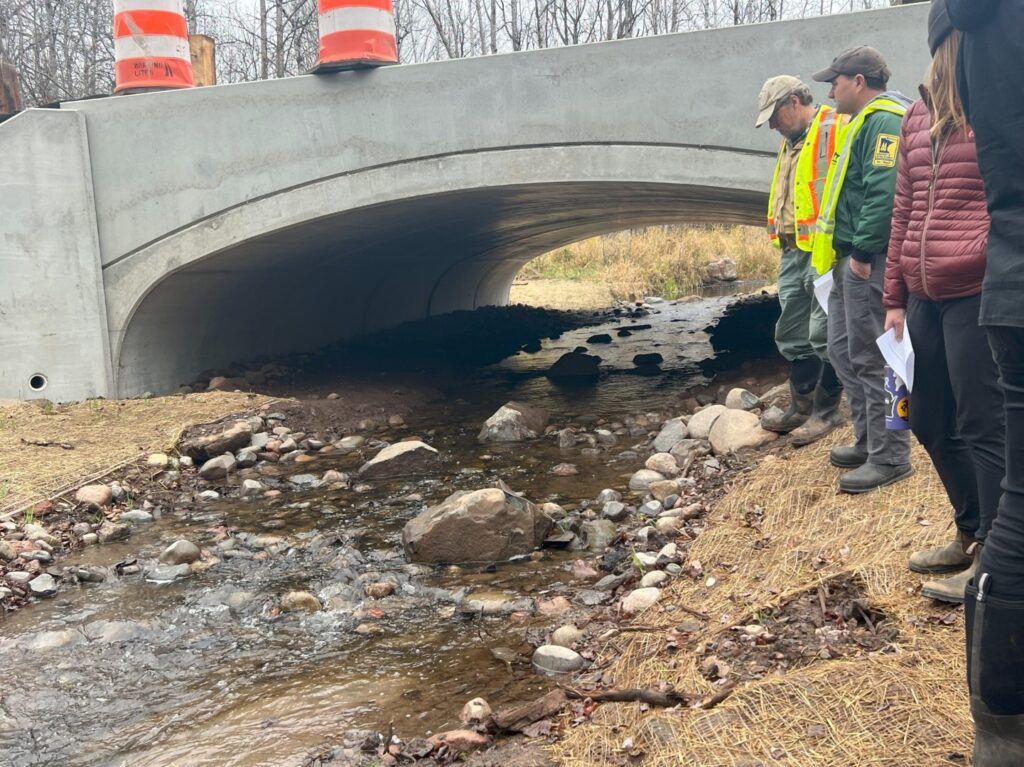
None of this work happens in a vacuum. The success across northeastern Minnesota reflects collaboration among many partners: MNTU, Minnesota DNR divisions, counties and townships, federal agencies like the U.S. Fish and Wildlife Service and U.S. Forest Service.
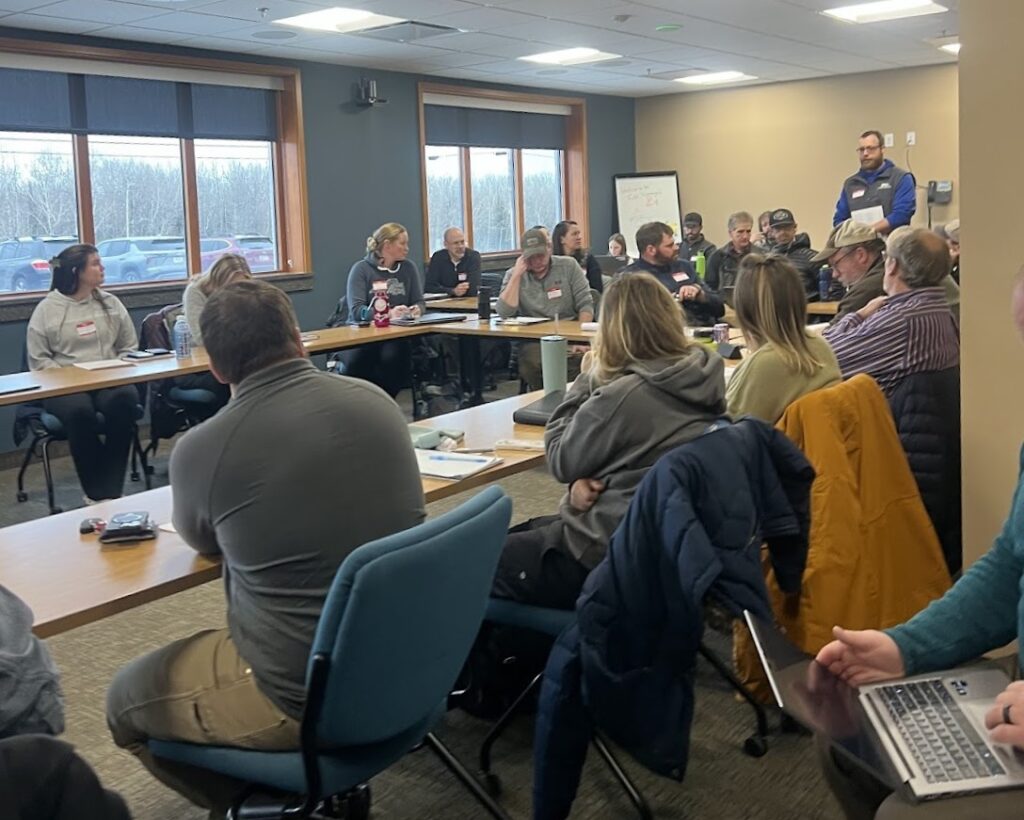
Funding has also been collaborative by necessity. Projects frequently combine resources from the Outdoor Heritage Fund (OHF), Great Lakes Restoration Initiative (GLRI), Conservation Partners Legacy (CPL) grants, federal programs, and partner contributions. While coordinating multiple funding sources can be complicated, it has allowed larger, more impactful projects to move forward.
The review also highlighted an important opportunity: improving how we track project status and funding across organizations. Better shared data will help all of us prioritize future work, identify gaps, and avoid duplication.
Looking ahead: Priorities and challenges
Despite the progress, significant work remains. Many watersheds still need comprehensive barrier assessments, and even in well-assessed watersheds, priority barriers remain. Capacity, both staffing and engineering, can to be a limiting factor, as are permitting timelines, easement acquisitions, and the growing complexity of designing crossings that can handle future flood regimes.
At the same time, the pipeline of proposed and preliminary projects shows that momentum hasn’t stalled. The challenge now for us to sustain it by coordinating assessments, acquiring funding, sharing tools, and continuing to view fish passage not as a standalone goal, but as part of a holistic approach to ensuring amore connected future for coldwater streams.