
Your questions answered about the South Branch Root River habitat restoration project
Minnesota Trout Unlimited (MNTU) is partnering with the City of Lanesboro and the Minnesota Department of Natural Resources (DNR) to improve habitat, public access and long-term river health along a 3,000-foot section the South Branch Root River in Lanesboro. This project comes after several years of discussions with local anglers and DNR fisheries staff.
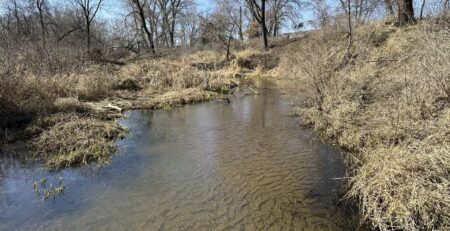
The river you see today is not the same river that existed many decades ago. Much of this reach was straightened and relocated. This project is not changing a natural river, it is restoring natural functions to a river that was previously altered by people. The project will reconnect the river to its floodplain, improve habitat for trout and establish a more diverse native river corridor that benefits fish, wildlife and public access to the water.
As with many restoration projects, questions come up about objectives, construction activities, tree removal and river access. The following answers to frequently asked questions outline what residents and visitors can expect as restoration moves forward.
Frequently asked questions
What is the South Branch Root River habitat improvement project?
This project is a partnership between MNTU, the City of Lanesboro and the DNR to restore and enhance river habitat in Lanesboro. The project is funded through the Lessard-Sams Outdoor Heritage Fund money secured by MNTU and does not use city tax dollars.
Why is this project needed?
The project addresses limited trout habitat, eroding banks, poor floodplain connectivity, invasive vegetation and limited public access while improving long-term river stability.
What habitat improvements will be made?
Improvements include submerged pool logs, woody habitat structures, improved spawning riffles, floodplain reconnection, native vegetation restoration and boulders that support both habitat and streambank stabilization.
How will this project help with flooding and erosion?
This project will reconnect the stream to its floodplain. A floodplain is the low-lying area next to a river that absorbs high flows during flood events, slowing down the river to reduce downstream erosion and flood damage. Reconnecting a previously altered stream to its floodplain also improves channel stability. The project’s permitting processes required rigorous floodplain modeling.
Will the project affect tubing, canoeing or kayaking?
No. Habitat features are being designed to avoid interfering with boating, tubing and other recreational uses.
Why are trees being removed?
Selective tree removal is necessary to reconnect the river to its floodplain, improve habitat, stabilize banks and restore a healthier native river corridor. Most (98%) of trees proposed for removal are invasive species or short-lived disturbance-adapted species. Dead or dying trees were also selected for removal. Some harvested trees will be used to create habitat in the river.
Are all of the trees along the river being removed?
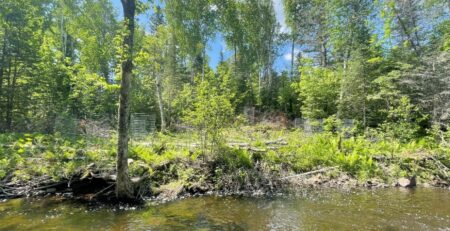
No. Healthy native trees that contribute to a diverse and resilient floodplain forest will be retained whenever possible. In addition, selected dead or declining trees that provide nesting and roosting habitat for birds, bats, woodpeckers and other wildlife will be left in place where they do not pose a safety risk. The goal is a healthier, more diverse floodplain forest, not the removal of tree cover.
Why remove box elder trees?
Although native, box elder are an early successional species that often dominates disturbed floodplains — “early successional” refers to the species that colonize a disturbed ecosystem.
Each tree can produce thousands of seeds and are fast growing which results in soft wood that is often damaged by strong wind and heavy snow. These trees have a relatively short lifespan and limit development of a more diverse forest community.
Why remove buckthorn & Asian bush honeysuckle?
Both species were introduced to the U.S. from Eurasia. Both are aggressive invasive species that crowd out native plants, reduce habitat quality, and destabilize streambanks by shading out deep-rooted herbaceous species.
Will new trees and shrubs be planted?
Yes. Native grasses, wildflowers, shrubs and trees will be established following construction to create a more diverse and resilient river corridor. In late summer or early fall in 2026, MNTU will work with the city and community to develop a tree planting plan to be implemented across three years.
Why is selective tree harvest needed?
A healthy river corridor depends on a diversity of native trees. In many areas along the South Branch Root River, invasive species and short-lived box elder trees have become dominant due to changing land use and fire suppression. While these trees provide some benefits, they often create dense, low-diversity stands that limit establishment of walnut, elm, basswood, cottonwood, hackberry, silver maple and other native trees typically associated with a healthy riparian forest community. Box elder are aggressive, competitive, and prolific seeders. Without intervention, they would continue to dominate the riparian corridor and limit the establishment of longer-lived, native shrubs and hardwoods species.
The project is designed to retain healthy native trees whenever possible while encouraging the development of a more diverse floodplain forest. Over time, a river corridor with a variety of native trees, shrubs, grasses and wildflowers provides better habitat for wildlife, improved bank stability, greater resilience to floods and disease as well as a healthier ecosystem overall.
The river has flowed this way for over a century. Why change it now?
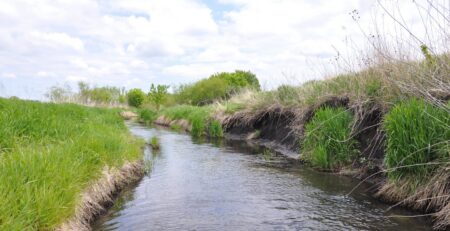
While the South Branch Root River may appear natural today, this reach of river was significantly altered by people many decades ago. Historically, the river followed a different alignment through the valley. To accommodate development and infrastructure, portions of the river were straightened and relocated, essentially converted into a ditch-like channel in some areas.
These changes disconnected the river from its floodplain, reduced habitat complexity, increased bank erosion and diminished the river’s ability to support healthy fish and wildlife populations. The goal of this project is not to create something new, but rather to restore some of the natural river functions that were lost when the channel was altered. By improving habitat, reconnecting the floodplain and restoring more natural stream processes, the project helps the river function more like a healthy ecosystem while continuing to flow through the community that has grown around it.
How will the project impact wildlife habitat?
While trout habitat improvements are an important goal, MNTU habitat improvement projects seek to add features to benefit birds, pollinators, amphibians, aquatic insects, native plants and other wildlife that depend on healthy river corridors.
How will the project improve fishing?
The project will create deeper pools, improve spawning habitat, increase fish cover and enhance public fishing access downtown with the creation of natural floodplain “benches” and sloping back steep banks.
What will construction look like and when will it happen?
Construction access will primarily occur from the west side of the river to minimize impacts on businesses and residents. MNTU coordinated with the city and local businesses to identify a time when both hydrological conditions are suitable for work and disturbance to the community would be limited. Construction is expected to start after the Fourth of July.
What will the river look like after construction?
Construction can temporarily make a restoration site look disturbed. As native vegetation becomes established over several years, the corridor will develop into a healthier and more diverse floodplain ecosystem that supports fish, wildlife and recreational opportunities.
When is the project completed?
Restoration is a long-term investment. Native vegetation establishment, invasive species management, monitoring and maintenance occur for several years after construction to ensure the project achieves its goals.