
Call to action: Speak up for Minnesota streams during neonics comment period
Minnesota trout fisheries need your voice.
The Minnesota Department of Agriculture (MDA) is accepting public comments on whether the state’s current rules adequately protect our natural resources from the contamination of neonicotinoid-treated seeds.
The public comment period closes July 31.
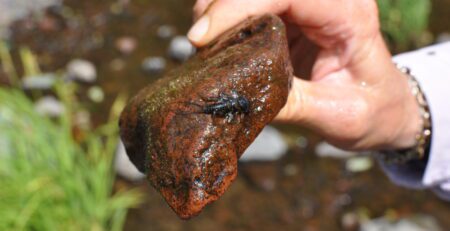
Minnesota’s surface water is widely contaminated with neonicotinoids at levels expected to cause harm to the aquatic invertebrates that form the base of the food webs supporting our valuable trout fisheries.
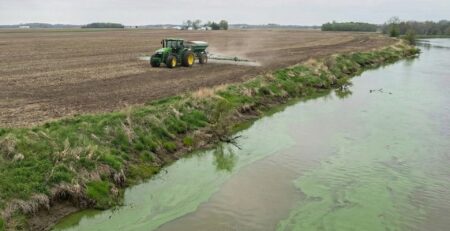
Neonicotinoids (or neonics) are systemic insecticides commonly applied as crop seed coatings to protect the plant from insects. However, only a small percentage of the insecticide is absorbed by the plant as it grows, typically leaving over 90% on the surface of the seeds or in the surrounding soil. When rain falls or irrigation water is applied, these residues can wash into nearby aquifers, streams and public water bodies.
The MDA’s own data shows that concentrations of these pesticides in Minnesota streams routinely exceed safe levels for aquatic invertebrates.
What to consider for your comments
- Comments that provide citations to studies, supportive data and include direct observations will help MDA correct its decision, whereas simply expressing support for new restrictions will not.
- Include your own observations you’ve noticed in aquatic insect hatches and stream health in Minnesota’s agricultural watersheds, such as southeastern Minnesota.
- Ask that the MDA reviews its own water monitoring data to conclude that its current non-regulatory approach is not adequate to protect Minnesota’s natural resources from the harm caused by neonic-coated crop seeds:
MDA’s reports:
- Detection Patterns of Neonicotinoid Insecticides in Minnesota Rivers and Streams, 2018 through 2022
- 2025 Water Quality Monitoring Report
Key points you might include:
- Aquatic insects form the base of food webs that support trout fisheries.
- Neonicotinoid chemicals are engineered to kill insects indiscriminately and they continue to kill insects after they wash into public waters.
- The concentrations of two neonics – clothianidin and imidacloprid – are routinely found in Minnesota streams at levels harmful and lethal to aquatic insects.
- MDA monitoring and reports identify neonicotinoid-treated seeds as a primary source of these highly toxic, persistent neonics in Minnesota waters.
- MDA water samples have shown spikes in neonics following rainfall-runoff events.
- Recent research in Minnesota showed neonics in 97% of water samples from rivers and streams and in 74% of groundwater samples, including at levels above that kill aquatic insects.
- MDA data confirms that neonic-treated seeds are the leading source of harmful neonic contamination in Minnesota waters. Highest levels are detected in May, June and July and are correlated with corn and soybean planting season.
- MDA concluded that neonicotinoids from seed treatments are the primary source of detections in water samples and are rapidly transported to rivers and streams after planting.
How to comment
Submit your comments using the MDA’s online comment form: here or by emailing them to TreatedSeed.MDA@state.mn.us