Minnesota Trout UnlimitedMinnesota Trout Unlimited
  • HOME
  • About
    • Chapters
      • Headwaters Chapter
      • Gitche Gumee Chapter
      • Twin Cities Chapter
      • Hiawatha Chapter
      • Win-Cres Chapter
    • Our Mission
    • Join MNTU
    • Contact Us
    • Help Support MNTU
  • NEWS
    • Blog
    • Events
    • Monthly Cast Newsletter
    • Trout Unlimited Minnesota Newsletter
  • HABITAT
  • EDUCATION
    • Education and Outreach
    • Trout in the Classroom
    • Fishing Skills Programs
    • Great Waters Fly Fishing Expo
    • Foster the Outdoors Program
    • T.U.N.E Camp
  • ADVOCACY
    • Agricultural Runoff
    • Data Centers
    • Feedlots
    • Neonics
    • Nitrates
    • Preventing Fish Kills
    • Public Waters
    • Sulfide Mining
  • FISHING
  • DONATE
  • HOME
  • About
    • Chapters
      • Headwaters Chapter
      • Gitche Gumee Chapter
      • Twin Cities Chapter
      • Hiawatha Chapter
      • Win-Cres Chapter
    • Our Mission
    • Join MNTU
    • Contact Us
    • Help Support MNTU
  • NEWS
    • Blog
    • Events
    • Monthly Cast Newsletter
    • Trout Unlimited Minnesota Newsletter
  • HABITAT
  • EDUCATION
    • Education and Outreach
    • Trout in the Classroom
    • Fishing Skills Programs
    • Great Waters Fly Fishing Expo
    • Foster the Outdoors Program
    • T.U.N.E Camp
  • ADVOCACY
    • Agricultural Runoff
    • Data Centers
    • Feedlots
    • Neonics
    • Nitrates
    • Preventing Fish Kills
    • Public Waters
    • Sulfide Mining
  • FISHING
  • DONATE

Macro of the month: Little Sallies

Jennifer Biederman - MNTU Habitat Director on May 13, 20242026-05-01T20:02:45+00:00
By Jennifer Biederman - MNTU Habitat Director on May 13, 2024

Stoneflies, belonging to the order Plecoptera, play an important role in freshwater ecosystems and are especially significant to anglers. These aquatic macroinvertebrates are a prime food source for many fish species, especially trout, making them a key focus for fly fishing enthusiasts. Stoneflies are characterized by their elongated bodies, two pairs of membranous wings, and long antennae. They thrive in clean, well-oxygenated waters, making their presence an indicator of good water quality.

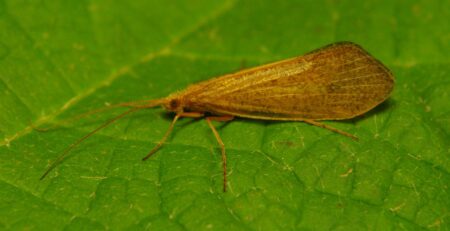
Among the diverse families of stoneflies, the genus Isoperla holds particular interest for anglers. Known commonly as Yellow Sallies or Little Sallies, these stoneflies are medium-sized and are often distinguished by their yellow or pale green coloration. Isoperla species are typically found in cool, fast-flowing streams and rivers, environments that are also ideal for trout and other game fish.

Lifecycle and Behavior

Isoperla stoneflies undergo incomplete metamorphosis, transitioning from nymphs to adults without a pupal stage. The nymphs are robust and well-suited to clinging onto submerged stones and vegetation in swift currents. This stage can last several months to a few years, depending on environmental conditions. As nymphs, they are highly sought after by fish, making them a favorite pattern for fly tiers.

When Isoperla nymphs mature, they crawl out of the water to molt into winged adults. Adult Little Sallies are less than an inch long and have a distinctive fluttering flight. They are often seen skimming over the water’s surface, where they lay eggs. This behavior makes them particularly vulnerable to fish, making adult imitations highly effective for dry fly fishing.

Fishing Tips for Anglers

  1. Nymph Patterns: Imitate Isoperla nymphs using patterns like the Yellow Sally Nymph or similar designs that mimic their size and coloration. Drift these patterns near the streambed where nymphs naturally reside.
  2. Dry Fly Patterns: For adult imitations, use dry flies such as the Yellow Sally Dry Fly. Focus on areas where adults are likely to be emerging or laying eggs, especially during warmer parts of the day.
  3. Fishing Techniques: Employ a dead drift technique for nymphs, ensuring the fly moves naturally with the current. For dry flies, a gentle cast and slight twitching can mimic the natural movement of adult stoneflies.

Conservation Note

Stoneflies, including those in the genus Isoperla, are sensitive to pollution and habitat degradation. Their presence is a good indicator of healthy water systems. Anglers can contribute to the conservation of these vital insects by minimizing streambed disturbance and supporting efforts to maintain healthy watersheds.

Understanding the life cycle and behavior of Isoperla stoneflies, particularly the Little Sallies, can significantly enhance your fly fishing experience. By mimicking their natural forms and movements, anglers can increase their chances of success while also appreciating the intricate beauty and ecological significance of these fascinating insects. Whether you’re nymphing deep pools or casting dry flies to rising trout, the Little Sallies offer an exciting challenge and a rewarding connection to the natural world.

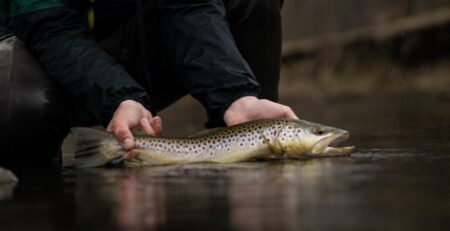
What’s a macro and what’s it have to do with trout angling and conservation? Macros are on the trout menu for pretty much every meal. Macro means big and macroinvertebrates, or “macros,” are animals without a backbone, that are big enough to be seen by the human eye. They can be aquatic or land based, however aquatic insects make up the majority of a trout’s diet. They are also, of course, the inspiration for the flies we tie and use to catch trout. Learn about a new macro each month and how you can create your own to take with you on your next fishing trip!
Share this post

Facebook Twitter Email

Related Posts

Gear up for North Shore steelhead

The fishing gear you need for catching Steelhead on the North Shore of Lake Superior. From rod and reels, to... read more

All about fly fishing strike indicators

Learn everything you need to know about fly fishing with indicators. Is is ok if you call it a bobber?... read more

Photo credit: Chironomidae Research Group

Community science for winter anglers: Bugs below zero

I went to college at Saint Mary’s in Winona, and during the winter months I spent a lot of time... read more

Winter fly fishing in Minnesota’s Driftless Area

For many Minnesota anglers, January is a month spent leaning over an ice hole or a fly-tying vice, but if... read more

What happens to aquatic invertebrates as winter sets in?

Macro of the Month – December 2025 December has always been one of my favorite times to walk a trout stream.... read more

Macro of the Month: Northern caddisflies

Northern Caddisflies (Family Limnephilidae) Last month, we explored the importance of October foliage after it falls into a stream. Let’s take... read more

Macro of the Month: Beetles

All it takes is a little wind on the grass and you might be lucky enough to hear a little... read more

Macro of the Month: Grasshoppers

It’s August in Minnesota. The heat has settled in, and streamside vegetation hangs thick and heavy over the banks of... read more

Macro of the Month: Ants

One of my favorite surprises of summer trout fishing in Minnesota comes after a good soaking rain. When storms sweep... read more

Macro of the Month: Crane flies

Living on a trout stream in southeastern Minnesota, it doesn’t require too much effort to keep an eye on what’s... read more

Categories

Recent Posts

  • Your questions answered about the South Branch Root River habitat improvement project
  • Action alert: Speak up to protect MNTU’s habitat improvement funding  
  • Construction for Eagle Creek restoration begins in May 
  • Photos: Mahtomedi students release trout and identify bugs
  • Action alert: Funding for habitat restoration is stalled

Chapters

  • Headwaters Chapter
  • Gitche Gumee Chapter
  • Twin Cities Chapter
  • Hiawatha Chapter
  • Win-Cres Chapter
Subscribe
 
Join MNTU
 
Make A Donation
  • Facebook
  • YouTube
  • Instagram
Protect – Restore – Sustain

Find Your Chapter

  • Headwaters Chapter
  • Gitche Gumee Chapter
  • Twin Cities Chapter
  • Hiawatha Chapter
  • Win-Cres Chapter

Learn More

  • Recent News
  • Upcoming Events
  • Habitat Projects
  • Fishing Information
  • Contact Us

Get Involved

  • Join MNTU
  • Make a Donation
  • Monthly Cast Newsletter
  • Follow on Facebook
  • Follow on Instagram
© Copyright 2026 Minnesota Trout Unlimited. All Rights Reserved.
Minnesota Trout Unlimited is a 501(c)(3) organization.