Habitat spotlight: Why riffles matter so much
If there is one thing that many degraded streams across Minnesota have in common, it’s a lack of key habitat types that support trout of all stages and ages.
Riffle habitats in trout streams are essential little ecosystems that provide an ideal environment for aquatic macroinvertebrates, which are small, aquatic organisms that play a crucial role in freshwater ecosystems – and the most important food source of stream dwelling trout in Minnesota. What is a riffle? Riffles are characterized...
The sight of an in-stream habitat improvement project in progress can be a bit eye-opening – heavy machinery, including large excavators are working along the banks and in the stream, often moving large amounts of soil to slope the banks while digging out silted in pools and re-constructing new riffle...
Standing by a newly restored stream, the benefits are often clear: the eroding banks, invasive plants, and barren channels have been replaced with gently sloped banks, deep pools, spawning riffles, and thriving native vegetation. It’s easy to see how these improvements boost fish populations by creating better habitat for food...
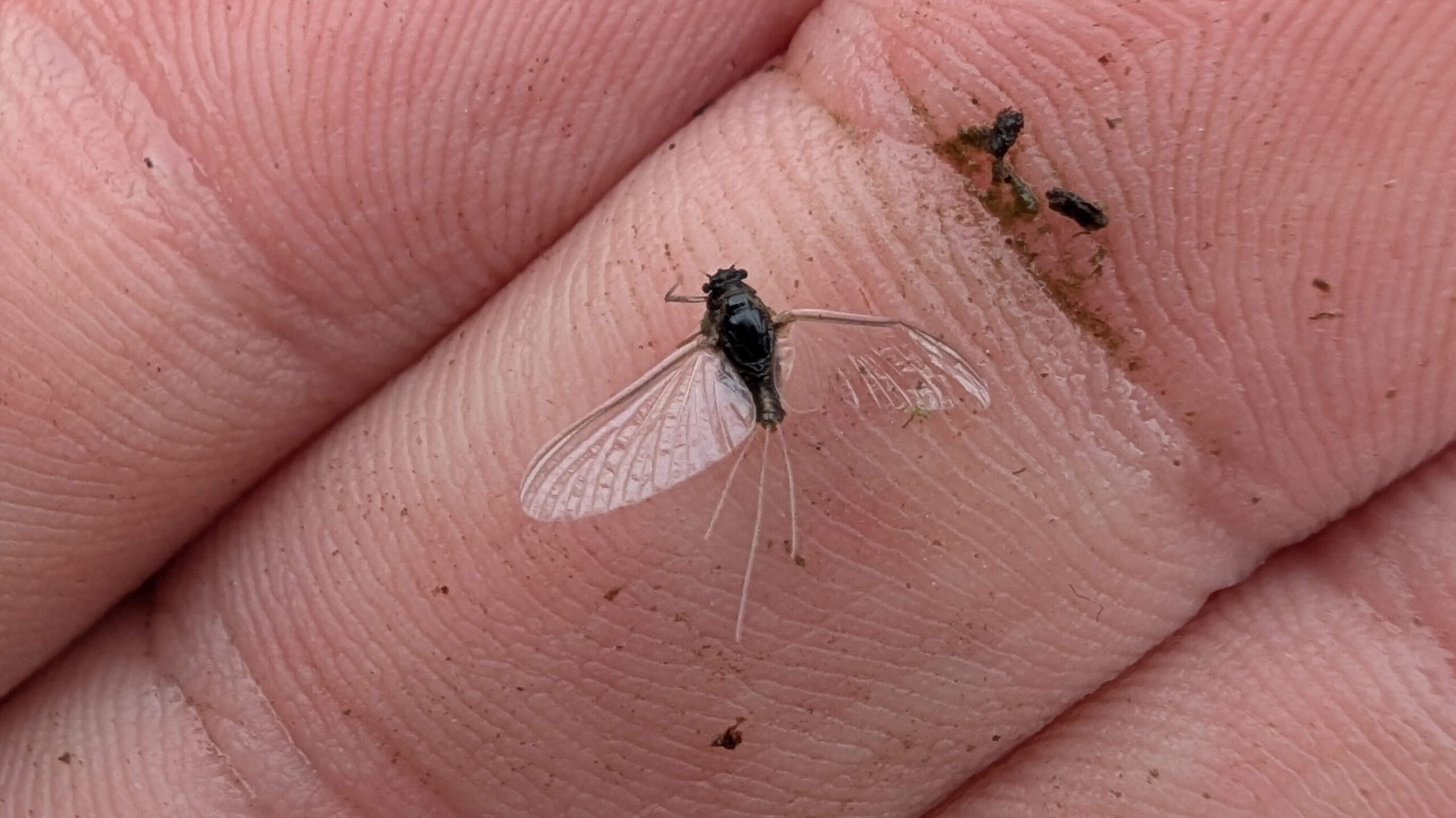
As summer begins to wind down, July, August and early September bring a special treat for fly anglers in Minnesota: the trico hatch. Tricos, short for Tricorythodes mayflies, are a small-bodied but super important part of many trout streams' ecosystems, and they offer some of the best dry fly fishing...
On August 4,2024 twenty conservation-minded folks gathered on the banks of Eagle Creek in Savage, MN to become certified Save Our Streams (SOS) community scientists – learning the techniques for biological and chemical water testing in streams. The effort was led by the Twin City Trout Unlimited (TCTU) Streamkeepers...
Unobstructed pathways are crucial for stream-dwelling trout at key times throughout the year and life cycle. Trout must be able to move freely in a stream system to reach spawning and overwintering areas, find coldwater refuge in low, warm summer flows, and access feeding grounds. However, barriers like dams, road...
When it comes to the diets of stream-dwelling trout in Minnesota, aquatic benthic invertebrates take most of the spotlight. Keep in mind that trout are visual and opportunistic feeders – so prey preference and capture probability are likely influenced by the accessibility, size, color, mobility, and degree of exposure of...
This photo from Hay Creek in the State Forest illustrates how the June flood waters spread out. You can see the flattened grass. The energy release of floodplain prevented any damage to the instream habitat.
These insects, known for their sensitivity to pollution, offer invaluable insights into the health of freshwater ecosystems.